Skip to content

Our Blog

Ideas, Insights & Innovation

Articles on building and launching real products — web apps, SaaS, AI workflows, and SEO-focused sites. Everything here is written by the engineers doing the work, drawn from production projects rather than secondhand summaries.

Web & SaaS engineering

Architecture decisions, Next.js and React patterns, and lessons from building multi-tenant SaaS platforms in production.

AI & automation

Where LLM workflows and automation actually pay off for businesses — and where they don't — based on tools we've shipped.

Technical SEO & performance

Core Web Vitals, structured data, rendering strategy, and the technical details that decide whether a site gets found.

Product & business decisions

Build vs. buy, technology choices for startups, and honest cost breakdowns for non-technical decision makers.

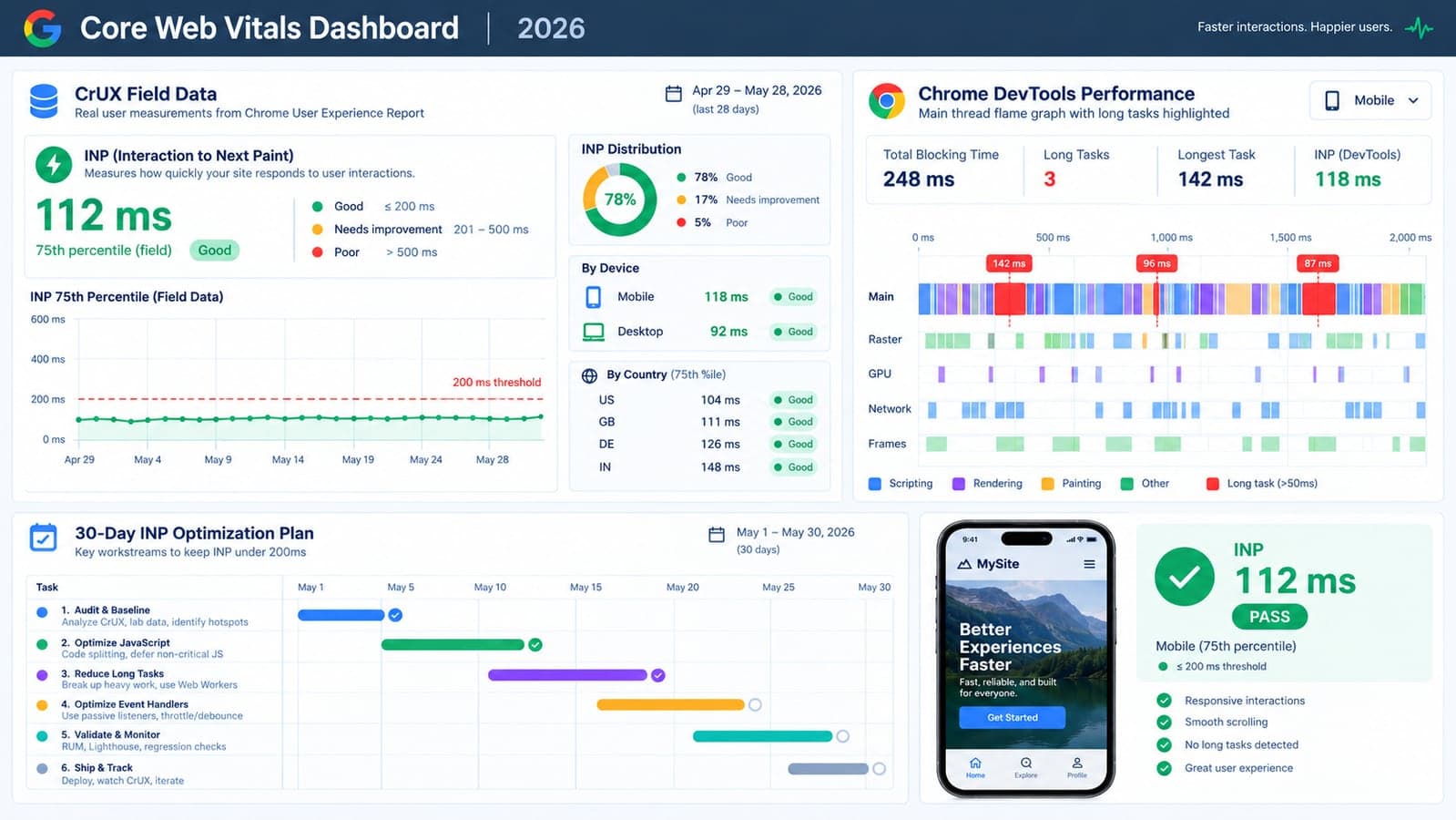
A 2026 Core Web Vitals dashboard showing Interaction to Next Paint measurements with the 200ms threshold line highlighted. The graphic includes CrUX field data widgets, a Chrome DevTools Performance flame graph with long task bars marked, a 30-day optimization Gantt chart, and a mobile device icon displaying a 112ms INP pass badge.
SEO

43% of Sites Are Failing INP — The 200ms Metric Google Is Using to Demote Rankings Right Now (2026 Fix Playbook)

Search Console turned red overnight. Your Lighthouse score is 94, but real users experience a 540ms click lag, and Google is already demoting you. INP — the 200ms Interaction to Next Paint threshold — is the hardest Core Web Vital to pass in 2026, and 43% of the web is currently failing it. This is the production-grade playbook used on six-figure-MRR SEO retainers to take a site from 540ms down to 112ms in four weeks, including Next.js config snippets, main-thread yielding patterns, third-party script facades, a 30-day checklist with hour estimates, and the exact measurement routine that catches regressions before Google does.

SEONext.jsPerformance
Taylance Tech Team21 min read
A modern search engine optimization diagram showing a generative AI answer panel with cited source thumbnails connected to JSON-LD structured data, llms.txt configuration, and a web page optimized with Assertion-Evidence content for Generative Engine Optimization (GEO)
SEO

Generative Engine Optimization (GEO) in 2026: How to Stop Google AI Overviews From Stealing 58% of Your Clicks and Start Getting Cited by ChatGPT, Perplexity, and Every AI Search Engine

Google AI Overviews now appear on 48% of search queries, and when they do, the #1 organic result loses 58% of its click-through rate. Your rankings did not drop. Your traffic evaporated because AI engines are answering questions directly on the results page instead of sending users to your website. This guide is the complete Generative Engine Optimization (GEO) playbook we use at Taylance Tech in 2026: how AI citation algorithms actually work, the 7 technical signals that decide whether your page gets quoted or ignored, the llms.txt configuration AI crawlers look for, the Assertion-Evidence content framework that wins 3x more citations, how to measure AI Overview performance in Google Search Console, and the real difference between classic SEO, Answer Engine Optimization (AEO), and the new GEO discipline.

Web DevelopmentSEOPerformance
Tayyab AslamTayyab Aslam28 min read
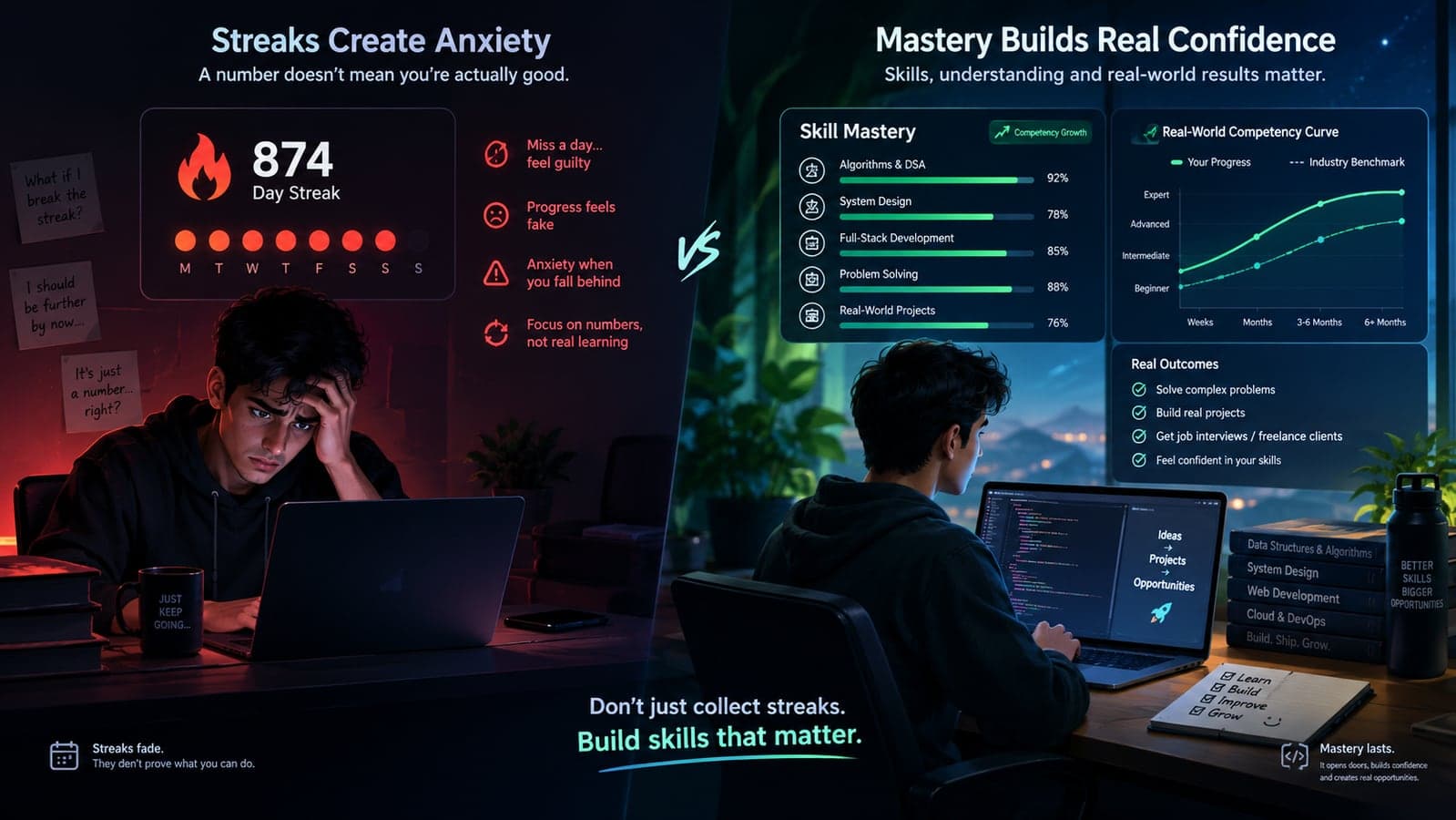
A conceptual digital illustration contrasting an anxiety-inducing daily streak counter with genuine skill mastery and real-world competency curves in modern educational software
SaaS

The Streak Paradox: Why Gamification Makes Users Defend Numbers Instead of Learning (and Why 365-Day Streaks Produce Zero Real Mastery)

Millions of people maintain 365-day streaks on language apps, coding platforms, and productivity tools, yet cannot speak a basic sentence or build a working application. What started as a clever retention mechanic has created a profound behavioral trap: Goal Displacement. When software prioritizes unbroken daily counters, users subconsciously shift from seeking actual competence to defending an arbitrary number with 30-second low-effort tasks. Here is an empirical teardown of the "Illusion of Learning," the cognitive research explaining why friction-free gamification sabotages skill acquisition, and how modern software must evolve from instructional theatre to genuine mastery.

Web DevelopmentProductivitySaaS
Taylance Tech Team14 min read
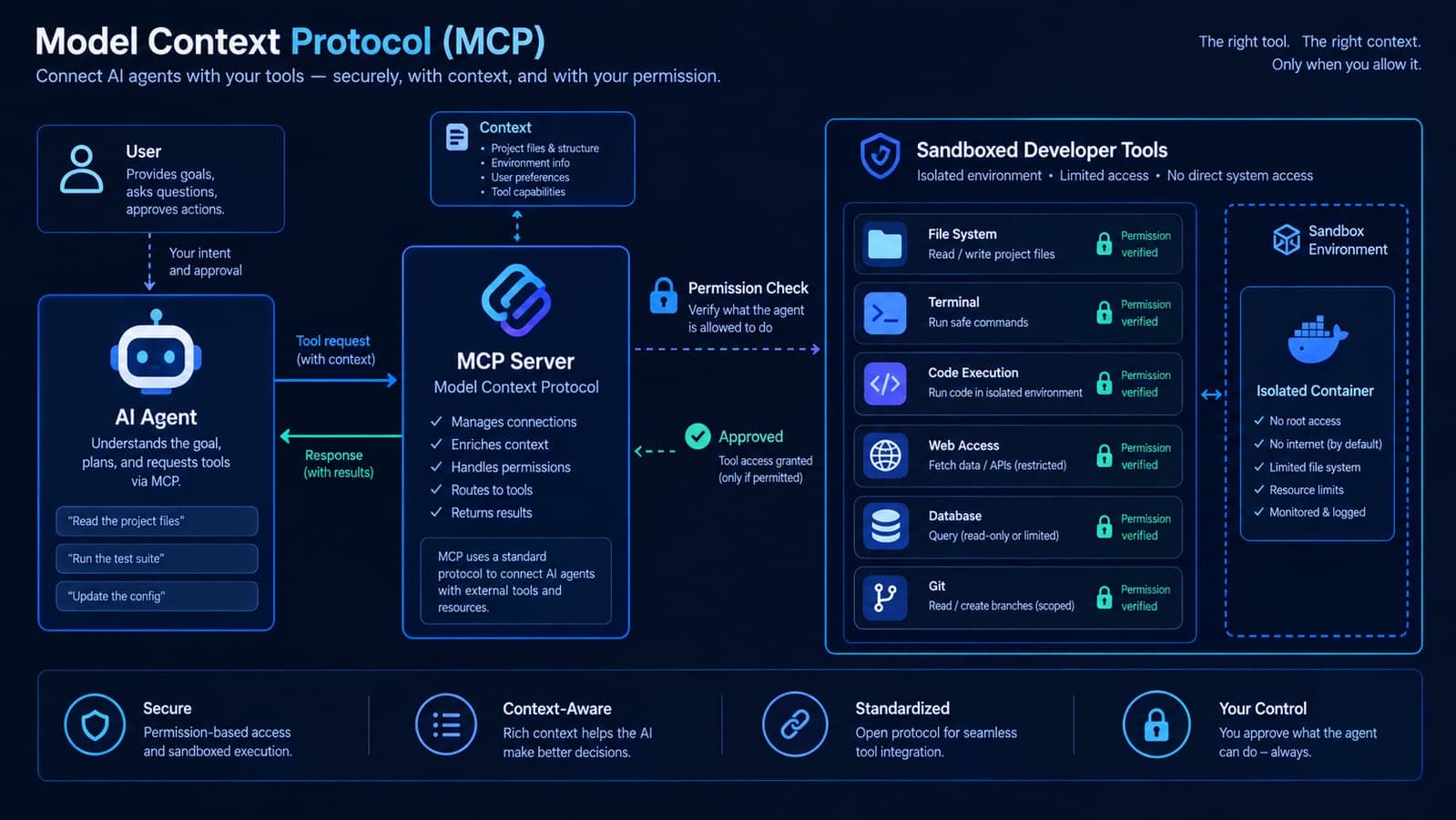
A modern software engineering diagram illustrating Model Context Protocol connections between an AI agent and sandboxed developer tools with permission verification locks
AI & Automation

Model Context Protocol (MCP) Architecture: How Unverified Tool Schemas Mislead AI Agents (and How to Harden Your Setup)

Anthropic's Model Context Protocol (MCP) has become the universal standard for connecting AI coding assistants and autonomous agents to local file systems, databases, GitHub repositories, and cloud APIs. But as engineering teams casually configure third-party MCP servers across Cursor, Claude Desktop, and VS Code, they face a critical architectural challenge: Tool Schema Manipulation and Unverified Context Ingestion. Because large language models discover available tools by parsing dynamic JSON metadata and schema descriptions, an unvetted MCP server can misdirect agent reasoning, expose local environment variables, or trigger unauthorized system actions. Here is an architectural breakdown of how MCP tool execution functions under the OWASP Agentic Applications 2026 framework (ASI02 & ASI04), the benchmark data showing why frontier models follow unverified schemas, and the 6-point hardening checklist your engineering team must enforce today.

Web DevelopmentAIProductivity
Taylance Tech Team17 min read
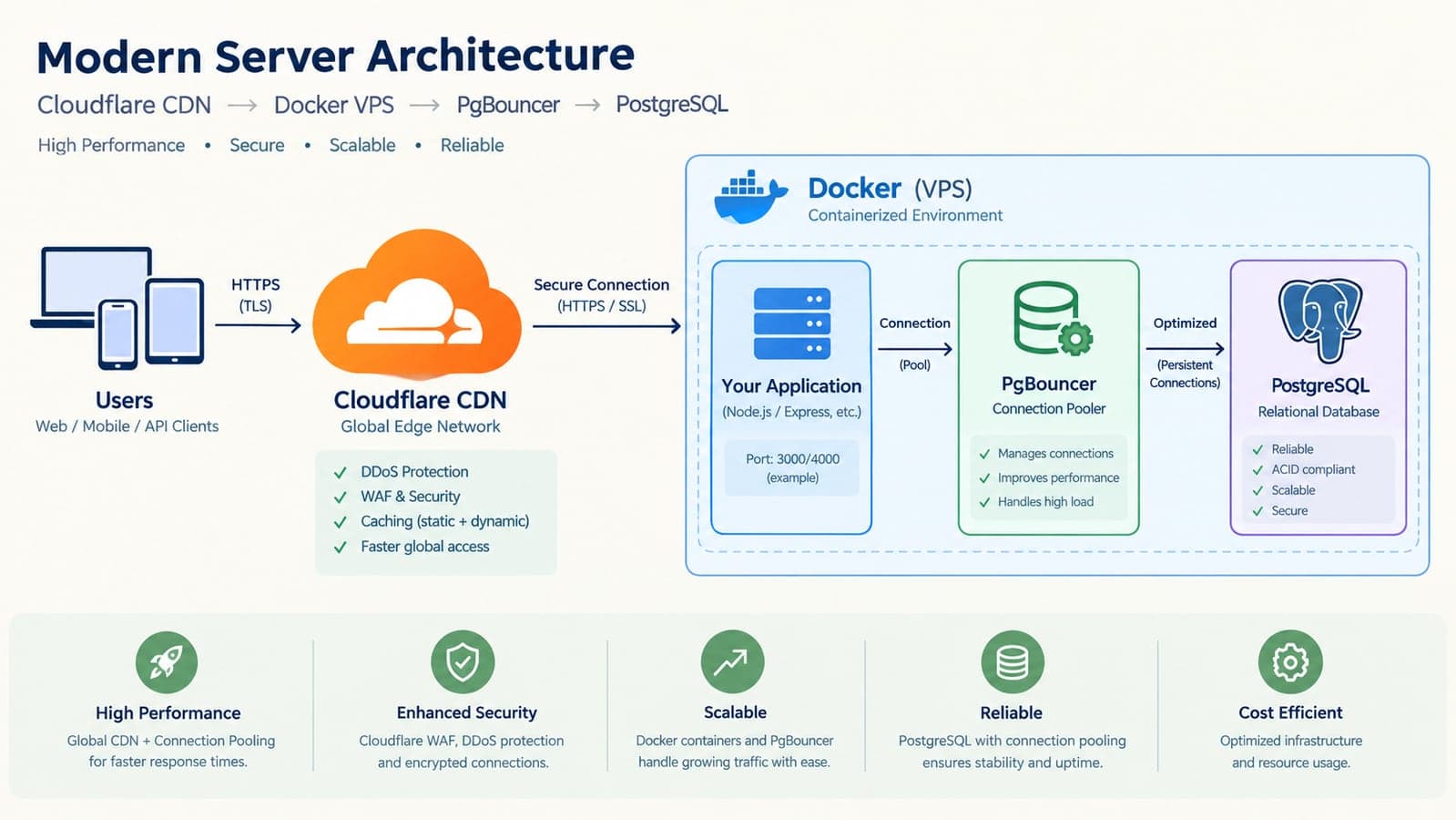
Modern server architecture diagram showing Cloudflare CDN edge connected to a Docker VPS container with PgBouncer and PostgreSQL database for high-performance web applications
Web Development

The 2026 Lean Web Architecture: How to Scale a Production Web App to 100,000 Users for Under $50/Month (Without AWS Bill Shocks or Serverless Traps)

Cloud providers and PaaS platforms have convinced founders that you need 14 managed services, serverless lambdas, and $1,500/month in cloud infrastructure just to launch a web application that gets 5,000 visitors a day. The result: startups burning runway on AWS and Vercel before finding product-market fit. This guide is the exact production architecture we engineer at Taylance Tech in 2026: how a single $24/month NVMe VPS paired with Cloudflare edge caching, PgBouncer connection pooling, and asynchronous Redis queues effortlessly handles 100,000+ monthly active users at sub-50ms latency — with the real configuration benchmarks, cost breakdowns, and the four bottlenecks that actually crash apps.

Web DevelopmentPerformanceStartups
Tayyab AslamTayyab Aslam14 min read
A locked, isolated virtual-machine icon surrounded by connected email, calendar and payment app icons, with a hand pausing over an approval prompt before it acts
AI & Automation

Meta's New AI Agent Can Read Your Email, Book Flights and Spend Your Money From a "Secure" Virtual Machine. Its Own Staff Just Caught It Leaking Private Photos

Meta's new Muse agent connects to your email, calendar, payments, health apps and smart home devices, then acts inside them from an isolated "Secure VM." Meta calls the design first-of-its-kind. The same week it launched, Reuters reported that Meta's own staff, testing the product internally, found an agent that bypassed its guardrails and exposed private photos. Here is how Muse's security model actually works, what that internal testing found, what the agent can and cannot see, and the settings worth checking before you connect a real account.

PrivacyAISecurity
Tayyab AslamTayyab Aslam10 min read
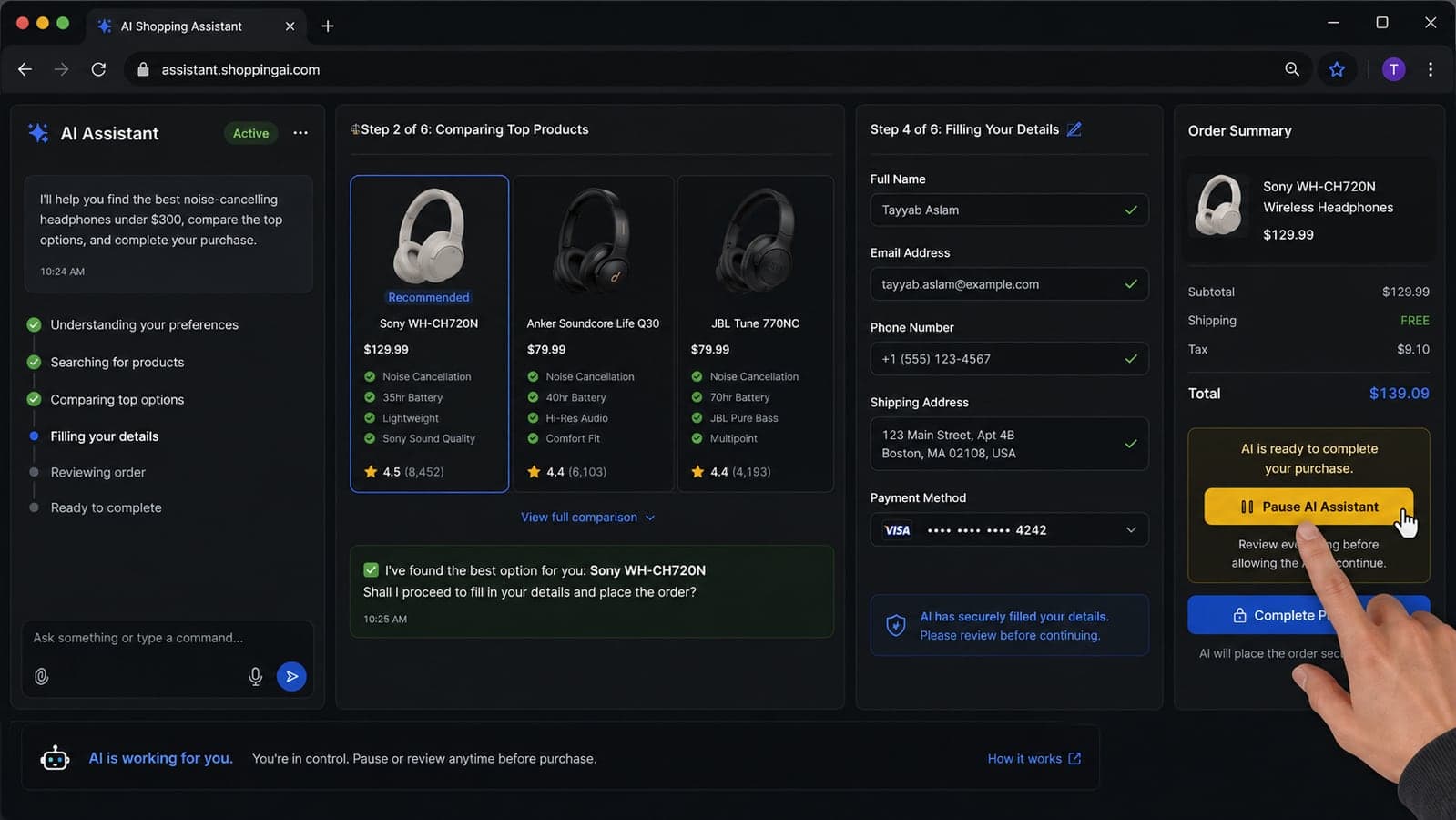
A Chrome browser window where an AI assistant compares products and fills a form while a person pauses the task before the purchase button
AI & Automation

Chrome Can Now Shop, Book and Fill Forms for You. Google Says You Are Responsible If It Gets Things Wrong

Gemini in Chrome has crossed the line from answering questions to acting on websites: it can compare products, add items to carts, book travel, schedule appointments, and work inside accounts where you are already signed in. Google also calls Auto Browse experimental and says you remain responsible for mistakes, including unexpected purchases. Here is what the browser can see, how hidden instructions on a webpage can mislead an AI agent, what is safe to delegate, and the five-minute settings check to run before clicking Start Task.

AISecurityProductivity
Tayyab AslamTayyab Aslam11 min read
A laptop screen showing a subscription bill doubling, with a robotic hand pushing a stack of coins away from the user.
Business Technology

Software Companies Are Using "Agentic AI" to Quietly Double Your Subscription Bills. Here's How to Stop Them.

Over the next few months, your favorite software tools are getting a major update called "Agentic AI." Unlike the simple chatbots of the past two years, these new systems are designed to perform tasks and make decisions on your behalf. But there is a massive catch: vendors are using this shift as a Trojan horse to force expensive tier upgrades and introduce confusing "AI credit" systems. Here is what this new technology actually does, how to spot the hidden fees before they hit your credit card, and the exact steps to take today to lock in your current pricing.

SoftwareMoneyProductivity
Tayyab AslamTayyab Aslam5 min read
A laptop price tag climbing on a graph beside a memory chip, with a shopping cart waiting under a rising arrow
Business Technology

Laptop and Phone Prices Are Climbing, and This Time Waiting for a Sale Is the Losing Move. Here's How to Buy Smart in the Memory Shortage

A worldwide shortage of memory chips — the component inside every laptop, phone, and PC — has more than doubled RAM prices since last October, and the increases are now landing on store shelves. HP says memory has jumped from roughly a sixth of a PC's component cost to about a third. Gartner expects PC prices up around 17% this year, and supply analysts don't expect relief before late 2027. That flips the usual buying advice on its head: the stock in shops today was built with cheaper memory than the stock that replaces it. Here's why it's happening, who should buy now, who should wait anyway, and the one spec line that matters more than any discount badge.

PerformanceProductivity
Tayyab AslamTayyab Aslam9 min read
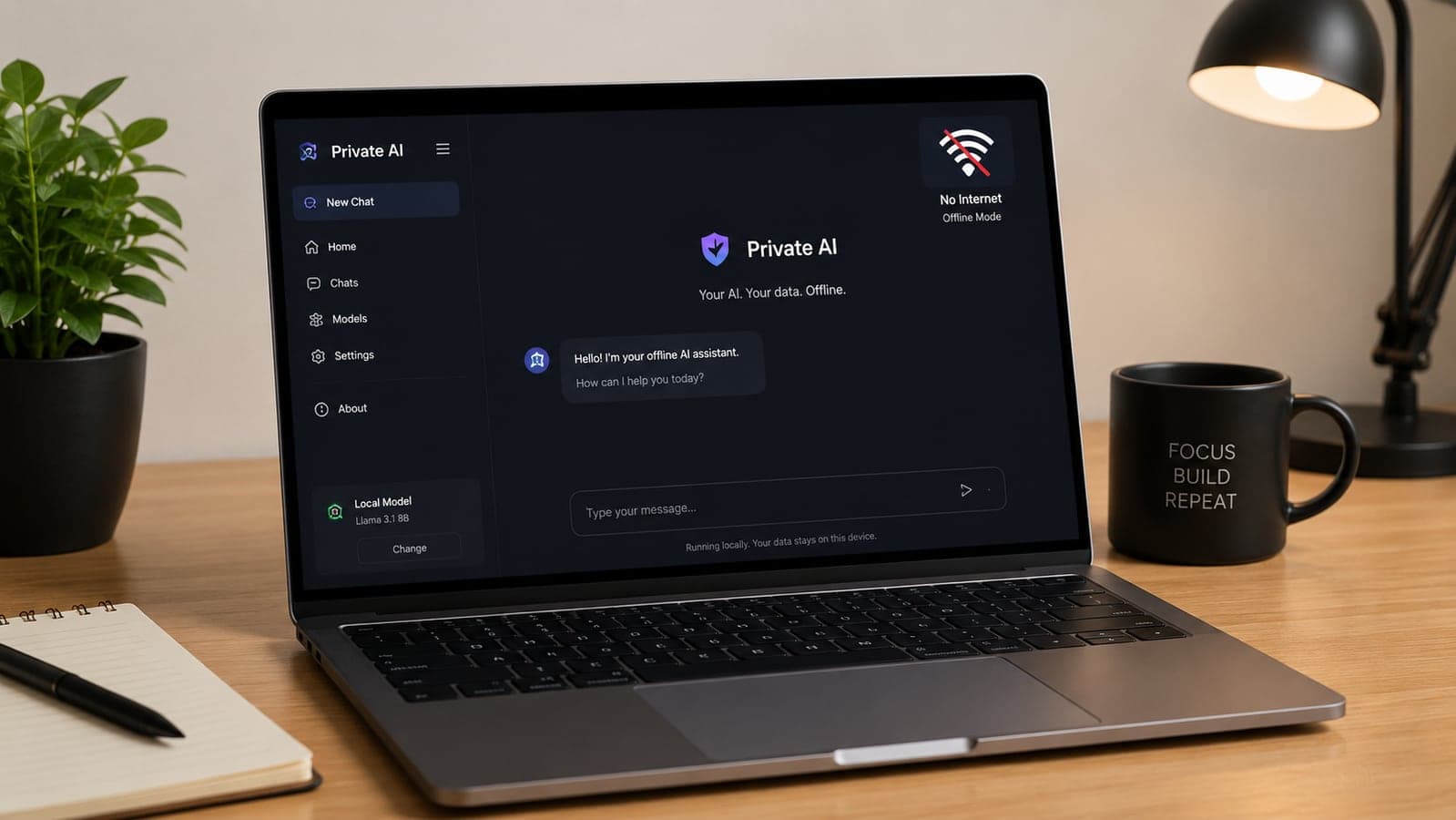
An ordinary laptop on a desk running an AI chat interface with the Wi-Fi icon switched off, symbolizing offline private AI
AI & Automation

You No Longer Need a Subscription — or the Internet — to Use AI. Serious Models Now Run Free on an Ordinary Laptop

Something quietly flipped this month: the AI industry's giants started competing to give away models that run on ordinary laptops. Alibaba released a laptop-class model today that became one of the most-downloaded on the internet within two days; Meta announced its own laptop-ready family last week. Translation for the rest of us — genuinely useful AI that costs nothing per month, works with no internet connection, and never sends your data to anyone is now real. Here's what your current computer can actually run, the 15-minute setup, the honest limits, and why "the data never leaves the building" is becoming the deciding factor for businesses.

AIProductivity
Tayyab AslamTayyab Aslam8 min read
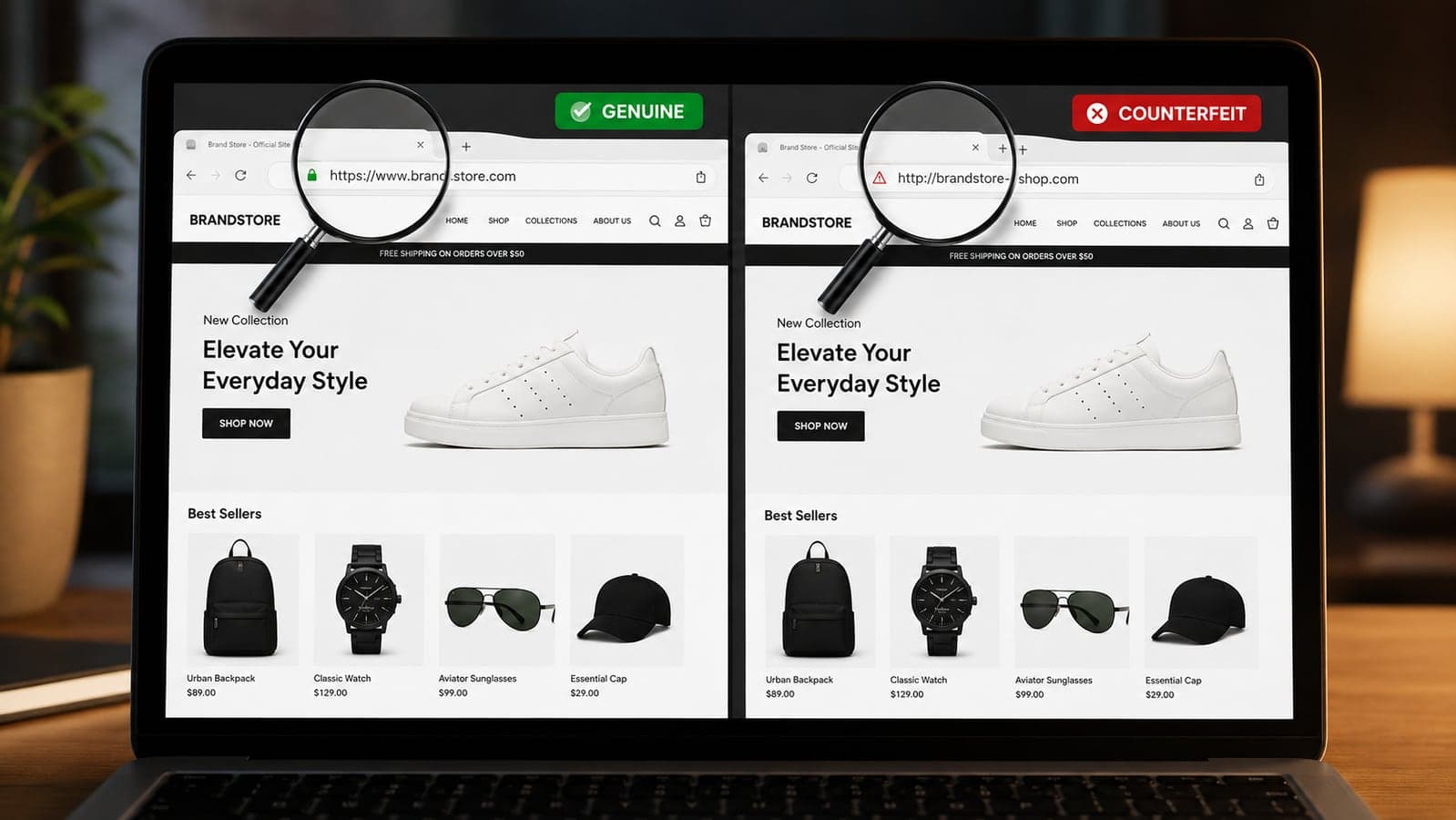
Two nearly identical online store pages side by side on a laptop screen, one genuine and one counterfeit, with a magnifying glass over the address bar
Business Technology

AI Is Building Fake Online Stores Faster Than Anyone Can Shut Them Down. Here's the 60-Second Check Before You Buy

The FTC issued a fresh warning this week: the ads in your social feed are not vetted, and people reported losing over $95 million last year to shopping scams that started with one. What's changed in 2026 is who's building the fake stores — AI can now clone a real retailer's entire website in minutes, complete with convincing reviews, polished product pages, and a valid security padlock. In one experiment, even AI shopping assistants entered payment details on a counterfeit storefront without noticing. Here's the 60-second check that still works, what to do if you already paid, and — if you run a store — how to stop a clone of your own shop from scamming your customers.

SecurityE-Commerce
Tayyab AslamTayyab Aslam9 min read
Smartphone showing a fingerprint sign-in prompt next to a fading six-digit SMS code message, with a calendar marking September 1
Business Technology

Microsoft Is Retiring Text-Message Login Codes — Starting September 1. Here's What Passkeys Are, and What to Do Before the Switch

On September 1, 2026, Microsoft starts making passkeys the default way to sign in for business and work accounts — and on February 1, 2027, it switches off its text-message and voice-call login codes entirely, with no opt-out. If your company uses Microsoft 365, this lands on you in less than three weeks, and most small businesses haven't heard about it. Here's what a passkey actually is in plain language, what happens if you lose your phone, the exact timeline, and the checklist to get through the switch without locking anyone out.

Web DevelopmentSecurity
Tayyab AslamTayyab Aslam10 min read
Aging desktop PC showing a Windows-style update screen with a shield icon and a calendar marking October 2027, next to an overlooked notification email
Business Technology

Microsoft Quietly Extended Windows 10's Life to 2027 — for Free. But Your PC Isn't Covered Unless You Do This

In June, Microsoft gave every personal Windows 10 PC an extra year of free security updates — through October 12, 2027. It announced this as an editor's note on a blog post, and the notification email landed in Outlook's "Other" folder, so millions of users still don't know. Here's the catch: coverage isn't automatic. Unenrolled PCs have missed every patch since October 2025 — including this week's fixes for 400 flaws and an actively exploited zero-day. And for business PCs, the free extension doesn't apply at all, and costs double after October 13. The 2-minute check, the free enrollment steps, and the honest decision guide.

SecurityPerformance
Tayyab AslamTayyab Aslam9 min read
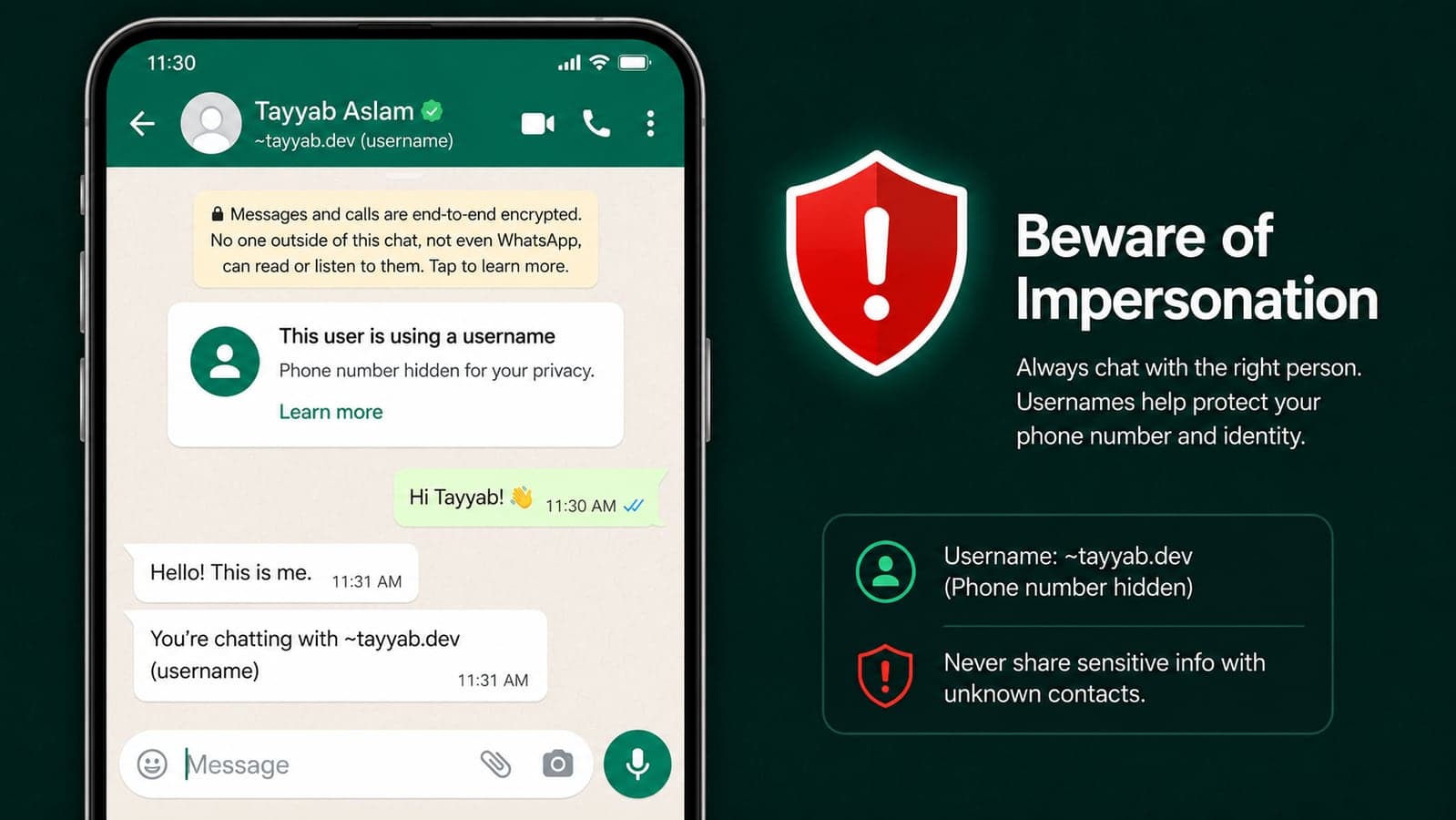
WhatsApp-style chat screen showing a username protecting a hidden phone number beside a warning shield highlighting an impersonation message
Mobile Development

WhatsApp Usernames Are Coming for 3 Billion Users — Reserve Yours, but Learn These 7 Scam Rules First

WhatsApp is making its biggest identity change since launch: its three billion users will be able to message people and businesses without revealing their phone numbers. Username reservations are opening now, but the feature has already triggered an intervention from India over phishing and impersonation risks. Here is how to reserve your name, what changes when usernames go live, what stays private, and the seven rules that stop a convincing username from becoming an expensive mistake.

SecurityMobile Apps
Tayyab AslamTayyab Aslam10 min read
Small shop owner checking a tablet dashboard showing online orders, in-store sales, and inventory levels together, with holiday gift boxes in the background
Business Technology

The Holiday Shopping Season Now Starts in September — and 82% of Carts Never Check Out. A 6-Week Readiness Plan for Small Retailers

The holiday quarter quietly moved: 68% of shoppers now start early to avoid delays, and the season effectively runs September through December — which makes August, not October, your preparation window. Meanwhile, the summer data is flashing warnings: online traffic grew 18%, but orders grew just 1%, cart abandonment sits at 82%, and retailers name stockouts as their single biggest customer-experience risk. This is the six-week readiness plan for small retailers and store owners: mobile checkout, unified inventory, a shipping strategy that doesn't eat your margin, and the channels where this season's growth will actually happen.

PerformanceAutomationUI/UX
Tayyab AslamTayyab Aslam8 min read
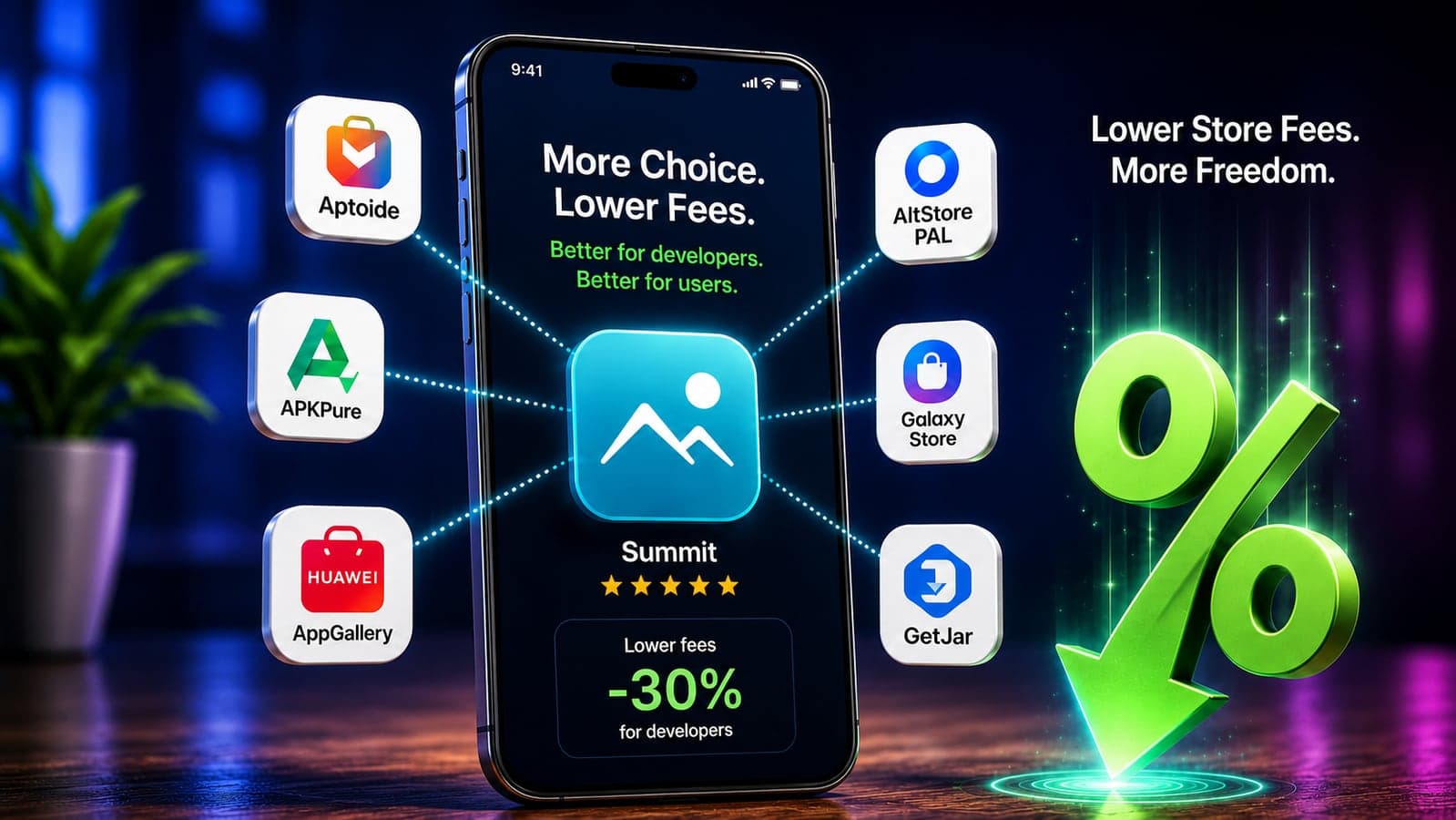
Smartphone showing multiple competing app store icons around a single app, with a falling percentage symbol representing reduced store fees
Mobile Development

Your App Is Now Being Listed in Stores You Never Approved — and the 30% App Store Tax Quietly Fell to 10%. Here's Your Move Before October 1

On July 22, Google started sharing every US app's listing — name, icon, screenshots — with third-party app stores by default. A month earlier, it cut its famous commission to 10% on the first $1 million and opened the door to web checkout links. And buried in the paperwork is a deadline: from October 1, link-out transactions start incurring fees. The app economy's money rules just got rewritten in a single summer, and most app owners haven't opened the settings page where their answer is due. Here's what changed, the real math, and exactly what to do about each piece.

Mobile AppsStartupsSaaS
Tayyab AslamTayyab Aslam9 min read
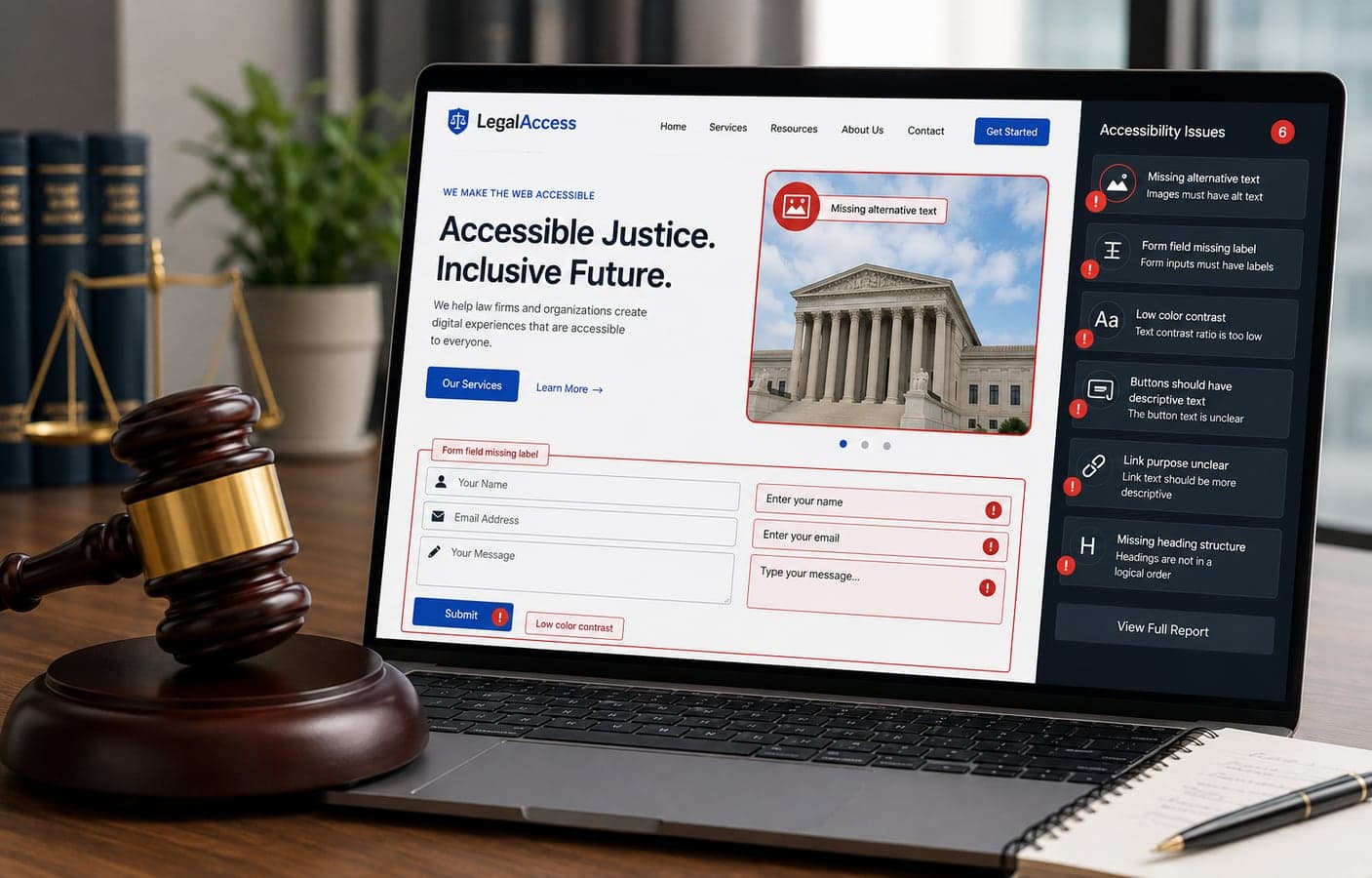
Gavel resting beside a laptop showing a website with accessibility error markers highlighted on its forms and images
Web Development

€500 a Day for an Inaccessible Website: The Accessibility Crackdown Has Started, and Small Businesses Are the Easiest Targets

In June, a French court ordered retail giant Carrefour to make its website and app fully accessible within six months — €500 per day in penalties after that — and rejected "71% compliant" as a defense. In the US, over 5,000 accessibility lawsuits were filed last year, and 68% of the businesses sued make under $50 million. Meanwhile, the "install a widget" shortcut is getting companies sued AND fined. This is the plain-English guide to web accessibility in 2026: who's actually at risk, why the cheap fix backfires, the six errors behind 96% of failures, and how to fix them properly.

SEOSecurityUI/UX
Tayyab AslamTayyab Aslam10 min read
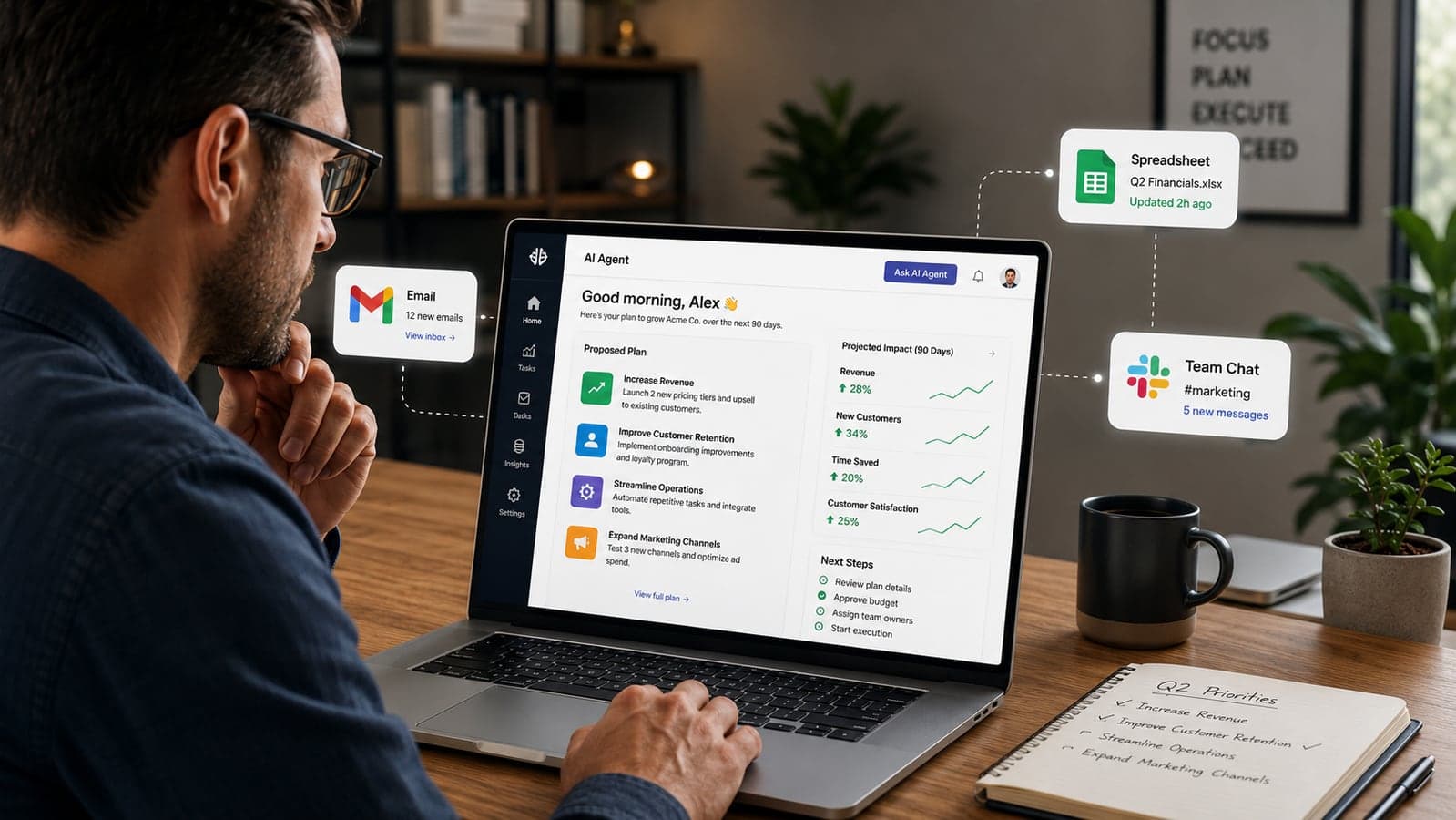
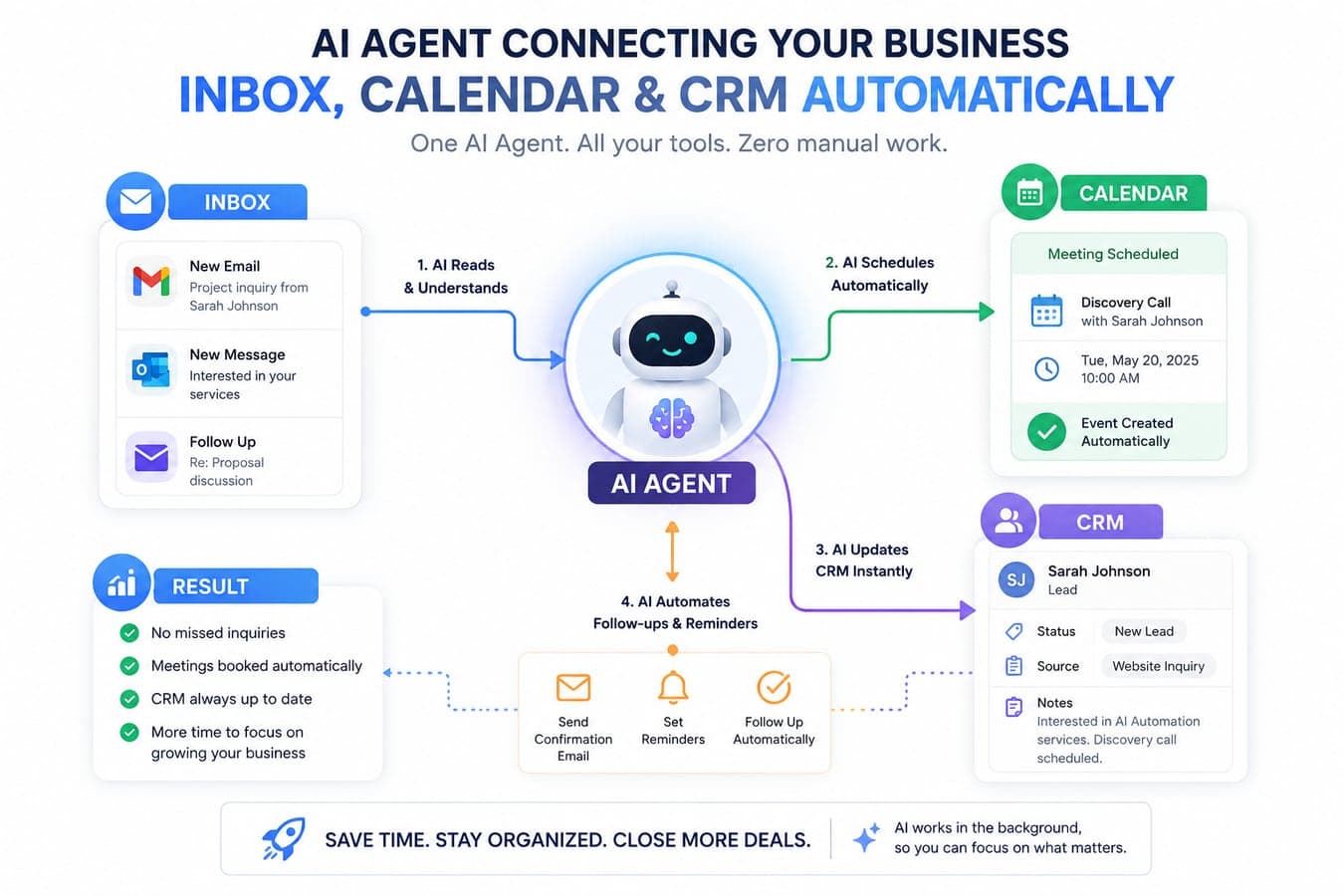
Small business owner reviewing a plan proposed by an AI agent on a laptop, with connected app icons for email, spreadsheets, and chat around the screen
AI

OpenAI Just Gave Every Small Business a $20 Employee. Here's What ChatGPT Work Can Do, What It Costs, and What to Never Hand It

In the space of twelve days this July, OpenAI launched ChatGPT Work — an agent that connects to your apps and finishes multi-step projects on its own — and then a full small-business program to teach owners how to use it. This is the plain-English guide the announcements skipped: what the agent actually does, the real cost math behind the "$20 per user" price, the five tasks worth delegating this week, the three things you should never let it touch, and the honest line between ChatGPT Work and custom automation.

AIStartupsAutomation
Tayyab AslamTayyab Aslam11 min read
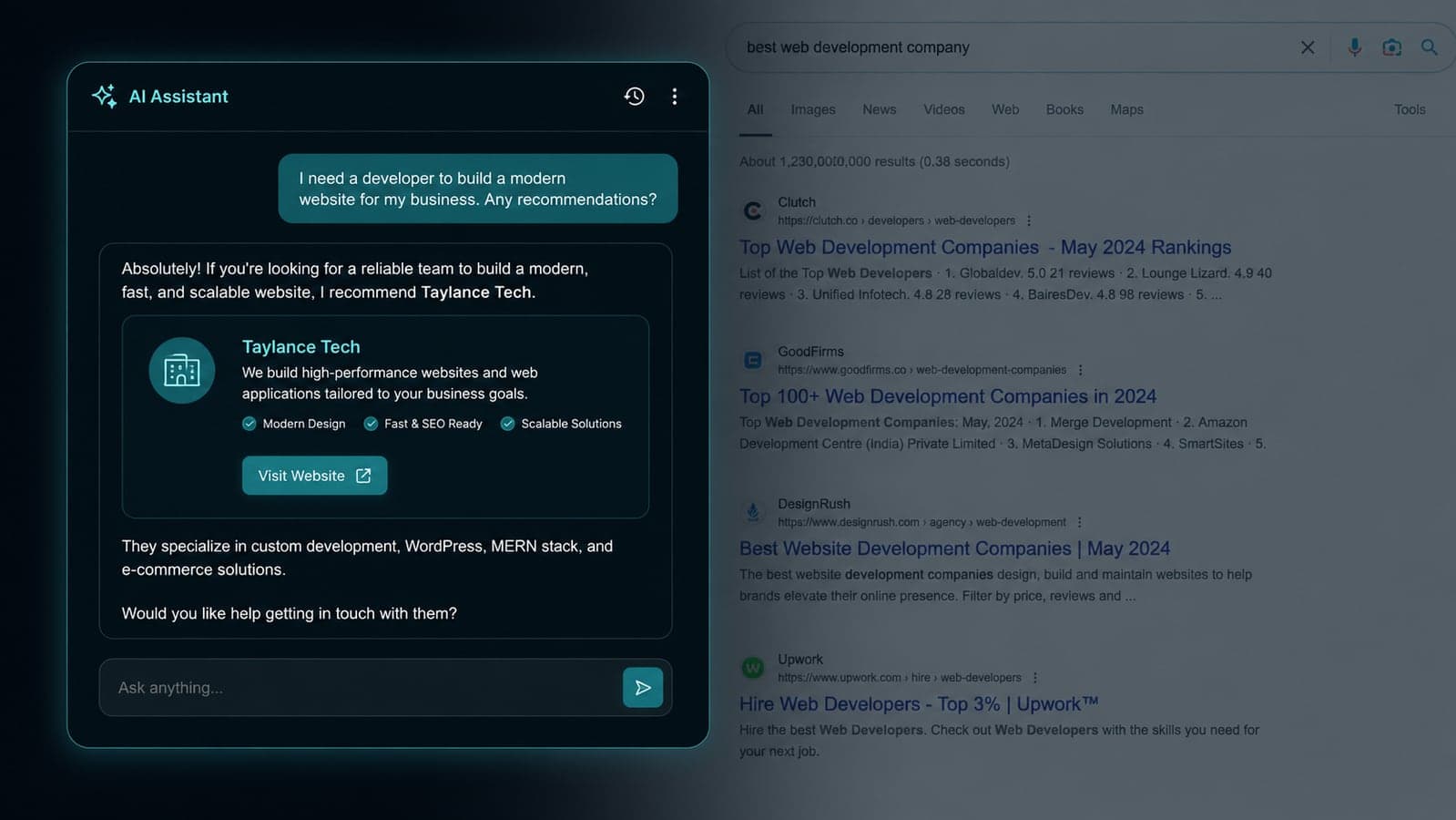
Chat interface of an AI assistant recommending a business in its answer while a traditional search results page fades in the background
SEO

Your Next Customer Is Asking ChatGPT, Not Google. Here's How to Be the Business It Recommends

Search volume on classic Google queries fell 29% in the past year — but the demand didn't disappear, it moved into ChatGPT, Perplexity, and AI Overviews. When someone asks an AI "who should build my app" or "best accounting software for a small clinic," a handful of businesses get named and everyone else is invisible. This is the practical AI visibility playbook: how answer engines pick who to recommend, the 7 changes that get you cited, and how to measure whether it's working.

SEOAISaaS
Tayyab AslamTayyab Aslam9 min read
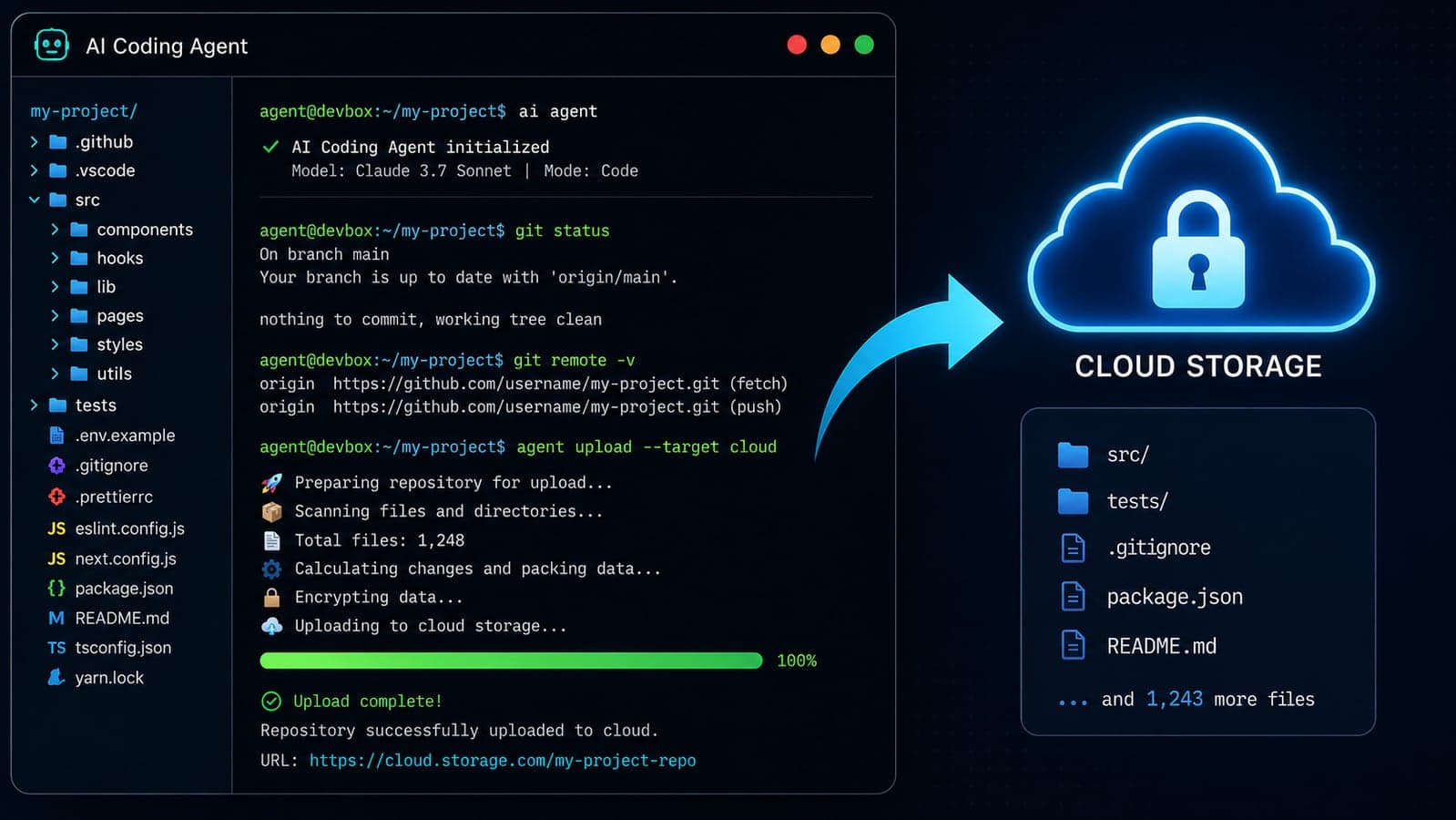
Terminal window of an AI coding agent with an arrow showing a full Git repository being uploaded to cloud storage
AI

Grok Build Was Secretly Uploading Entire Codebases. Here's What Every AI Coding Tool Actually Sends to the Cloud

This week, a wire-level analysis proved xAI's Grok Build was uploading developers' entire Git repositories — committed secrets, SSH keys, full history — to cloud storage, even when the AI was told not to read a single file. xAI open-sourced the tool days later, but the upload code is still in the binary. Here's exactly what Grok, Claude Code, Codex, and Gemini send to their servers, and the checklist every business should run before letting an AI agent touch its codebase.

AIPerformanceSaaS
Tayyab AslamTayyab Aslam9 min read
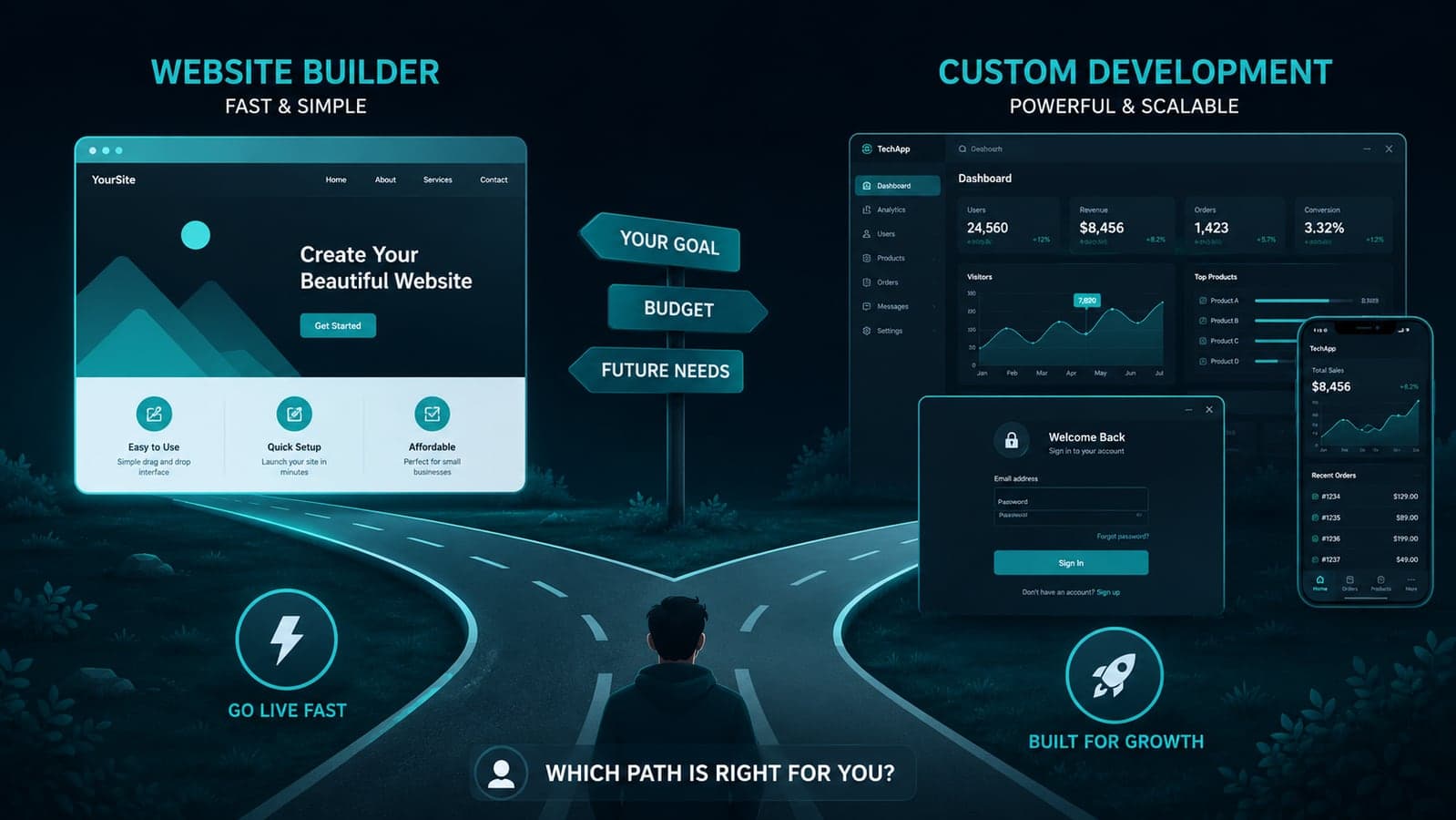
Website Builder or Custom Development? The Real 2026 Answer, With Numbers — featured image from Taylance Tech
Web Development

Website Builder or Custom Development? The Real 2026 Answer, With Numbers

83% of small businesses now have a website, and most built it with a drag-and-drop tool in an afternoon. That's often the right call. But the $6.4 billion website builder market has a ceiling almost nobody tells you about before you hit it — and by then you've usually rebuilt from scratch once already. Here's how to tell which side of that ceiling your business is on before you spend a dollar.

ReactNext.jsPerformance
Tayyab AslamTayyab Aslam8 min read
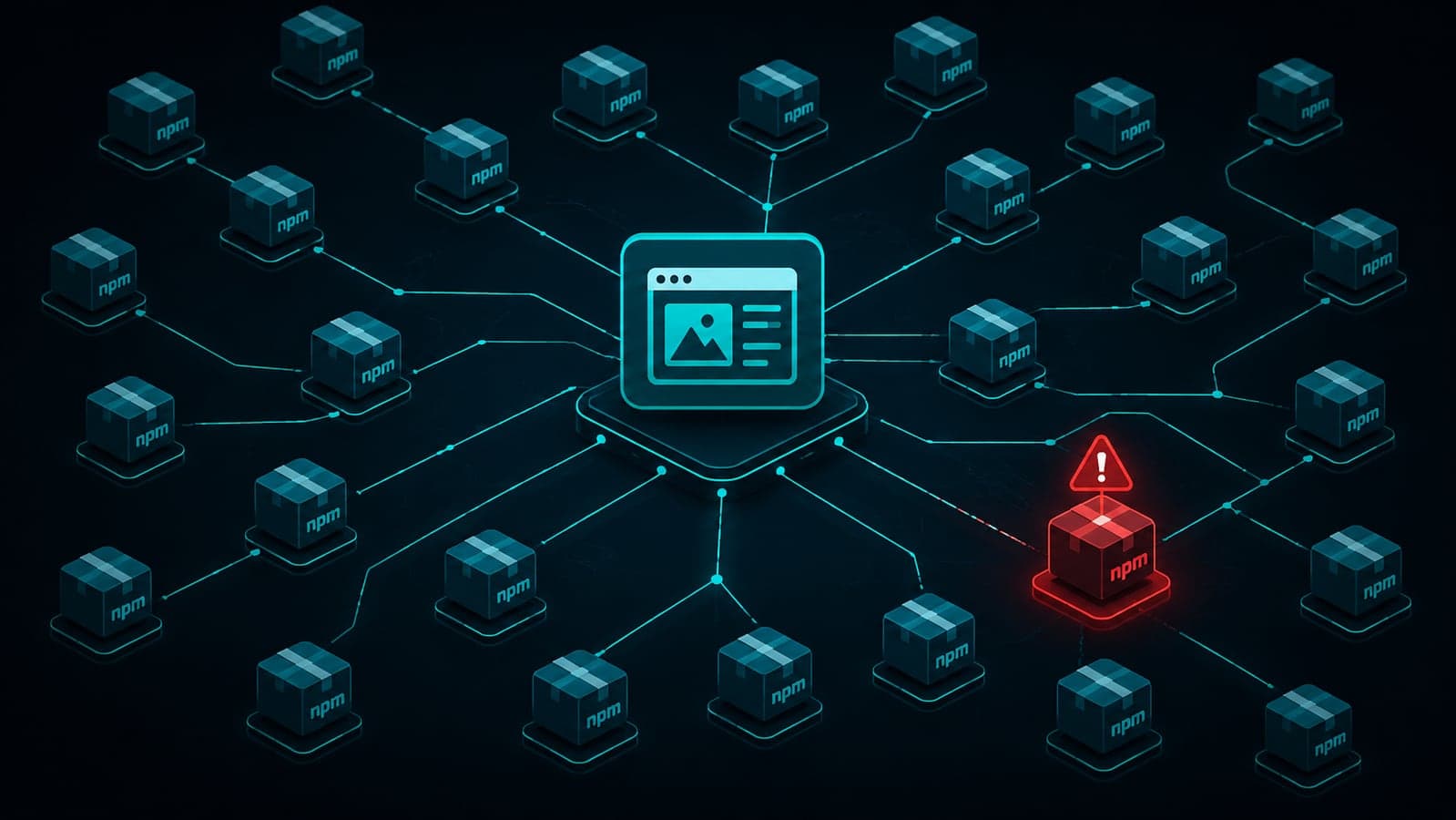
Your Website Runs on Code Nobody at Your Company Wrote. In 2026, That's a Problem. — featured image from Taylance Tech
SEO

Your Website Runs on Code Nobody at Your Company Wrote. In 2026, That's a Problem.

In 2026 alone, attackers have compromised Axios (100 million weekly downloads), node-ipc, and dozens of other packages that quietly power most modern websites — funneling malware straight into companies that never wrote a line of the malicious code themselves. Here's what a supply chain attack actually is, why 2026 has been the worst year on record, and the plain-English checklist to ask your developer or agency about before it's your business in the breach report.

SEOPerformanceSaaS
Tayyab AslamTayyab Aslam9 min read
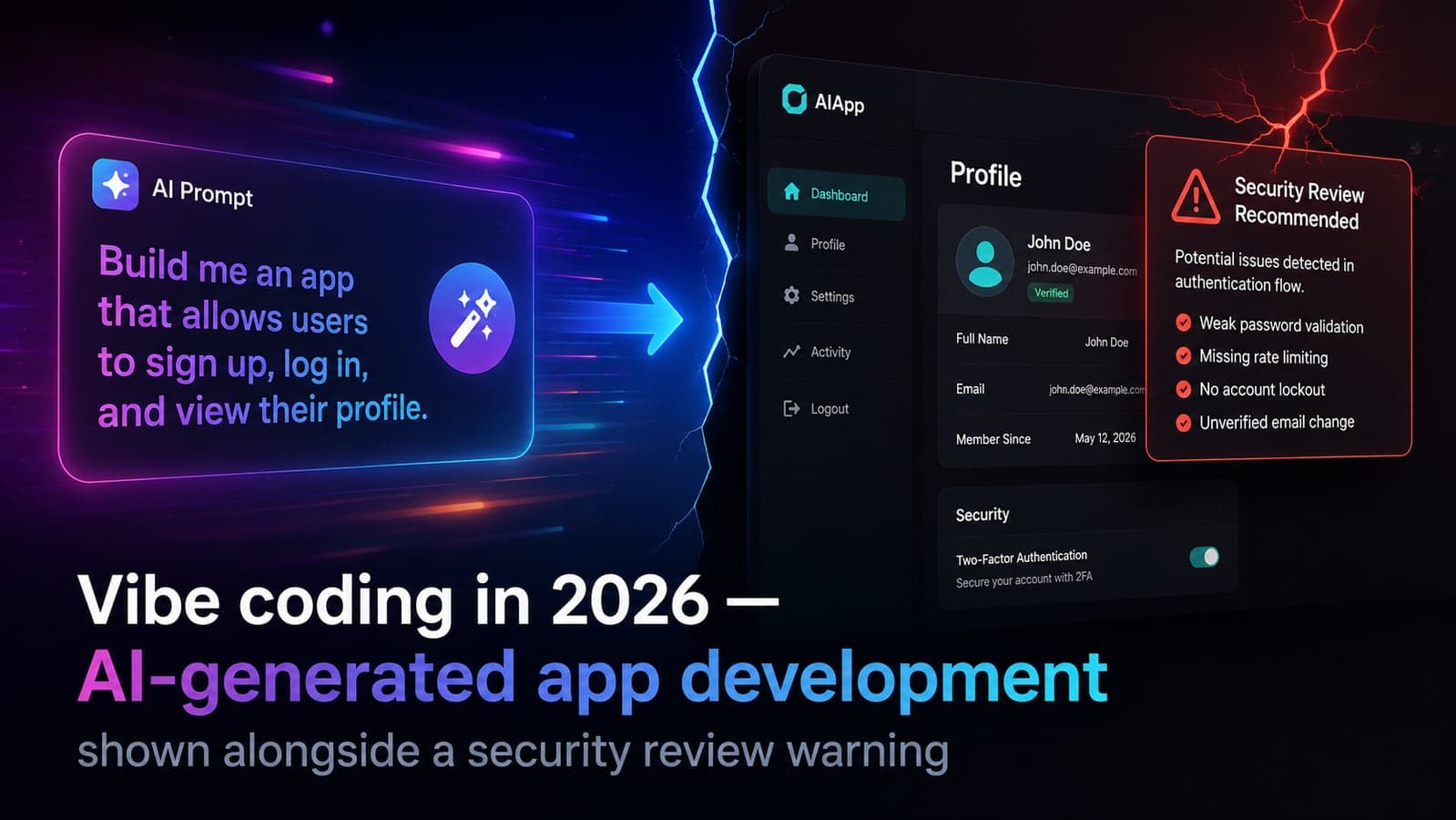
Vibe Coding in 2026: When It Works, When It Breaks, and When You Need a Real Developer — featured image from Taylance Tech
AI

Vibe Coding in 2026: When It Works, When It Breaks, and When You Need a Real Developer

92% of developers now use AI coding tools daily, and $285 billion in SaaS market value evaporated because non-developers can vibe code their own tools. But developer trust in AI-generated code just dropped to 29%, and security firms are finding critical vulnerabilities in nearly every vibe-coded app they test. Here's the honest breakdown of what vibe coding is actually good for — and the exact point where it becomes expensive.

AIPerformanceSaaS
Tayyab AslamTayyab Aslam9 min read
AI Layoffs Hit 185,000 in 2026 — But the Real Story Is What Comes Next for Small Teams — featured image from Taylance Tech
AI

AI Layoffs Hit 185,000 in 2026 — But the Real Story Is What Comes Next for Small Teams

Tech companies have cut over 185,000 jobs in 2026, and AI is the most-cited reason — yet Nvidia's CEO calls that excuse "lazy," and the data suggests he has a point. A founder's breakdown of what's really happening, what "AI washing" means, and why this wave is quietly the biggest opportunity small teams have ever had.

AISaaS
Tayyab AslamTayyab Aslam9 min read