SaaS Technical SEO in 2026: The 12-Point Checklist for Google, AI Overviews & ChatGPT

Last updated: June 1, 2026. You launched a polished SaaS. Traffic is flat. Search Console shows pages “crawled” but not indexed. ChatGPT never mentions your product. Meanwhile, a competitor with weaker features ranks for the exact keywords you target.
That gap is rarely “bad luck.” In 2026, technical SEO for SaaS is the difference between a product Google can understand and a JavaScript shell that looks great in the browser but stays invisible to crawlers — including the AI systems founders now care about: Google AI Overviews, Perplexity, and ChatGPT search.
At Taylance Tech, we ship Next.js web apps and SaaS platforms with SEO baked in from day one. This guide is the checklist we run before every launch — written for founders, product leads, and engineering teams who want organic pipeline without gambling on paid ads forever.
TL;DR — What actually moves the needle in 2026
- Hybrid rendering: SSR/SSG for marketing, pricing, docs, and blog; client-side only inside the authenticated app.
- Semantic completeness: Each page answers the full question in self-contained sections (40–80 word answer blocks under question-style H2s).
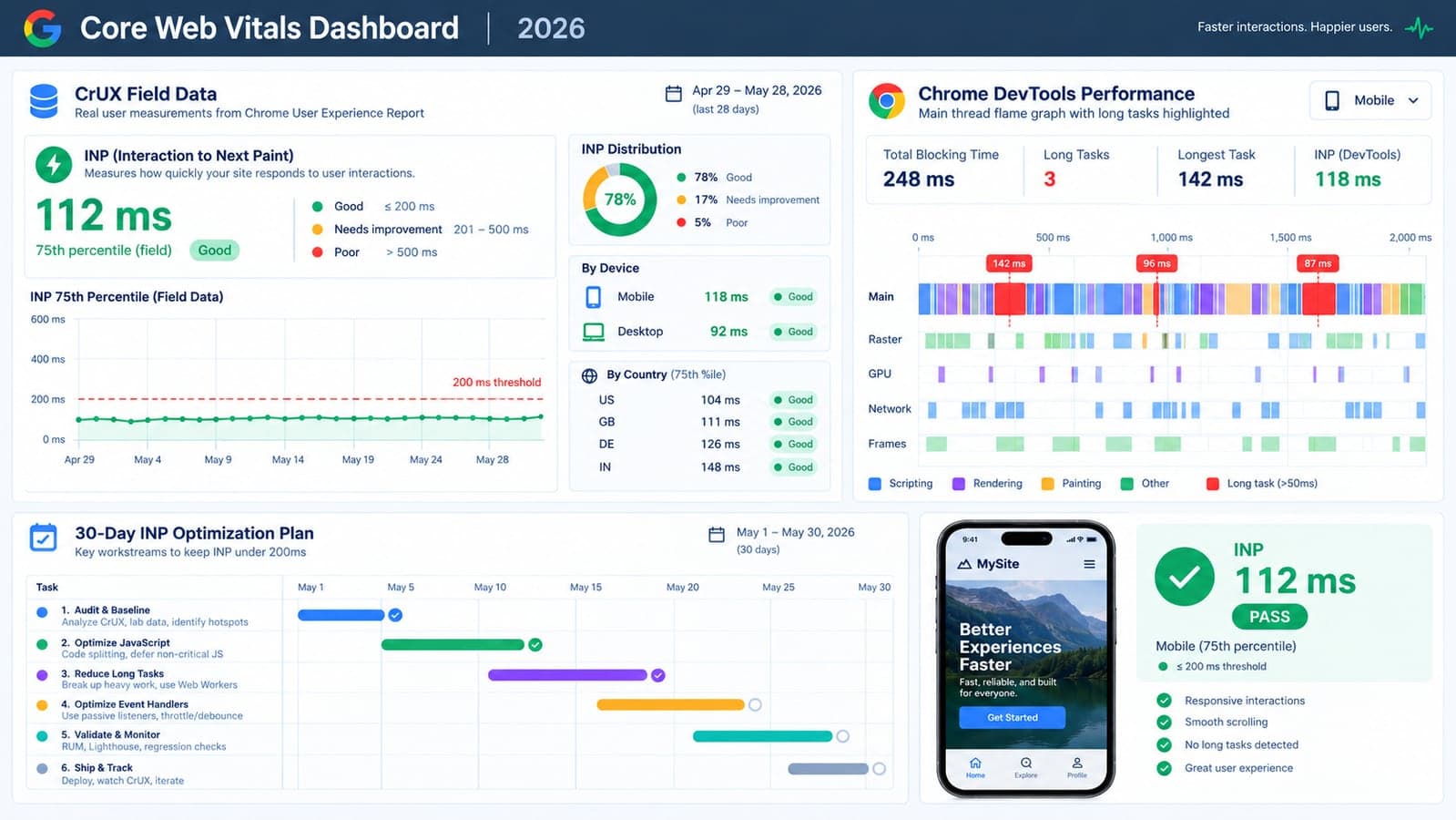
- Core Web Vitals: LCP < 2.5s, INP < 200ms, CLS < 0.1 — baseline for ranking and AI eligibility.
- Structured data: Article, FAQPage, SoftwareApplication, and BreadcrumbList JSON-LD on key URLs.
- AI crawler access: Don’t block GPTBot, ClaudeBot, or PerplexityBot unless you have a deliberate policy.
- Topical clusters: One pillar + supporting posts beat a single 6,000-word page every time.
Why SaaS sites fail SEO in 2026 (even when the product is good)
Three patterns show up on almost every audit we run:
- Everything is client-rendered. The marketing site and the app share one SPA bundle. Google may index some content, but AI crawlers that don’t execute JavaScript see an empty page.
- Thin or duplicate URLs. Fifty integration pages with swapped logos and one paragraph each. Google’s helpful-content systems treat that as scale spam, not authority.
- Launch without indexable depth. One homepage, a pricing page, and a login screen. No blog, no docs, no comparison content — nothing to rank for mid-funnel queries.
Fixing copy without fixing architecture is like repainting a house with a cracked foundation. Technical SEO comes first; content amplifies what crawlers can already read.
What is technical SEO for SaaS in 2026?
Technical SEO is everything that helps search engines and AI systems discover, crawl, render, and trust your pages: URL structure, rendering model, speed, HTTPS, canonicals, sitemaps, robots rules, and structured data. For SaaS, it also means separating public surfaces (rankable) from private app routes (noindex).
In 2026, technical SEO extends to Generative Engine Optimization (GEO) — making content easy for AI Overviews and answer engines to cite: clear headings, extractable answers, tables, FAQs, author credibility, and freshness signals.
How is AI search different from classic Google SEO?
Traditional rankings still lean on relevance, backlinks, and engagement. AI Overviews add a layer: they prefer pages that already rank in the top 10, pass quality filters (E-E-A-T), and score high on semantic completeness — covering the question and the follow-ups a human would ask next.
Practical implication: write for humans first, but structure for machines — question H2s, direct answers, evidence, and schema that mirrors your on-page FAQ.
| Signal | Classic Google SEO | AI Overviews / GEO (2026) |
|---|---|---|
| Primary goal | Rank in top 10 blue links | Get cited inside the AI answer block |
| Content shape | Comprehensive long-form | Self-contained sections + extractable 40–80 word answers |
| Rendering | Googlebot executes JS (with delays) | Many AI crawlers do not run JavaScript at all |
| Trust | Backlinks + site reputation | Author bios, sources, policies, fresh dates |
| Technical baseline | Mobile, HTTPS, CWV | Same — poor CWV can disqualify pages from AI features |
Which rendering model should a SaaS use for SEO?
Use hybrid rendering:
- SSR or SSG (Next.js App Router): Homepage, pricing, features, comparisons, blog, docs, changelog, legal pages.
- CSR (client-side): Logged-in dashboard, settings, real-time editors — routes behind auth where SEO does not matter.
Next.js with React Server Components delivers HTML on first request — what Googlebot and many AI bots need without waiting for a JavaScript waterfall. That is why we default to Next.js + TypeScript for marketing-led SaaS instead of a pure Vite SPA for the entire domain.
What are the Core Web Vitals targets in 2026?
Google’s confirmed thresholds still define “good” experience:
- LCP (Largest Contentful Paint): under 2.5 seconds
- INP (Interaction to Next Paint): under 200 milliseconds (replaced FID in 2024)
- CLS (Cumulative Layout Shift): under 0.1
Core Web Vitals are a tiebreaker, not a substitute for strong content — but on SaaS sites heavy with analytics, chat widgets, and hero animations, failing CWV is common. Fixing LCP alone often lifts organic traffic within a few months because more pages become eligible for competitive queries.
The 12-point SaaS technical SEO checklist (use before launch)
1. Pick one canonical host (www vs non-www)
Choose https://taylancetech.com or https://www. — not both. Set 301 redirects at the edge (Vercel, Cloudflare) and match rel=canonical, sitemap URLs, and NEXT_PUBLIC_SITE_URL. Mixed hosts create “alternate page” noise in Search Console.
2. Ship a dynamic sitemap and robots.txt
sitemap.xml must list every indexable URL (blog posts, docs, integrations you want ranked). robots.txt should allow /, disallow /admin and /api, and point to the sitemap. Submit the sitemap in Google Search Console after deploy.
3. Set metadata on every public route
Unique <title>, meta description (≈150–160 characters), canonical, and Open Graph tags per page. Avoid duplicate titles across feature pages.
4. Add JSON-LD structured data
Minimum set for SaaS:
- Organization — name, URL, logo, contact
- WebSite — sitelinks search box optional
- SoftwareApplication — on product pages where accurate
- Article / BlogPosting — every blog post with author and dates
- FAQPage — real FAQs only (must match visible content)
- BreadcrumbList — on nested pages
5. Use semantic HTML, one H1 per page
One clear H1, logical H2/H3 hierarchy, descriptive alt text on images, and internal links to related service and blog URLs.
6. Block only what must stay private
noindex admin, staging, thank-you duplicates, and thin search result pages. Do not noindex your pricing or blog by mistake.
7. Allow AI crawlers unless legal says otherwise
If you want visibility in ChatGPT, Perplexity, and similar tools, avoid blanket blocks on GPTBot, ClaudeBot, and PerplexityBot in robots.txt. Pair access with accurate schema and public, renderable HTML.
8. Optimize images and fonts
WebP/AVIF, explicit width/height (CLS), next/image or equivalent, subset fonts, and lazy-load below-the-fold media only.
9. Audit third-party scripts
GA4, chat, heatmaps, and A/B tools hurt INP. Load non-critical scripts after interaction or consent; use Consent Mode where required.
10. Build a topical cluster, not one lonely page
Example cluster for a CRM SaaS:
- Pillar: “SaaS technical SEO in 2026” (this article)
- Supporting: “Next.js vs SPA for SEO,” “How to index a new SaaS site,” “Core Web Vitals for React apps”
- Commercial: service pages linking back to pillars
Internal links pass relevance; clusters signal topical authority.
11. Publish answer-first content (GEO-friendly)
Phrase H2s as questions. Put a concise answer in the first paragraph under each H2 before depth. Add tables, steps, and cited stats where possible — AI systems favor citable, structured evidence.
12. Measure and iterate monthly
Track Search Console (indexing, CWV, queries), GA4 landing pages, and manual checks: view-source on key URLs — if the main copy is missing without JavaScript, fix rendering before writing more blog posts.
Next.js SaaS SEO stack we recommend in 2026
| Layer | Tool | Why it matters for SEO |
|---|---|---|
| Framework | Next.js (App Router) + TypeScript | SSR/SSG, metadata API, image optimization |
| Hosting | Vercel or similar edge platform | Fast TTFB, HTTPS, redirects |
| Content | Supabase or headless CMS | Indexable blog/docs with clean URLs |
| Analytics | GA4 + Search Console | Queries, indexing, CWV field data |
| Schema | JSON-LD in layout/page | Article, FAQ, SoftwareApplication |
Need implementation help? See our SEO services and SaaS development pages — we scope technical SEO as part of build, not a PDF delivered after launch.
Common SaaS SEO mistakes to avoid in 2026
- Vibe-coded SPAs for the whole domain — fast to demo, painful to rank; migrate marketing to SSR early.
- Programmatic pages without unique value — template swaps at scale trigger quality demotions.
- Fake FAQs for schema — FAQPage markup must match visible Q&A or you risk manual actions.
- Ignoring indexing reports — “Crawled – currently not indexed” on new domains is often normal for weeks; fix rendering and strengthen internal links before panicking.
- Stale content — pages not updated in 12+ months lose AI citation preference; refresh stats and dates on pillars annually.
How long until a new SaaS site gets organic traffic?
Honest range for a new domain with solid technical SEO and 4–8 quality pages: 8–16 weeks for first meaningful impressions, 4–9 months for compounding traffic on competitive terms. Factors include niche difficulty, backlink velocity, and publishing cadence. Paid search can run in parallel; SEO is compound interest, not a switch.
90-day SaaS SEO launch roadmap
| Phase | Weeks | Focus |
|---|---|---|
| Foundation | 1–2 | Canonical host, SSR marketing pages, sitemap, GSC, GA4, Organization schema |
| Content | 3–6 | 1 pillar + 2 supporting posts, FAQ on pricing, internal linking |
| Product SEO | 7–10 | Feature pages with unique copy, comparison page, case study |
| Optimize | 11–13 | CWV fixes, indexation review, update titles from query data |
What we implement on Taylance Tech client launches
Every public build includes crawlable HTML, canonical URLs, dynamic sitemap, admin noindex, JSON-LD on key templates, and CWV-minded image/font loading — the same patterns we use on taylancetech.com. We link architecture decisions to business outcomes: indexed pages, qualified leads, and content AI systems can cite.
Explore live portfolio projects, read our companion guide how to build a web app in 2026, or book a technical SEO review if you already launched and Search Console looks angry.
— Tayyab Aslam, Founder & Lead Developer, Taylance Tech · Faisalabad, Pakistan · Remote worldwide
FAQ
Frequently Asked Questions
Quick answers to common questions about this topic.
What is technical SEO for SaaS?
Technical SEO for SaaS is the practice of making your marketing site, docs, and blog crawlable, fast, and trustworthy — using correct rendering, URLs, metadata, schema, and performance — while keeping the authenticated product out of the index.
Does Next.js help SaaS SEO in 2026?
Yes. Server-rendered and statically generated pages send complete HTML to crawlers on first request. Used correctly, Next.js is one of the strongest defaults for SaaS companies that depend on organic discovery.
What is Generative Engine Optimization (GEO)?
GEO is optimizing content so AI answer engines (Google AI Overviews, Perplexity, ChatGPT search) can extract and cite your pages — through semantic completeness, question-based headings, schema, and E-E-A-T signals.
Should I block GPTBot and other AI crawlers?
Block only if you have a legal or licensing reason. If organic discovery in AI answers matters to your GTM, allow reputable AI bots and ensure public pages render without JavaScript.
Are Core Web Vitals still a ranking factor?
Yes. They act as a quality baseline and tiebreaker. Poor CWV rarely outranks excellent content, but good content on slow pages can lose AI Overview eligibility and mobile rankings.
What is semantic completeness?
Semantic completeness means your page answers the main query and the obvious follow-up questions in one place — definitions, steps, pros/cons, pricing context, and limitations — without forcing users (or AI) to hunt across five URLs.
How many blog posts does a SaaS need to rank?
Quality beats quantity. Start with one pillar (2,000–3,500 words) and two focused supporting articles interlinked with service pages. Many startups see more impact from three excellent posts than thirty thin ones.
Why are my pages “crawled but not indexed”?
Common causes: new domain, duplicate or alternate URLs (www vs non-www), thin content, or weak internal links. Fix canonicals and rendering, request indexing for key non-www URLs in Search Console, and wait — new sites often need several weeks.
Can I fix SEO after launching on a client-only SPA?
Yes, but cost rises over time. Options: prerender critical routes, add SSR via migration to Next.js, or split marketing onto a subdomain with SSG. Earlier migration is cheaper than bolting SEO onto a mature SPA.
Should I hire an SEO agency or my development team?
Best results combine both: engineers own rendering, speed, and schema; strategists own keyword clusters and content briefs. Founder-led studios like Taylance Tech bridge that gap when you want one team accountable for ship and discoverability.
 Tayyab Aslam