The Holiday Shopping Season Now Starts in September — and 82% of Carts Never Check Out. A 6-Week Readiness Plan for Small Retailers

Here's a date problem most small retailers haven't adjusted to: the holiday shopping season doesn't start on Black Friday anymore. Survey data from this summer shows 68% of consumers now start holiday shopping early specifically to avoid delays, and a quarter deliberately spread purchases across several months to pace their spending and catch markdowns. Marketing analysts across the board are describing the 2026 season the same way: it runs September through December.
Do the arithmetic and it lands uncomfortably: if your first holiday customers arrive in six weeks, your store — the website, the checkout, the inventory system, the shipping rules — needs to be ready in August. Fix things in November and you're renovating the shop while the queue is already at the till.
And this year, "ready" is a higher bar than usual. The Salesforce Shopping Index — which tracks activity across hundreds of millions of shoppers — reported that global digital traffic grew 18% in Q2 2026 while order volume grew just 1%. Visitors are cheap and getting cheaper; conversions are the whole game. With cart abandonment sitting at 82% and mobile now commanding three-quarters of all online traffic, the stores that win Q4 won't be the ones with the most visitors. They'll be the ones that stopped leaking the visitors they already get.
We build commerce systems for small retailers — including our own POS and inventory platform — so this is the checklist we'd run on any store before the season. Six fixes, ordered by impact, sized for a small team, with the data behind each one.
Week 1–2: Make mobile checkout embarrassingly fast
Three out of four visits to your store this season will come from a phone, and 82 out of every 100 carts will be abandoned. Those two numbers together tell you where the money leaks: the gap between "added to cart on a phone, standing in a queue somewhere" and "actually paid" is the single most expensive stretch of your funnel.
The fixes are unglamorous and proven:
- Guest checkout, always. Forcing account creation before payment is the classic abandonment trigger. Offer account creation after the order confirmation, when the customer has nothing left to lose.
- Wallet payments front and center. Apple Pay, Google Pay, and local one-tap options turn a two-minute form into a thumbprint. Every field you delete from checkout is conversion you get back.
- Speed budget: interactive in under 3 seconds on a mid-range phone over mobile data — not on your office Wi-Fi. Test with Chrome's Lighthouse on "Slow 4G" throttling; the score your customers experience is the one that matters.
- Label your form fields properly. Broken, unlabeled checkout forms don't just lose sales — they're also the most common accessibility failure, and as we covered in our guide to the accessibility crackdown, they're now a legal exposure too. One fix, two problems solved.
Week 2–3: Get one honest number for your inventory
In a survey of retail logistics leaders published this month, inventory imbalance was named the top operational risk of the season (52%), and stockouts the number-one customer experience risk (51%) — even though 85% of retailers say they're increasing stock levels. More inventory doesn't help if you can't see it accurately.
The failure mode for a small retailer is almost always the same: the online store and the physical counter keep separate counts. The website sells a product the shop sold an hour ago; now you're refunding a holiday shopper who will not come back — remember, this year's customer is comparing more stores than ever, and 42% of in-store visits are people coming to collect or inspect something they already researched online. If your site says "in stock" and your shelf disagrees, that research trip converts for your competitor.
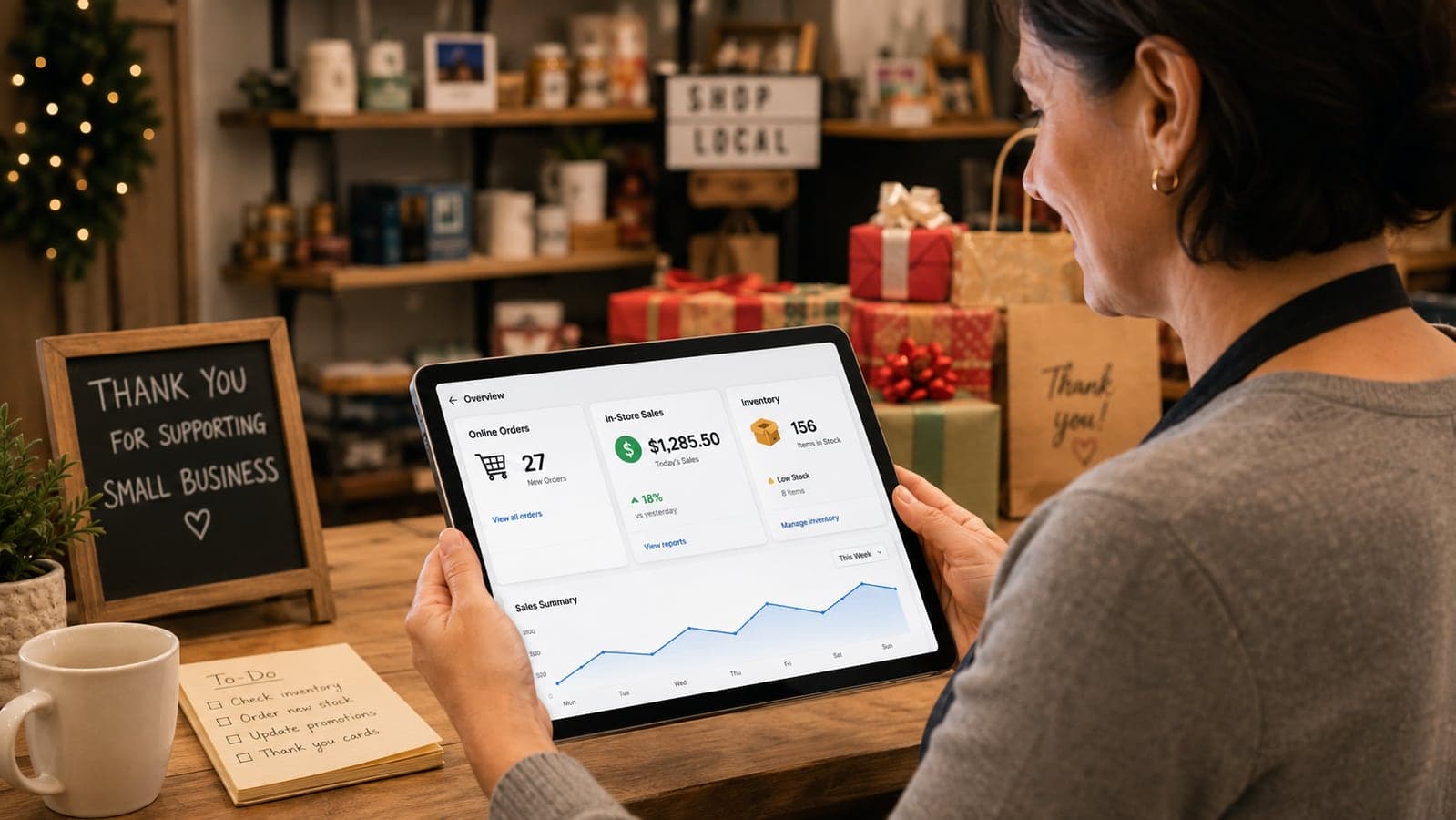
The fix is structural, not seasonal: one system of record for stock, with the website and the register both reading from it live. If you're stitching this together manually — a spreadsheet, a nightly correction ritual — that's precisely the gap our own Tillqorin platform exists to close: POS, online orders, and inventory in one place, so a sale anywhere updates stock everywhere. Whatever tool you choose, get to one number per product before September, because Salesforce's forecast expects 38% of all holiday retail dollars to be "hybrid sales" — purchases that cross between digital research and a physical storefront — and hybrid sales run on inventory truth.
Week 3–4: Decide your shipping math before the season decides it for you
One finding this summer cut across every income group in Salesforce's consumer research: free shipping is the single most important factor in deciding where to shop this holiday. For budget shoppers it's a financial shield; for affluent ones it's simply expected. At the same time, retailers globally are forecast to spend an extra $3 billion subsidizing free shipping this season as logistics costs rise about 7% year over year — and 82% of retail leaders expect transportation costs to eat into margins.
So "free shipping on everything" is margin suicide, and "no free shipping" is a conversion tax. The small-retailer play is in the middle:
- Threshold-based free shipping, set just above your average order value. It protects margin and mechanically raises basket sizes — the customer adds the second item to clear the bar.
- Click-and-collect as your zero-cost "free shipping." If you have a physical location, in-store pickup is free delivery you don't pay a courier for — and it walks a researched-online shopper straight into your store, where the extra sale happens. This only works if the inventory number from the previous step is honest.
- Publish your last order dates early. The 68% who shop early do it to avoid delivery anxiety. A visible "order by X, delivered by the 24th" banner converts the anxious better than a discount does.
Week 4–5: Put your products where people actually scroll
Salesforce predicts social commerce will be the fastest-growing transaction channel this season, growing at nine times the rate of traditional e-commerce. Social shops already account for 7–9% of total orders for brands that have them, 48% of Gen Z identify as social shoppers, and social platforms drove 29% more e-commerce visits in Q2. Meanwhile, engagement on brand-owned websites fell 7% year over year. The sale is moving to where the scrolling happens.
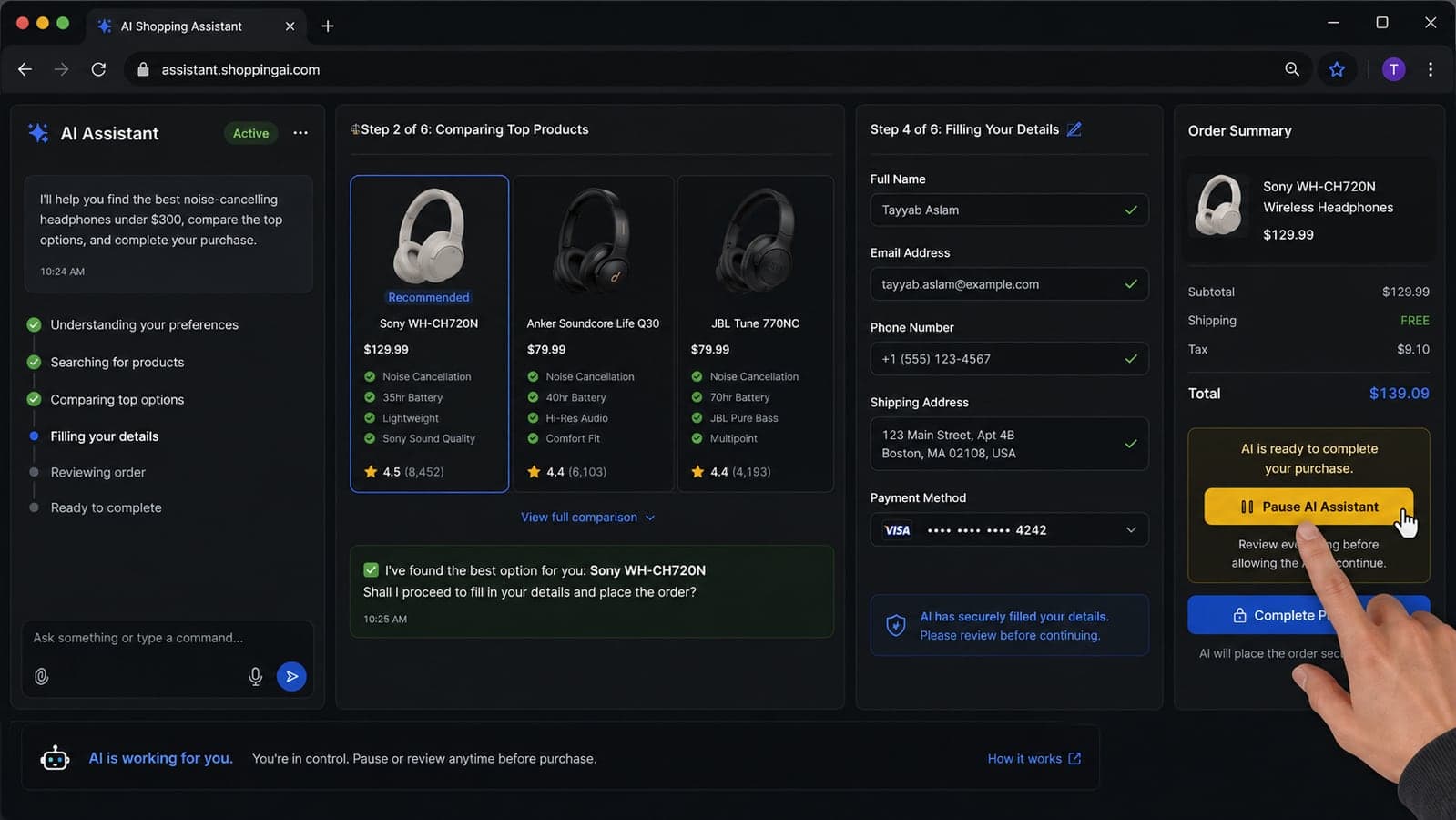
For a small retailer, this doesn't mean becoming a content studio. It means plumbing: get a clean, live product feed — titles, prices, stock, images — syndicated to the channels your customers use (Instagram/TikTok shops, Google Shopping listings, and marketplace catalogs). A feed that updates when your inventory changes is a one-time technical setup that then sells for you all season. It's also, increasingly, how AI shopping assistants discover products: half of shoppers now use one somewhere in their buying journey, and those assistants read structured feeds, not your homepage banner.
Week 5: Win the comparison shopper
This year's buyer is deliberate: 30% compare more retailers than they did two years ago, 27% take longer to research, and 35% are actively trading down to cheaper alternatives. That shopper lands on your product page with three competitor tabs open. What closes them:
- Complete product pages — dimensions, materials, real photos, shipping cost visible before checkout. Every unanswered question is a reason to check the other tab.
- Reviews where they can see them. Deliberate shoppers treat reviews as due diligence; no reviews reads as risk.
- Price honesty. Comparison shoppers punish surprise fees at checkout hardest — it's the top abandonment reason in nearly every study of that 82% number. Show the full cost early.
Week 6: Treat returns as your second season
Fulfillment leaders now plan for returns as a distinct operational peak in January — and for margin-squeezed retailers, a chaotic returns process burns the year's hardest-won customers at the exact moment they decide whether to come back. Before the rush: publish a plain-language returns policy (deliberate shoppers read it before buying — it's a conversion asset, not fine print), extend the window through late January for holiday purchases, and set up a self-serve flow so returns don't become a December inbox fire. If a return can land as store credit in two taps, some meaningful slice of your refunds becomes revenue retained.
The calendar, honestly
Six weeks from today is mid-September — when early shoppers, the 68%, are already buying. The order above is deliberate: checkout speed and inventory truth first, because everything else — the social feeds, the shipping thresholds, the comparison-ready pages — depends on a store that converts and numbers that are true. A small team doing only weeks 1–3 properly will out-earn a store that spent the same time planning a discount calendar.
And the quiet advantage this list hands you: most of your competitors won't do any of it until November. The season moved to September; their preparation didn't. Yours can.
If the plumbing is the blocker — a checkout that's slower than it should be, inventory split across systems that don't talk, product feeds that don't exist yet — that's what we do. Taylance Tech builds fast commerce sites, and our Tillqorin platform gives small retailers POS, online orders, and inventory in one system. Tell us where your store stands and we'll tell you what's realistically fixable before September — and what to skip.
FAQ
Frequently Asked Questions
Quick answers to common questions about this topic.
When should a small retailer start preparing for the 2026 holiday season?
August. Survey data shows 68% of consumers now start holiday shopping early to avoid delivery delays and about a quarter spread purchases across several months, which stretches the effective season from September through December. Working backwards, technical fixes — checkout speed, inventory syncing, product feeds, shipping rules — need to be finished before the first early shoppers arrive in September, which makes August the real preparation window rather than October or November.
Why is my online store getting traffic but not sales?
You're experiencing the season's defining trend: the Salesforce Shopping Index found global digital traffic grew 18% in Q2 2026 while order volume grew just 1%, with cart abandonment at 82%. The highest-impact fixes are at the bottom of the funnel: offer guest checkout, add wallet payments like Apple Pay and Google Pay, show full costs including shipping before the final step, and make the mobile experience fast — three-quarters of traffic is now on phones, and a checkout that takes over three seconds to load on mobile data quietly bleeds orders.
Should a small store offer free shipping during the holidays?
Yes, but with guardrails — free shipping ranked as the single most important factor in choosing where to shop across every income group, yet logistics costs are up about 7% this year and retailers are forecast to spend an extra $3 billion subsidizing it. The sustainable version for small retailers is threshold-based free shipping set just above your average order value (which also raises basket sizes), plus free in-store pickup if you have a physical location, which costs you no courier fees and brings shoppers through your door.
How do I stop selling products online that are already sold out in my shop?
Move to a single system of record for inventory, where your website and your point-of-sale both read and write the same live stock numbers. Separate counts reconciled manually are why stockouts are retailers' number-one customer experience risk (cited by 51% of logistics leaders) even while 85% increase inventory. Unified retail platforms — including our own Tillqorin — sync every sale, online or at the counter, to one stock level instantly, which also makes click-and-collect and accurate "in stock" labels possible.
Is social commerce worth it for a small retailer in 2026?
The data says yes: social commerce is predicted to be the fastest-growing transaction channel this holiday season — growing at roughly nine times the rate of traditional e-commerce — and brands with native social shops already see 7–9% of orders there. For a small retailer the entry point isn't content production; it's a clean, automatically updated product feed (titles, prices, stock, images) syndicated to Instagram or TikTok shops and Google Shopping. The same structured feeds also make your products visible to the AI shopping assistants half of consumers now use during their buying journey.
 Tayyab Aslam