The Zero-Click Internet Is Here: 7 Proven Ways to Get Website Traffic in 2026

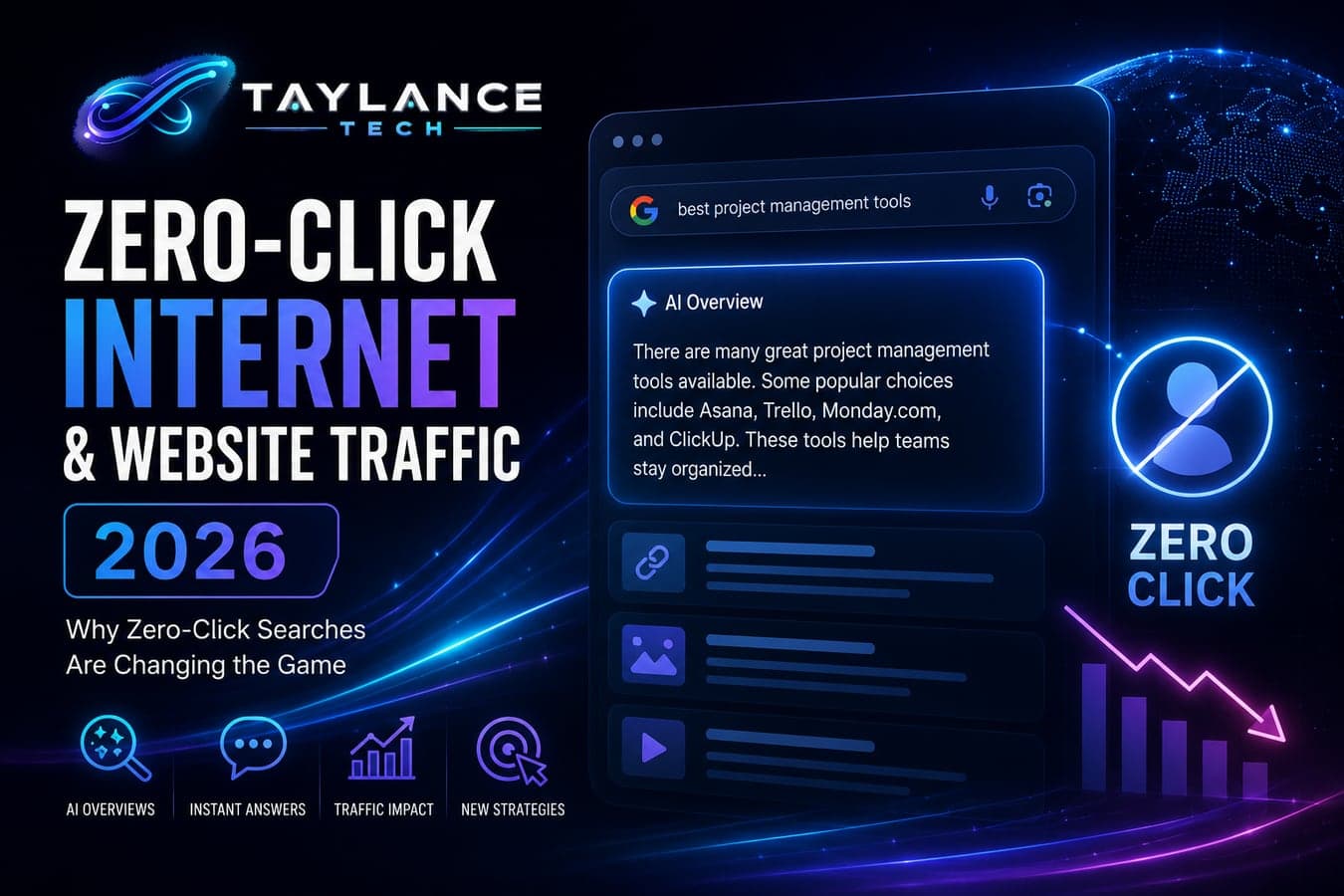
Last updated: July 11, 2026. Open Google. Search something. Notice what happens — or rather, what doesn't.
You got your answer, and you never left the page. The AI Overview summarized it. The snippet answered it. The map pack handled it. Somewhere below all of that, ten blue links sat untouched — including, quite possibly, yours.
Welcome to the zero-click internet. The majority of Google searches now end without a single click to an external website, and even pages that earn a spot inside an AI answer watch their click-through rates fall off a cliff. If your entire growth plan is "rank on Google, get clicks," you are building on land that is sinking.
Here's the part nobody puts in the doom threads: websites are still growing in 2026. They're just not growing the old way. This is the playbook that actually works now — seven channels, ranked by effort-to-payoff, from a team that builds and ships products rather than just theorizing about them.
Why Your Google Traffic Quietly Disappeared
Three things collided:
- AI Overviews went everywhere. Google's AI answers now sit on top of a huge share of informational queries. When the answer is on the results page, the click never happens — and study after study shows CTR dropping sharply for pages ranked beneath an AI Overview.
- Search moved into chatbots. ChatGPT, Perplexity, Gemini, and Claude answer millions of questions a day that used to be Google searches. They cite a handful of sources — and if you're not one of them, you're invisible.
- Google keeps users on Google. Shopping panels, hotel widgets, video carousels, "People also ask" — every pixel is engineered to answer without sending anyone away.
The uncomfortable conclusion: the informational click is dying, but demand isn't. People still search, still research, still buy. The traffic didn't vanish — it moved. Your job is to follow it.
The 7 Channels That Still Send Real Traffic in 2026
1. AI Answer Engines (GEO) — Be the Citation, Not the Casualty
Generative Engine Optimization is the single highest-leverage shift you can make this year. When ChatGPT or Perplexity answers "best POS software for small retail" or "how much does a web app cost," it names three or four sources. Those citations convert astonishingly well — the visitor arrives pre-sold, because an AI they trust just recommended you.
How to earn citations:
- Publish something original. First-hand numbers, real project costs, actual benchmarks. AI engines are starved for primary sources and quote them constantly. Generic listicles get skipped.
- Answer the question in the first two sentences under a clear heading, then elaborate. AI models extract direct answers, not essays.
- Add schema markup (Article, FAQ, HowTo, Product) so machines understand your page without guessing.
- Get mentioned elsewhere. AI engines heavily weight third-party mentions — Reddit threads, directory listings, reviews. Your off-site footprint is now part of your on-site SEO.
We covered the technical side in depth in our 2026 technical SEO checklist for Google and AI Overviews — pair that article with this one.
2. Communities — Reddit, Hacker News and Niche Forums
Here's an ironic twist: Google now ranks Reddit threads above original blogs for thousands of queries, and AI models train on those same threads. Community presence has become a search strategy.
The rule that separates traffic from bans: give the full answer in the thread, link only when it genuinely adds more. One thoughtful, detailed Reddit answer in the right subreddit can outperform a month of blog posts — and keep referring visitors for years, because the thread itself ranks. On Hacker News, a strong opinion backed by real experience can put five figures of visitors on your site in a day.
3. LinkedIn and X — Personal Beats Corporate, Every Time
Company pages whisper; founder profiles shout. A build-in-public post from a founder — real numbers, real mistakes, a screenshot of the actual dashboard — routinely reaches many times what the same content earns on a company page. The algorithm favors people, and so do buyers.
The efficient system: every blog post becomes one LinkedIn post (the story angle), one X thread (the tactical breakdown), and one short carousel. One asset, four surfaces. Your website becomes the destination people click when the post earns their curiosity.
4. YouTube — The Search Engine Nobody Treats Like One
YouTube is the world's second-largest search engine, its videos rank inside Google results, and — critically — AI Overviews now cite videos. A ten-minute screen recording of "how we set up thermal receipt printing in a web POS" ranks for years, feeds Google's video carousel, and pushes viewers to your site through description links.
You don't need production value. You need your screen, your voice, and a real problem being solved. Cut the same recording into Shorts, Reels, and TikToks and you've covered short-form video with zero extra filming.
5. Free Tools — The Traffic Asset That Never Sleeps
A calculator, checker, or generator does three things a blog post can't: it earns backlinks passively (people link to tools far more than articles), it ranks for high-intent "calculator" and "checker" keywords, and it gets recommended by AI engines when users ask "is there a free tool for…".
A web-app cost calculator, a meta description length checker, an invoice generator — each is a weekend of work for a competent developer and compounds indefinitely. We've watched simple free tools quietly become the top traffic source for entire businesses. If you can't build one in-house, that's exactly the kind of thing we build.
6. Email — The Only Channel No Algorithm Can Take From You
Every channel above rents you an audience. Email is the one you own. When Google's next core update lands or a platform changes its feed, your list still opens their inbox.
Start embarrassingly simple: one signup box, one useful email whenever you publish. A list of 500 genuinely interested subscribers will drive more revenue than 50,000 anonymous pageviews — and every send creates a traffic spike that search engines read as engagement, which feeds back into rankings.
7. Digital PR and Directories — Borrowed Authority That Compounds
Being listed and mentioned across the web now pays twice: once in referral traffic and backlinks, and again when AI engines treat those mentions as trust signals. The quick wins:
- Agency and product directories relevant to your niche (for software: Clutch, G2, Capterra and their peers).
- Journalist request platforms — answer expert queries, earn quotes and links from major publications.
- Podcast guesting — one hour of talking becomes a backlink, an audience, and content to clip for months.
The Strategy That Ties It Together: Hub and Spokes
Don't treat these as seven separate jobs. Treat your website as the hub and everything else as spokes:
- Create once — one substantial, original article or tool on your site per week.
- Distribute everywhere — LinkedIn post, X thread, Reddit answer, short video, newsletter send, all pointing home.
- Structure for machines — schema, direct answers, clean server-rendered pages, so both Google and AI engines can cite you.
The sites winning in 2026 aren't the ones that found a secret channel. They're the ones that stopped depending on a single one.
Your First 30 Days: A Realistic Plan
- Week 1: Add FAQ schema to your five most important pages. Set up an email capture. Claim your directory listings.
- Week 2: Publish one article with original data or first-hand numbers. Turn it into a LinkedIn post and an X thread the same day.
- Week 3: Answer three questions in your niche's biggest community — fully, generously, no drive-by links. Record one screen-share video solving a real problem.
- Week 4: Scope one free tool your audience would actually use. Ship the simplest version of it.
Thirty days from now you'll have five channels warming up instead of one channel dying. That's the whole game.
Frequently Asked Questions
What is a zero-click search?
A zero-click search happens when a person gets their answer directly on the search results page — from an AI Overview, featured snippet, knowledge panel, or map pack — and never clicks through to any website.
Is SEO dead in 2026?
No — it changed shape. Informational clicks are shrinking, but high-intent commercial searches, AI citations, and brand searches still convert strongly. SEO now means earning visibility and trust across search engines and AI answer engines, not just chasing rankings.
How do I get my website cited by ChatGPT and Perplexity?
Publish original data and first-hand experience, lead each section with a direct answer, add schema markup, keep your pages server-rendered and crawlable, and build third-party mentions — AI engines lean heavily on what the rest of the web says about you.
What is the best alternative to Google traffic?
There isn't a single one — that's the point. The resilient stack is an owned email list plus communities, video, free tools, and AI-engine visibility working together. Diversification is the strategy.
Taylance Tech is a founder-led software studio building web apps, SaaS products, and SEO-ready websites for clients worldwide. If your traffic chart looks like a ski slope and you want engineering-grade SEO — technical fixes, GEO, and content machines can actually cite — see our SEO services or tell us what you're working on.

 Tayyab Aslam