
AI Is Building Fake Online Stores Faster Than Anyone Can Shut Them Down. Here's the 60-Second Check Before You Buy

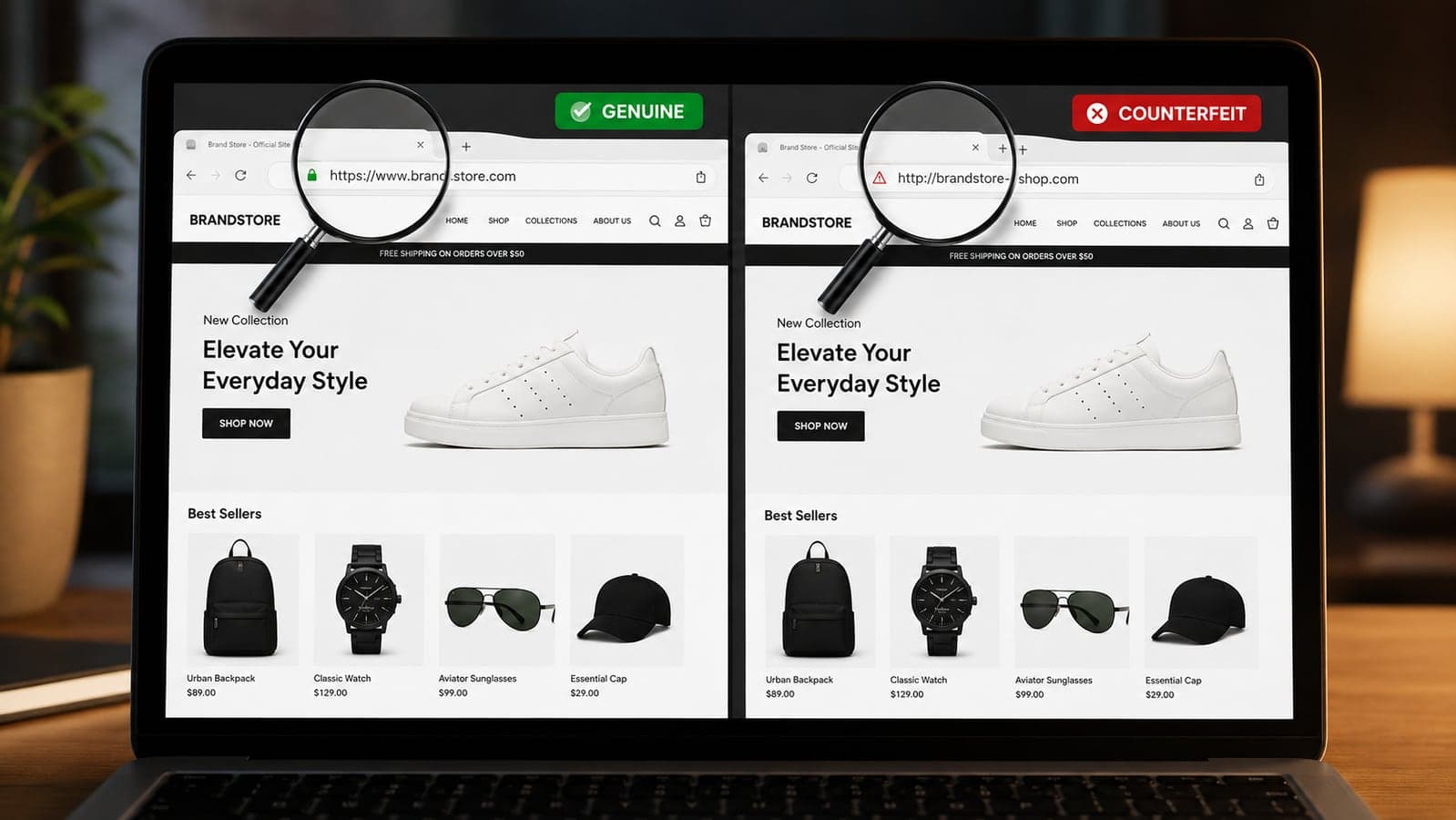
You're scrolling your feed and an ad stops your thumb: the exact thing you've been wanting, half price, limited time. The page it opens looks completely professional — brand logo, product photos, five-star reviews, secure padlock in the address bar. Every visible signal says "real store."
This week the U.S. Federal Trade Commission published a blunt reminder of why that's not enough: social media platforms don't thoroughly vet the ads in your feed or the advertisers behind them. Anyone can pay to place an ad — including someone impersonating a brand you trust. According to the FTC's data, people reported losing more than $95 million in 2025 to shopping scams that started with a social media ad, and since most scams are never reported, real losses are far higher. Across all scam types that started on social media, reported losses reached $2.1 billion last year — an eightfold increase since 2020.
None of that is entirely new. What's new — and why this deserves ten minutes of your attention in 2026 — is the production line behind the fake stores.
Why fake stores exploded this year
Building a convincing counterfeit shop used to take a team and some skill. Now generative AI does it in minutes: cloned page layouts, fluent product descriptions, realistic customer reviews, professional-looking "About us" pages, even chatbots that answer questions politely while you're being robbed. The numbers coming out of the fraud-prevention industry this quarter tell the story:
- Attacks on shoppers' online accounts were up 78% year over year in the first four months of 2026, according to fraud-prevention firm Signifyd's State of Fraud report — driven largely by AI tooling that makes fake login pages and credential-testing dramatically cheaper.
- Interpol-sourced figures cited in the same report say AI-assisted fraud runs about 4.5 times more profitable than conventional methods.
- The FBI's Internet Crime Complaint Center logged more than 22,000 complaints mentioning AI last year, with $893 million in reported losses, noting that AI-generated content is getting easier to make and harder to detect.
- Perhaps the most telling experiment: researchers at Guardio Labs directed AI shopping assistants to buy products, then pointed them at a counterfeit Walmart storefront. The AI agents entered payment details on the fake checkout without flagging anything. The visual "gut feeling" cues humans rely on aren't part of how software judges a website — and even the humans' cues are now forged.
In short: the old advice — "look for the padlock, check for typos, trust your eyes" — describes a world that no longer exists. A 2026 scam store has a valid padlock, flawless grammar, and beautiful design. So the checks that still work are the ones a scammer can't fake with AI. Here they are.
The 60-second check before you buy from an unfamiliar store
1. Look up the domain's age (20 seconds). Search "WHOIS lookup," paste in the store's web address, and read the registration date. This is the single strongest tell: a shop claiming to be an established brand — or offering deep discounts on branded goods — on a domain registered a few weeks ago is treated as fake until proven otherwise. Real retailers have years of history.
2. Reverse-image-search a product photo (15 seconds). Right-click a product image and search it with Google Images or TinEye. Fake stores steal photos from the real brand, Amazon, or AliExpress. If the identical image appears on dozens of unrelated shops, you're not looking at the original seller.
3. Search the store's name plus "scam" — off the site (15 seconds). This is the FTC's own recommended check. Ignore every testimonial on the store itself; AI writes those by the thousand. Search the shop's name with "scam," "complaint," or "reviews" and look at Trustpilot, Reddit, and the BBB's scam tracker. A store with no independent footprint anywhere is a warning all by itself.
4. Check how they want to be paid (5 seconds). A store that only accepts bank transfers, cryptocurrency, gift cards, or "payment apps to a personal account" is disqualified instantly — those payments are irreversible, which is precisely why scammers prefer them. Pay by credit card where possible: if goods never arrive, chargeback protections give you a real path to your money back.
5. Read the address bar character by character (5 seconds). Clone stores live on look-alike domains — a swapped letter, an extra hyphen, an odd ending. If an ad claims to be a brand you know, don't trust the ad's link at all: type the brand's address yourself or use your existing bookmark. That one habit defeats the entire impersonation category.
And a note on reviews, since AI has made them the most convincing fake of all. The tells that survive: dozens of five-star reviews posted within the same day or two, reviews with no product-specific detail, reviewer photos that look like AI-generated portraits — and trust badges that are just pictures. Click the "Trustpilot" widget: if it doesn't open the real review platform in a new tab, it's a screenshot, not a rating.
The padlock means almost nothing now
This deserves its own paragraph because a generation of security advice taught people to look for it. The padlock (HTTPS) only means your connection to the site is encrypted. Security certificates are free and issued automatically in minutes, and anti-phishing researchers — including the UK's National Cyber Security Centre — have documented for years that most scam sites now carry valid ones. Encrypted traffic to a thief is still theft. Treat a missing padlock as disqualifying, but never treat its presence as proof of anything.
If you already paid a fake store
- Paid by credit card? Contact your card issuer and dispute the charge — this is exactly what chargeback protections exist for. Do it promptly; dispute windows are limited.
- Paid by debit card or bank transfer? Call your bank immediately. Speed matters most here — recovery is sometimes possible if the transfer is recent.
- Report it at ReportFraud.ftc.gov (U.S.) or your country's consumer-protection agency, and report the ad to the platform where you saw it. Reports are what get scam ad accounts and domains taken down.
- Change your passwords if you created an account on the fake site — especially if you reuse that password anywhere else. That email-and-password pair should now be considered public. (This scenario, incidentally, is exactly what passkeys were designed to end — we covered the industry-wide switch to passkeys earlier this week.)
- Watch your statements for small "test" charges over the following weeks — card thieves verify stolen numbers with tiny transactions before larger ones.
If you run an online store: your shop is the disguise
Here's the side of this story most coverage skips. Every one of those cloned storefronts impersonates a real business — and when a customer gets scammed by a fake version of your shop, they don't blame the scammer they never saw. They blame you, in reviews, chargebacks, and word of mouth. Meanwhile the same AI tooling is hitting merchants directly: Signifyd's data shows AI-driven card-testing attacks up 175% this year, and 35% of surveyed retailers say return-and-refund fraud — now supercharged by AI-generated fake receipts and doctored "damaged item" photos — is trending higher than last year.
The defensive moves are unglamorous but effective, and worth doing before the holiday traffic arrives (they slot neatly into the holiday readiness plan we published):
- Own your look-alikes. Registering the obvious misspellings and domain variants of your brand costs a few dollars each and removes the cheapest clone real estate.
- Make the real site easy to verify. A findable physical address, a working phone number, and consistent business details everywhere (site, Google Business Profile, social accounts) — the exact things a clone can't back up under scrutiny.
- Tell your customers how to recognize you. One line in your order emails — "we will never contact you from another domain; our only site is X" — inoculates customers against the impersonation email that follows every data leak.
- Search for yourself monthly. Your brand name plus "shop," "discount," and "sale" — the same searches your customers make — surfaces clones early. Report them to the domain registrar, Google Safe Browsing, and the ad platform; takedowns work best before the clone accumulates victims.
- Harden customer accounts. Loyalty points and stored cards are now prime targets — attackers drain neglected accounts because points are rarely guarded like money. Multi-factor authentication or passkey sign-in on customer accounts closes the credential-stuffing door.
The short version
- Ads in your social feed are not vetted — the FTC said so again this week, and shopping scams that start with an ad cost people $95M+ in reported losses last year.
- AI builds flawless fake stores now. Looks, grammar, reviews, and the padlock prove nothing anymore.
- The 60-second check: domain age, reverse image search, external "name + scam" search, payment methods, and reading the address bar — five things AI can't fake.
- Never buy through an ad's link for a brand you know — type the address yourself.
- Already paid? Dispute fast, report it, change reused passwords, watch for test charges.
- Store owners: register your look-alike domains, make the real site verifiable, warn your customers, and search for clones of yourself monthly.
If you sell online and want the merchant side of this handled properly — from a storefront your customers can verify at a glance to account security that shuts down credential-stuffing — that's the kind of build-it-right work we do every week. Send us a note and we'll tell you where your current setup is exposed and what's actually worth fixing first.
Figures verified against the FTC's consumer alert of August 10, 2026 and its April 2026 social media fraud data spotlight, the FBI IC3 2025 Internet Crime Report, Signifyd's 2026 State of Fraud report, and Guardio Labs' published research, as of August 15, 2026. Scam tactics evolve quickly — treat any single check as one signal, not a guarantee, and report suspected fraud to your national consumer-protection agency.
FAQ
Frequently Asked Questions
Quick answers to common questions about this topic.
How can I tell if an online store is fake before buying?
Run five quick checks. Look up the domain's registration date with a free WHOIS lookup — a "trusted brand" on a weeks-old domain is the strongest red flag. Reverse-image-search a product photo; stolen images appearing on dozens of unrelated shops mean it's not the real seller. Search the store's name plus "scam" or "reviews" on Trustpilot, Reddit, and the BBB — ignoring the site's own testimonials, which are easily AI-generated. Check the payment options: bank-transfer, crypto, or gift-card-only stores are disqualified instantly. Finally, read the address bar character by character to catch look-alike domains. The whole routine takes about a minute.
Is the padlock icon (HTTPS) proof that a website is safe?
No. The padlock only means your connection to the site is encrypted — it says nothing about who runs the site. Security certificates are free and issued automatically within minutes, and anti-phishing researchers, including the UK's National Cyber Security Centre, have documented that most scam sites now carry valid ones. Treat a missing padlock as disqualifying, but never treat its presence as proof of legitimacy.
Are ads on social media checked before they're published?
Generally no — and that's directly from the FTC's August 2026 consumer alert. Anyone can use a platform's self-serve advertising tools to place an ad, including scammers impersonating well-known brands, and platforms don't always thoroughly vet ads or advertisers. The FTC reports over $95 million in 2025 losses to shopping scams that began with a social media ad, and $2.1 billion across all scams that started on social media. The safest habit: if an ad interests you, don't click it — type the brand's address into your browser yourself.
What should I do if I already paid a fake online store?
Act fast. If you paid by credit card, contact your issuer and dispute the charge — chargeback protections exist for exactly this, but dispute windows are limited. For debit or bank transfers, call your bank immediately; recent transfers can sometimes be recalled. Report the scam at ReportFraud.ftc.gov (or your country's equivalent) and to the platform showing the ad. If you created an account on the fake site, change that password everywhere you reuse it, and watch your card statements for small "test" charges in the following weeks.
Why are there suddenly so many fake online stores in 2026?
Because AI removed the cost and skill barrier. Generative tools can clone a real retailer's layout, write fluent product descriptions and reviews, and even run a customer-service chatbot — in minutes, by one person. Fraud-prevention firm Signifyd measured attacks on shoppers' accounts up 78% year over year in early 2026, Interpol-sourced figures put AI-assisted fraud at about 4.5 times the profitability of conventional methods, and the FBI logged $893 million in reported losses from AI-related complaints last year. Even AI shopping assistants have been fooled: in Guardio Labs' tests, agents entered payment details on a counterfeit storefront without flagging it.
I run an online store — how do I stop scammers from cloning my shop?
Assume your brand is the disguise and make cloning expensive. Register the obvious misspellings and variants of your domain before scammers do. Keep your business details (address, phone, policies) consistent and verifiable across your site, Google Business Profile, and social accounts — the things a clone can't survive scrutiny on. Tell customers in order emails which domain is genuinely yours. Search your brand name plus "shop" or "discount" monthly to catch clones early, and report them to registrars, Google Safe Browsing, and ad platforms. Finally, protect customer accounts (especially loyalty points and stored cards) with multi-factor authentication or passkeys, since credential-stuffing attacks against store accounts are rising sharply.


 Tayyab Aslam