AI Layoffs Hit 185,000 in 2026 — But the Real Story Is What Comes Next for Small Teams


The numbers coming out of the tech industry this year don't make sense at first glance. As of mid-July 2026, layoff trackers count roughly 185,000 tech workers cut across 267 layoff events — nearly a thousand jobs lost per working day, almost double last year's pace (Layoffs.fyi / SkillSyncer tracker data). May alone saw about 38,000 cuts, the sector's worst single month in nearly two years, according to outplacement firm Challenger, Gray & Christmas.
And the reason executives keep giving? AI. Meta cut around 8,000 roles while reassigning thousands into AI positions. Oracle is cutting 20,000–30,000 as it pours money into AI infrastructure. Block's CEO halved headcount, writing that intelligence tools have "changed what it means to build and run a company." Cloudflare's CEO publicly blamed AI for cutting 20% of his workforce.
Here's the part the headlines skip: the four largest tech companies are spending roughly $700 billion on AI infrastructure this year — nearly double 2025 — and much of that money is coming straight out of payroll. They're firing people and buying GPUs with the savings.
I run a small software studio. We build with AI every day — it's one of our core services. So I have no interest in either doom-posting or cheerleading. What follows is the honest read: what's actually happening, what's exaggerated, and why I think this moment is — quietly — the biggest opportunity small teams and small businesses have had in a decade.
Is AI Really Taking These Jobs? The "AI Washing" Problem
The most interesting fight in tech right now isn't between AI and workers. It's between executives about whether the AI explanation is even true.
Nvidia CEO Jensen Huang — the man selling the GPUs — called CEOs who blame AI for layoffs "lazy," arguing it makes no business sense that companies are already using AI so extensively that people are being replaced. OpenAI's Sam Altman acknowledged there's "some AI washing where people are blaming AI for layoffs that they would otherwise do." Marc Andreessen was blunter: companies overhired during the pandemic, and AI is now "the silver bullet excuse." Deutsche Bank analysts predicted in January that "AI redundancy washing will be a significant feature of 2026." They were right.
The measurement data backs up the skepticism. Challenger, Gray & Christmas attributes only 8–26% of cuts to AI depending on the month — AI is actually the fifth most-cited reason, behind market conditions, restructuring, closures, and general cost-cutting. Meanwhile a Gartner study of 350 firms this May found that the companies cutting the most staff showed no improvement in financial returns. And some companies are already quietly rehiring people they "replaced with AI."
So the honest answer is: it's both. Genuine AI displacement is real in specific roles — support tiers, middle management, some entry-level engineering. But a large share of "AI layoffs" are ordinary corporate belt-tightening wearing a fashionable costume, because "we're becoming an AI company" reads better to investors than "we overhired in 2021."
The Two Numbers That Actually Matter
Strip away the noise and two data points tell the real story.
1. Entry-level tech employment is genuinely collapsing. Stanford HAI data shows software developer employment for workers under 26 has fallen nearly 20% since 2024. Companies are cutting the bottom of the pipeline — the tasks AI handles best are exactly the tasks juniors used to learn on. The long-term consequence nobody's pricing in: fewer juniors today means fewer experienced engineers in five years, right when companies expect AI-augmented seniors to be their most valuable people.
2. The "one-person team" is being institutionalized. When Coinbase cut 14% of staff, it announced it would experiment with one-person teams combining engineering, design, and product. Snap's CEO said AI lets the same work be done by a smaller group. Whatever you think of the layoffs, the underlying claim is one I can verify from my own work: a small, senior, AI-fluent team in 2026 genuinely ships what required a department five years ago. We're a founder-led studio of a few people, and we build and operate production SaaS — a full commerce platform, media tools, AI products — because AI-assisted development collapsed the cost of building software. That's not a press release; it's our Tuesday.
What This Means If You Run a Small Business
Here's the inversion almost nobody writes about: every force that's terrifying inside big tech is an advantage outside it.
- Software just got dramatically cheaper to build. The same AI leverage that lets Meta cut teams lets a small business commission custom software — a client portal, an internal tool, a booking system — for budgets that would have been laughable in 2021. If a custom web app was out of reach for your business three years ago, re-price it now. The economics changed.
- The talent market flipped. There are now hundreds of thousands of skilled, recently-laid-off tech workers, many open to contract and fractional work. Small businesses that could never compete with Google salaries suddenly can hire real expertise.
- Your big competitors are distracted. Enterprises are mid-reorg, moving people into AI roles they reportedly hate, and cutting the service layers customers actually touch. Small businesses that stay fast and personal are winning customers from companies that replaced their support teams with a chatbot that doesn't work yet.
- But the automation logic applies to you too — at your scale. The right lesson from the layoff wave isn't "replace your staff." It's that repetitive digital work — support triage, follow-ups, reporting, data entry — is now automatable for a few hundred dollars a month. We covered exactly which automations pay back, and which fail, in our guide to AI agents for small business.
What This Means If You're a Developer
I'm a developer before I'm a founder, so this section is personal.
The market is punishing one profile specifically: the developer whose job was converting well-specified tickets into code, without touching users, architecture, or outcomes. That conversion step is what AI compressed. It's why the under-26 numbers are brutal and why "we need fewer people doing some of the jobs being done today," as Amazon's CEO put it, keeps showing up in memos.
What's holding value — and in some places is in acute shortage — is everything around the code: system design, data modeling, product judgment, AI integration itself, and the ability to own an outcome end-to-end. Layoff trackers note that roles in ML infrastructure, model evaluation, AI safety, and applied engineering remain hard to fill even at companies actively cutting elsewhere. And IBM reportedly tripled entry-level hiring this year precisely because AI output still needs human judgment wrapped around it.
Three moves I'd make (and made):
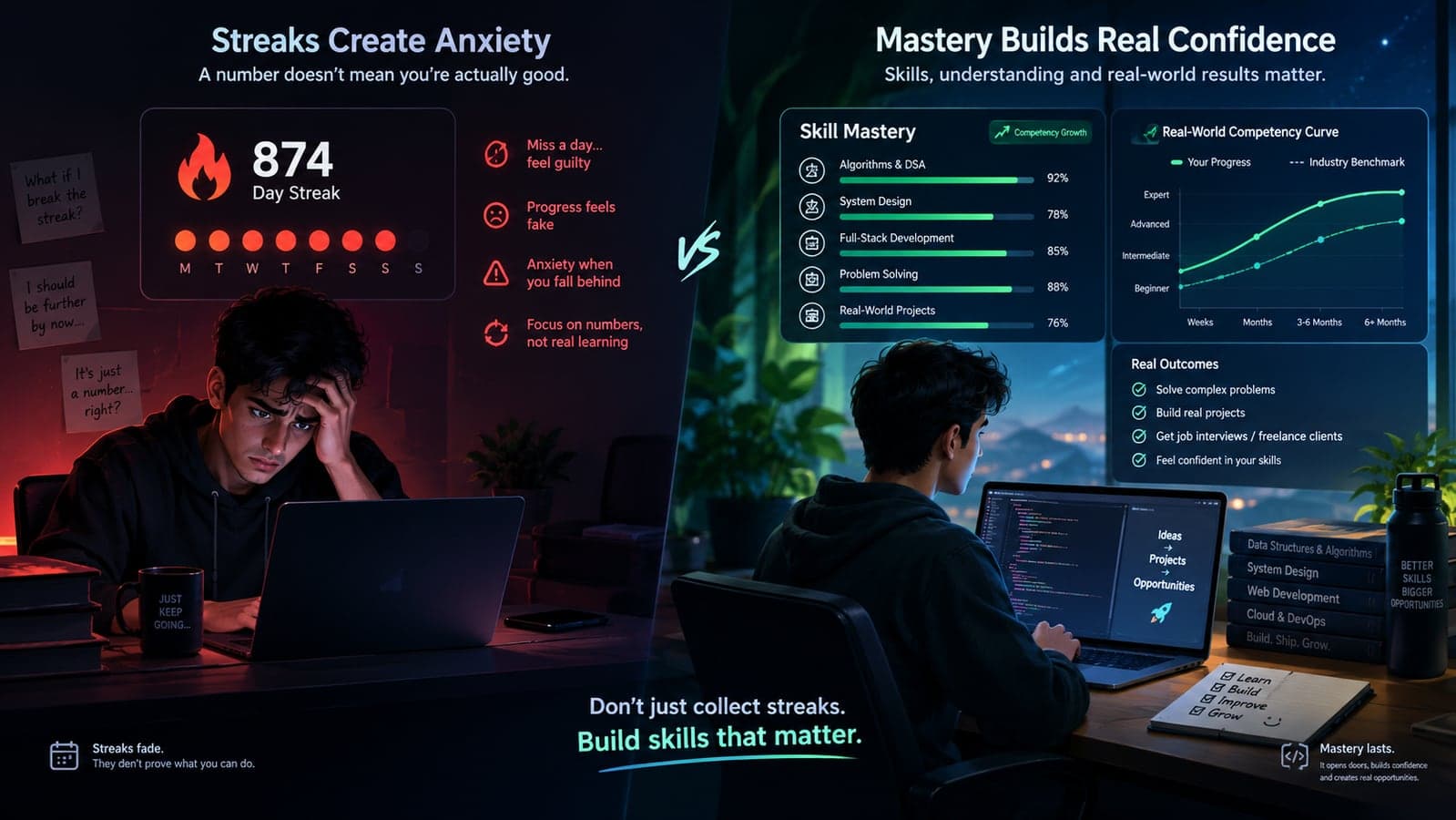
- Become the person who ships with AI, not despite it. The developers thriving right now treat AI as a force multiplier and can demonstrate 3–5x personal throughput. That skill is provable in a portfolio; degrees aren't required to show it.
- Move up the stack to outcomes. Learn to talk to users, scope problems, and own delivery. The one-person-team era rewards range.
- Consider small. While big tech cuts, AI-native startups and small studios are building more with fewer people — and a laid-off enterprise engineer's skills go furthest where there's no bureaucracy to absorb them. Some of the best businesses of this decade will be started by people on this year's layoff lists.
The Bottom Line
The 2026 layoff wave is two stories wearing one headline. Story one: corporations redirecting payroll into a $700 billion infrastructure bet, using AI as the acceptable public reason — with early data showing no financial payoff yet. Story two, the real one: the cost of building and operating software has genuinely collapsed, and the advantage has shifted to small, fast, senior, AI-fluent teams — and to the small businesses that hire them.
Big tech is restructuring around that truth clumsily and publicly. Small teams get to just... use it.
If you're a business owner wondering what the new economics make possible for you — a product idea that was too expensive in 2021, a workflow that should be automated — tell us what you're thinking. We'll give you an honest read on cost and scope in 2026 terms, and honest includes "you don't need us for this."
Frequently Asked Questions
How many tech workers have been laid off in 2026?
As of mid-July 2026, trackers report roughly 185,000 workers cut across 267 layoff events — nearly double the daily pace of 2025. Projections suggest the full year could approach 370,000, near the post-pandemic record set in 2023.
Is AI really the cause of the 2026 layoffs?
Partially. Challenger, Gray & Christmas data attributes between 8% and 26% of cuts to AI depending on the month — making AI the fifth most-cited reason, behind market conditions and restructuring. Industry leaders including Nvidia's Jensen Huang and OpenAI's Sam Altman have acknowledged "AI washing": companies blaming AI for cuts they would have made anyway. Genuine AI displacement is concentrated in entry-level engineering, support, and middle-management roles.
What is "AI washing" in layoffs?
AI washing is when a company attributes layoffs to artificial intelligence because it sounds strategic to investors, when the actual causes are overhiring, cost-cutting, or restructuring. Deutsche Bank analysts predicted it would be "a significant feature of 2026," and a May 2026 Gartner study found companies making the deepest AI-cited cuts showed no improvement in financial returns.
Which tech jobs are safest from AI in 2026?
Roles that remain in shortage even at companies conducting layoffs include machine learning infrastructure, model evaluation, AI safety, applied research, and senior engineers who combine system design with product judgment. The roles most exposed are those centered on converting well-defined specifications into code or handling routine, repetitive digital tasks.
Do the 2026 layoffs make custom software cheaper for small businesses?
Yes, meaningfully. AI-assisted development has compressed build timelines and costs, and the talent market now includes a large pool of experienced engineers open to contract work. Projects priced out of reach for small businesses in 2021 are frequently viable in 2026 — worth re-quoting before assuming custom software is too expensive.

 Tayyab Aslam