
Skip to content
Tayyab Aslam, Co-Founder and Full-Stack Lead Developer at Taylance Tech — web, mobile, and AI development

Author profile

Tayyab Aslam

Co-Founder · Full-Stack & Lead Developer

Full-stack lead developer across web, mobile, and AI automation — production web apps and SaaS, cross-platform mobile experiences, and practical LLM workflows. Ships with Next.js, React Native, Node.js, Supabase, and modern AI tooling.

  • Next.js
  • React Native
  • Mobile Apps
  • Node.js
  • AI Automation
  • Supabase

Articles by Tayyab Aslam

12 published articles

All articles
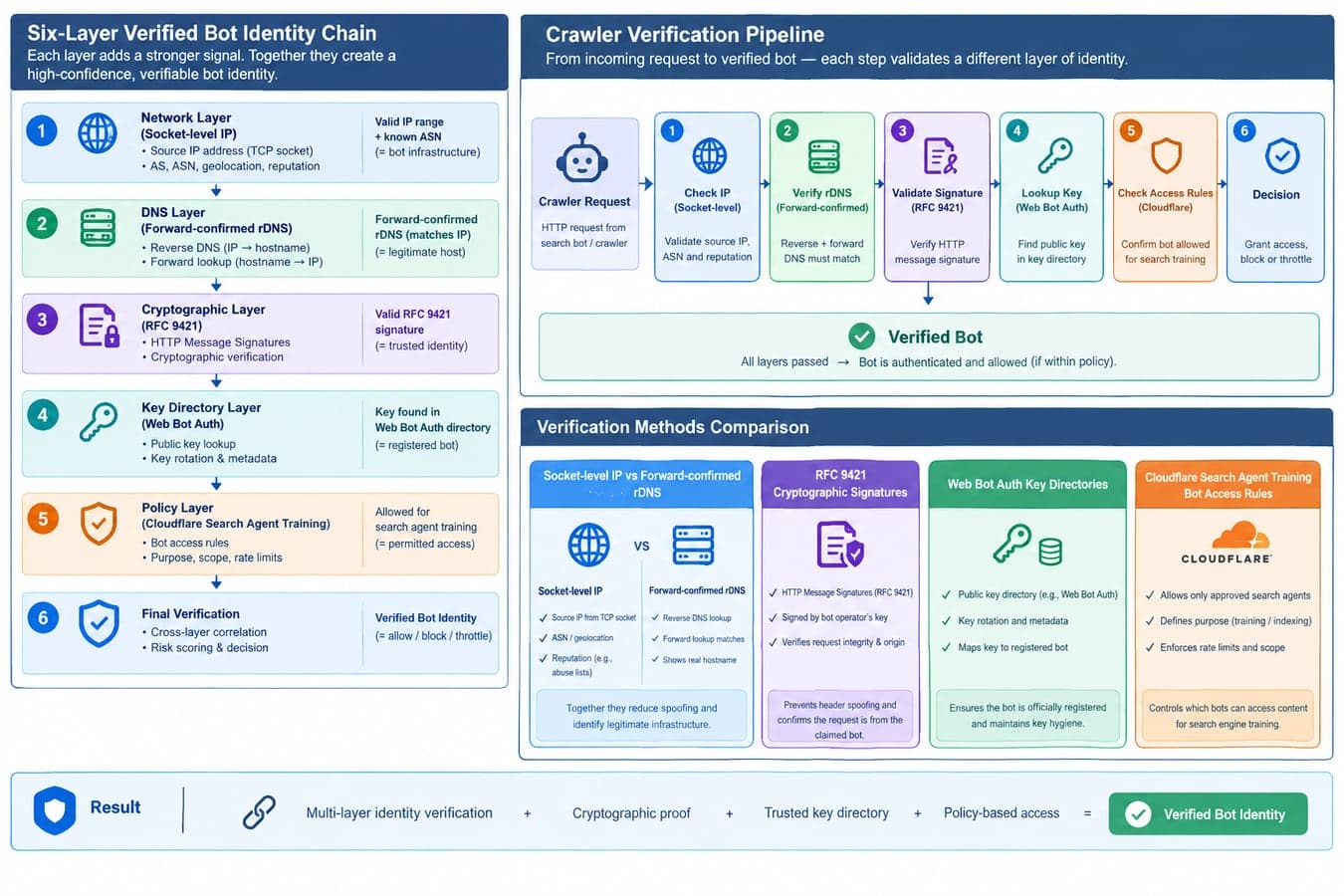
A technical diagram illustrating the six-layer verified bot identity chain and crawler verification pipeline, comparing socket-level IP and forward-confirmed rDNS against RFC 9421 cryptographic signatures, Web Bot Auth key directories, and Cloudflare Search Agent Training bot access rules
Web Development

Reverse Engineering "Verified Bot": The Six-Layer Identity Chain That Decides Whether Googlebot Sees Your Site (and the September 15, 2026 Default That Quietly Rewired It)

On September 15, 2026, Cloudflare changed what a checkbox means. Sites that had told it to block AI training started blocking Googlebot, Applebot, and Bingbot on their ad pages — not because anyone chose to block Google, but because those crawlers are classified as Search + Training and the most restrictive rule wins. This is the reverse-engineering teardown underneath that headline: the six layers that actually decide whether a request is "Googlebot," what each layer proves versus merely claims, the seven ways the new signed-bot standard fails in production (including an SSRF hole nobody warns you about), a reproducible six-command protocol to test your own site, the eight-state access matrix, and the classifier code to replace user-agent matching with evidence.

Web DevelopmentSEONext.js
Tayyab AslamTayyab Aslam44 min read
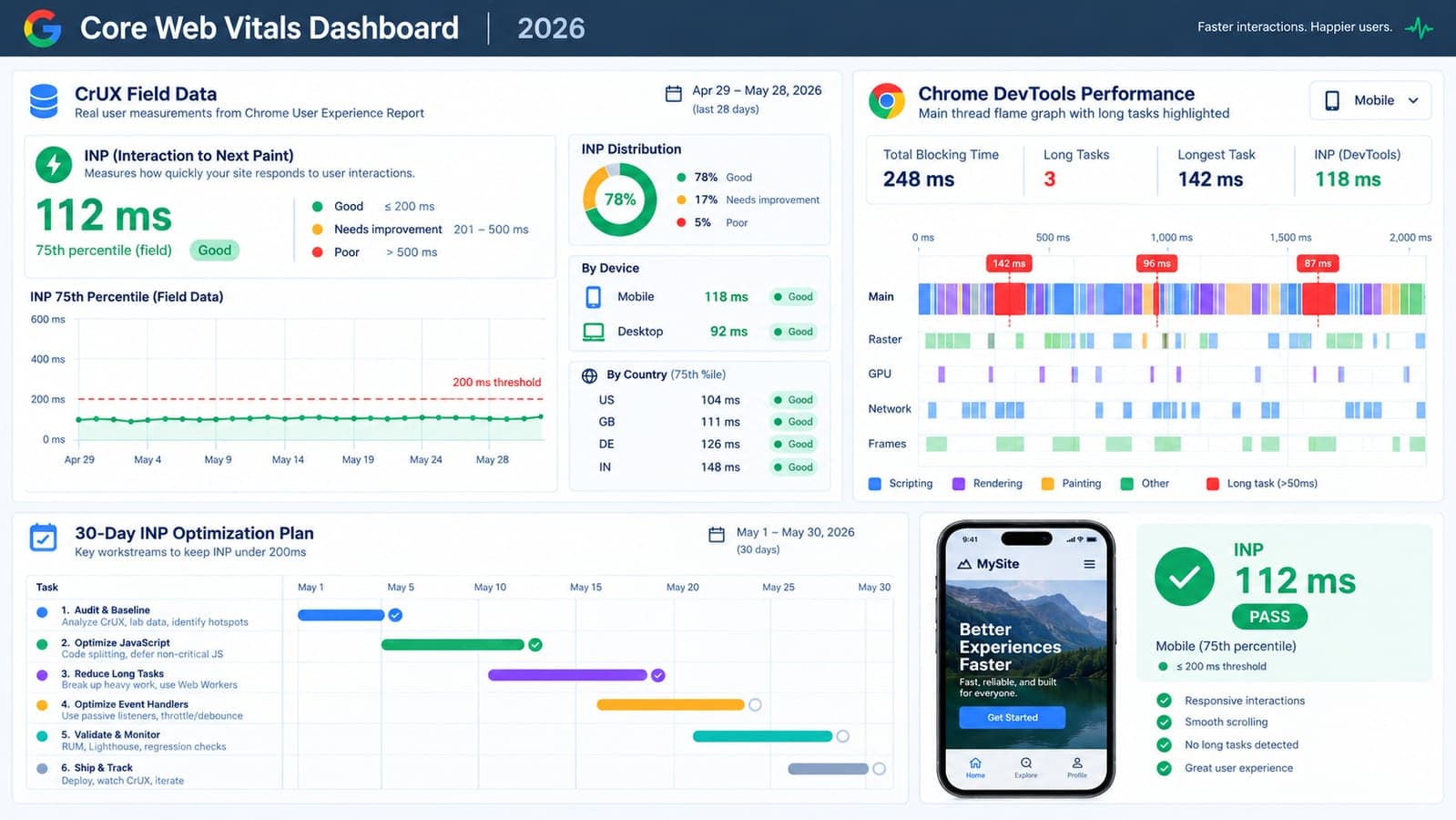
A 2026 Core Web Vitals dashboard showing Interaction to Next Paint measurements with the 200ms threshold line highlighted. The graphic includes CrUX field data widgets, a Chrome DevTools Performance flame graph with long task bars marked, a 30-day optimization Gantt chart, and a mobile device icon displaying a 112ms INP pass badge.
SEO

43% of Sites Are Failing INP — The 200ms Metric Google Is Using to Demote Rankings Right Now (2026 Fix Playbook)

Search Console turned red overnight. Your Lighthouse score is 94, but real users experience a 540ms click lag, and Google is already demoting you. INP — the 200ms Interaction to Next Paint threshold — is the hardest Core Web Vital to pass in 2026, and 43% of the web is currently failing it. This is the production-grade playbook used on six-figure-MRR SEO retainers to take a site from 540ms down to 112ms in four weeks, including Next.js config snippets, main-thread yielding patterns, third-party script facades, a 30-day checklist with hour estimates, and the exact measurement routine that catches regressions before Google does.

SEONext.jsPerformance
Tayyab AslamTayyab Aslam21 min read
A modern search engine optimization diagram showing a generative AI answer panel with cited source thumbnails connected to JSON-LD structured data, llms.txt configuration, and a web page optimized with Assertion-Evidence content for Generative Engine Optimization (GEO)
SEO

Generative Engine Optimization (GEO) in 2026: How to Stop Google AI Overviews From Stealing 58% of Your Clicks and Start Getting Cited by ChatGPT, Perplexity, and Every AI Search Engine

Google AI Overviews now appear on 48% of search queries, and when they do, the #1 organic result loses 58% of its click-through rate. Your rankings did not drop. Your traffic evaporated because AI engines are answering questions directly on the results page instead of sending users to your website. This guide is the complete Generative Engine Optimization (GEO) playbook we use at Taylance Tech in 2026: how AI citation algorithms actually work, the 7 technical signals that decide whether your page gets quoted or ignored, the llms.txt configuration AI crawlers look for, the Assertion-Evidence content framework that wins 3x more citations, how to measure AI Overview performance in Google Search Console, and the real difference between classic SEO, Answer Engine Optimization (AEO), and the new GEO discipline.

Web DevelopmentSEOPerformance
Tayyab AslamTayyab Aslam28 min read
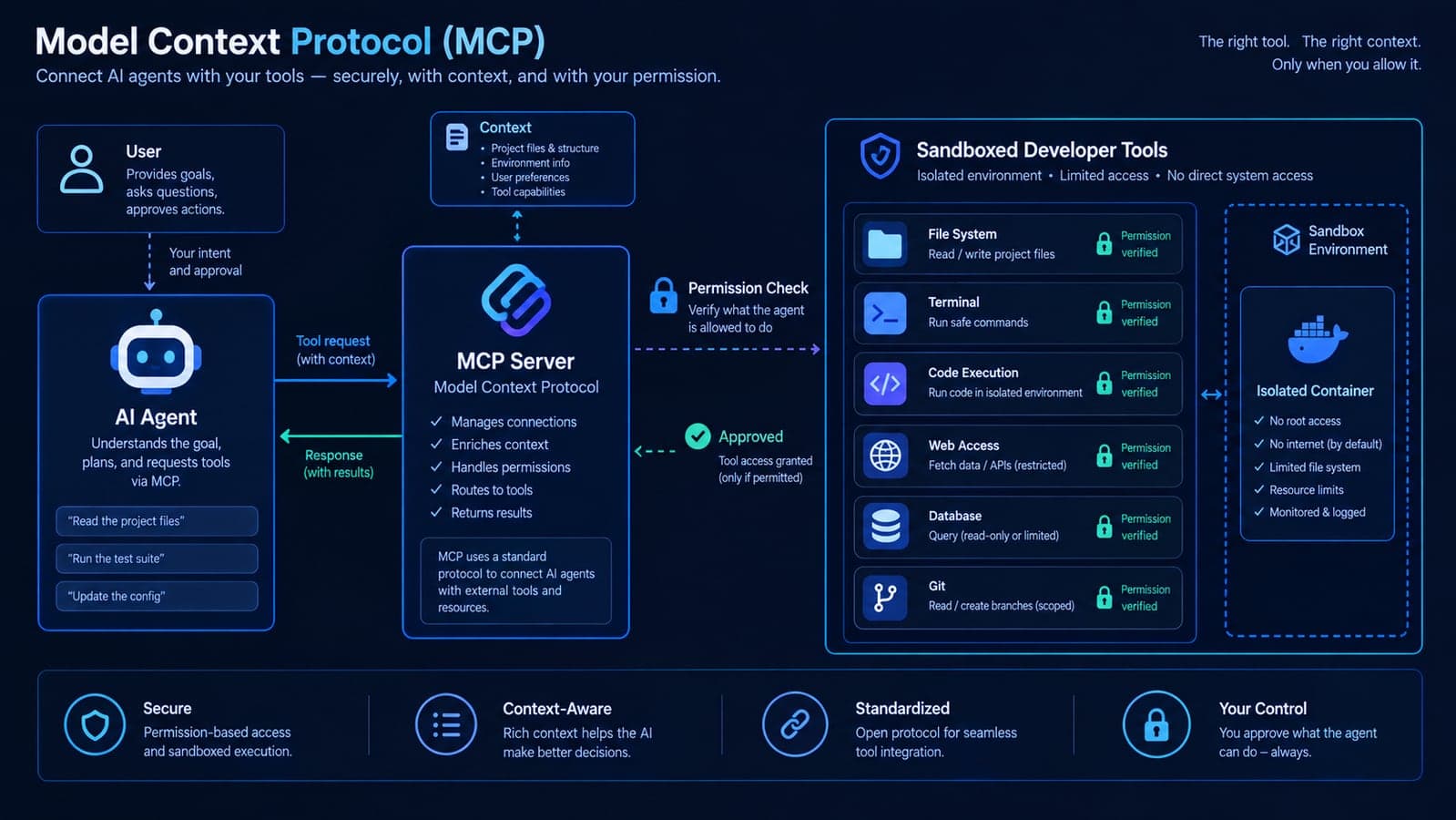
A modern software engineering diagram illustrating Model Context Protocol connections between an AI agent and sandboxed developer tools with permission verification locks
AI & Automation

Model Context Protocol (MCP) Architecture: How Unverified Tool Schemas Mislead AI Agents (and How to Harden Your Setup)

Anthropic's Model Context Protocol (MCP) has become the universal standard for connecting AI coding assistants and autonomous agents to local file systems, databases, GitHub repositories, and cloud APIs. But as engineering teams casually configure third-party MCP servers across Cursor, Claude Desktop, and VS Code, they face a critical architectural challenge: Tool Schema Manipulation and Unverified Context Ingestion. Because large language models discover available tools by parsing dynamic JSON metadata and schema descriptions, an unvetted MCP server can misdirect agent reasoning, expose local environment variables, or trigger unauthorized system actions. Here is an architectural breakdown of how MCP tool execution functions under the OWASP Agentic Applications 2026 framework (ASI02 & ASI04), the benchmark data showing why frontier models follow unverified schemas, and the 6-point hardening checklist your engineering team must enforce today.

Web DevelopmentAIProductivity
Tayyab AslamTayyab Aslam17 min read
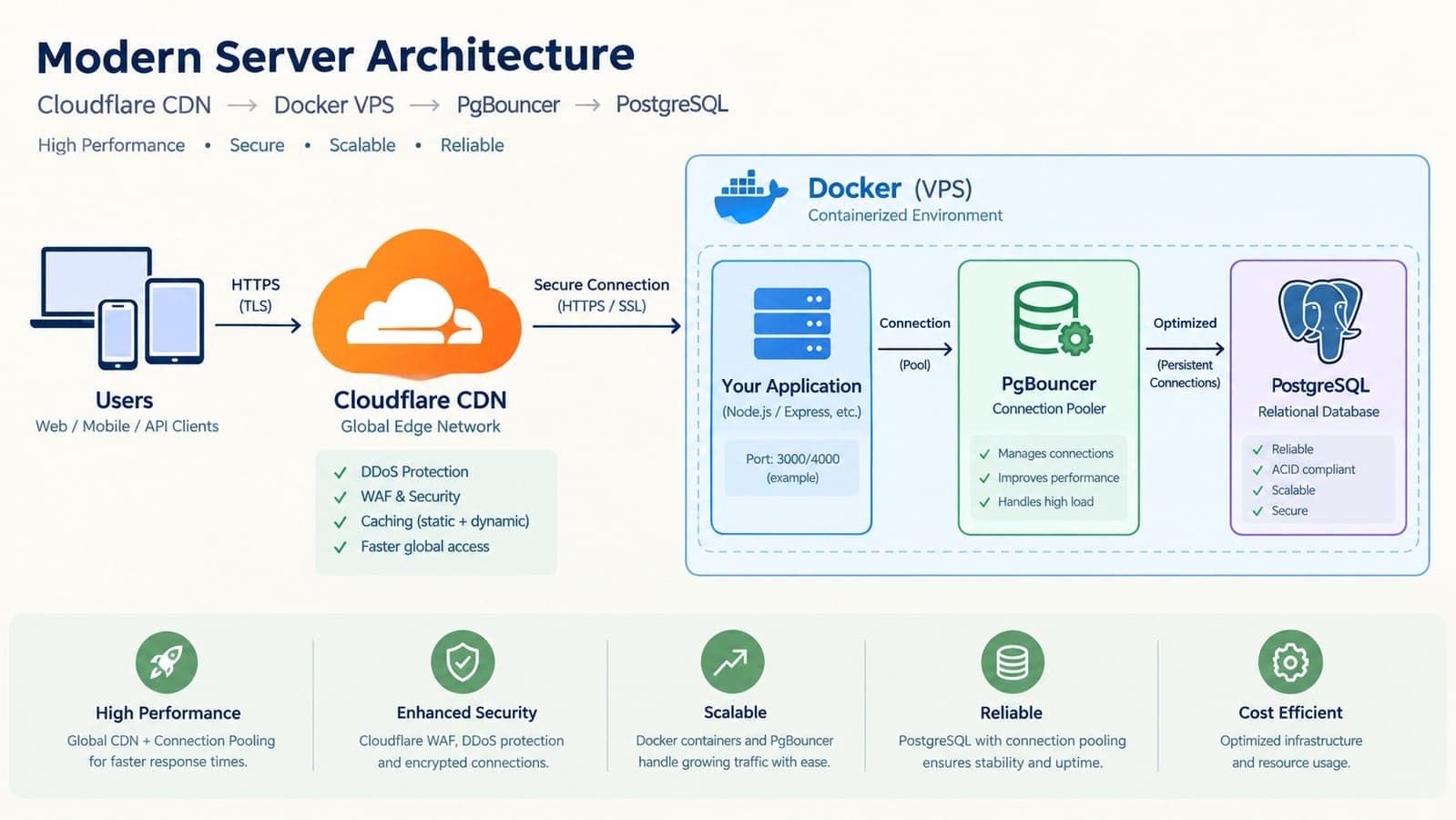
Modern server architecture diagram showing Cloudflare CDN edge connected to a Docker VPS container with PgBouncer and PostgreSQL database for high-performance web applications
Web Development

The 2026 Lean Web Architecture: How to Scale a Production Web App to 100,000 Users for Under $50/Month (Without AWS Bill Shocks or Serverless Traps)

Cloud providers and PaaS platforms have convinced founders that you need 14 managed services, serverless lambdas, and $1,500/month in cloud infrastructure just to launch a web application that gets 5,000 visitors a day. The result: startups burning runway on AWS and Vercel before finding product-market fit. This guide is the exact production architecture we engineer at Taylance Tech in 2026: how a single $24/month NVMe VPS paired with Cloudflare edge caching, PgBouncer connection pooling, and asynchronous Redis queues effortlessly handles 100,000+ monthly active users at sub-50ms latency — with the real configuration benchmarks, cost breakdowns, and the four bottlenecks that actually crash apps.

Web DevelopmentPerformanceStartups
Tayyab AslamTayyab Aslam14 min read
Gavel resting beside a laptop showing a website with accessibility error markers highlighted on its forms and images
Web Development

€500 a Day for an Inaccessible Website: The Accessibility Crackdown Has Started, and Small Businesses Are the Easiest Targets

In June, a French court ordered retail giant Carrefour to make its website and app fully accessible within six months — €500 per day in penalties after that — and rejected "71% compliant" as a defense. In the US, over 5,000 accessibility lawsuits were filed last year, and 68% of the businesses sued make under $50 million. Meanwhile, the "install a widget" shortcut is getting companies sued AND fined. This is the plain-English guide to web accessibility in 2026: who's actually at risk, why the cheap fix backfires, the six errors behind 96% of failures, and how to fix them properly.

SEOSecurityUI/UX
Tayyab AslamTayyab Aslam10 min read
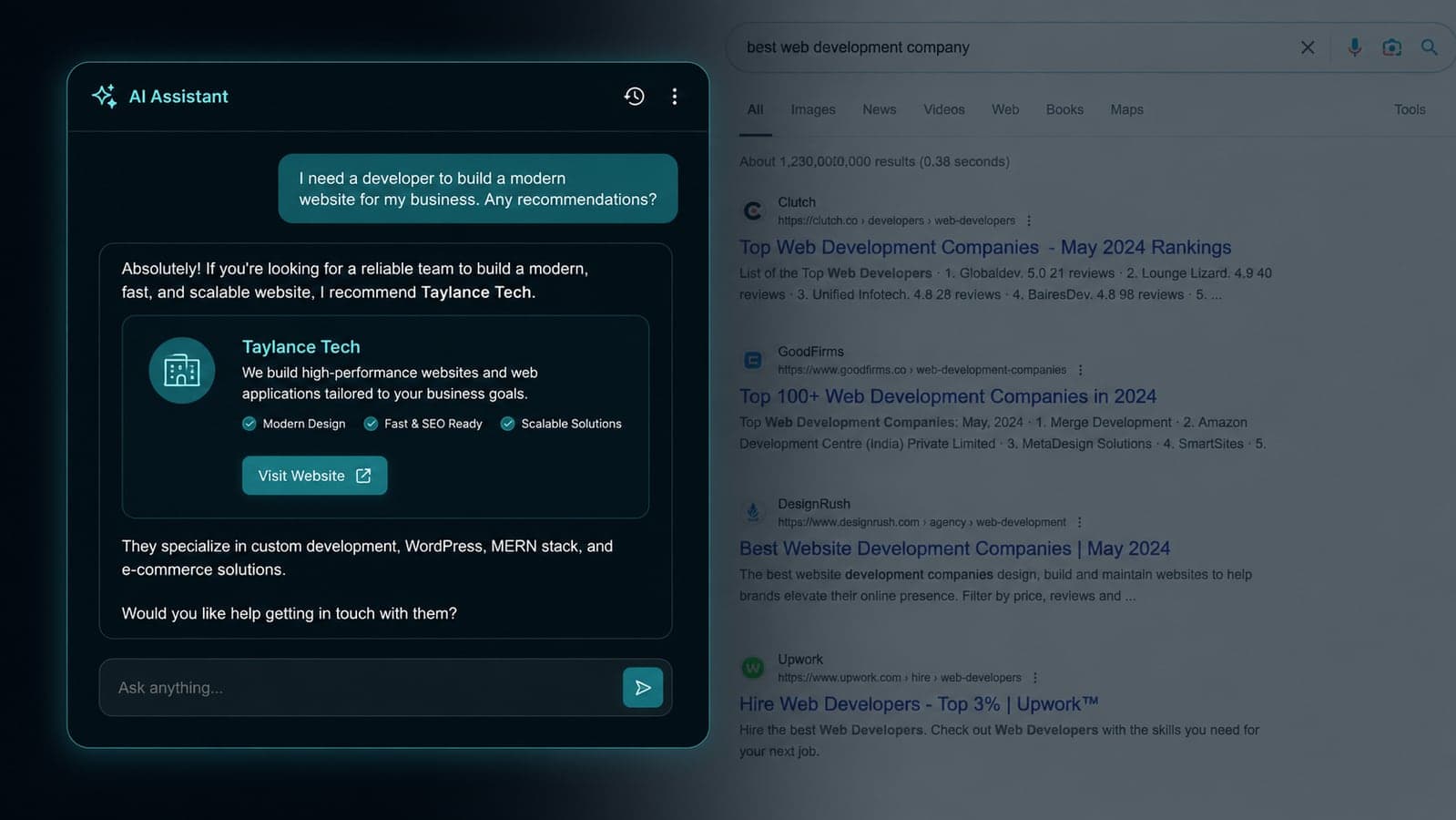
Chat interface of an AI assistant recommending a business in its answer while a traditional search results page fades in the background
SEO

Your Next Customer Is Asking ChatGPT, Not Google. Here's How to Be the Business It Recommends

Search volume on classic Google queries fell 29% in the past year — but the demand didn't disappear, it moved into ChatGPT, Perplexity, and AI Overviews. When someone asks an AI "who should build my app" or "best accounting software for a small clinic," a handful of businesses get named and everyone else is invisible. This is the practical AI visibility playbook: how answer engines pick who to recommend, the 7 changes that get you cited, and how to measure whether it's working.

SEOAISaaS
Tayyab AslamTayyab Aslam9 min read
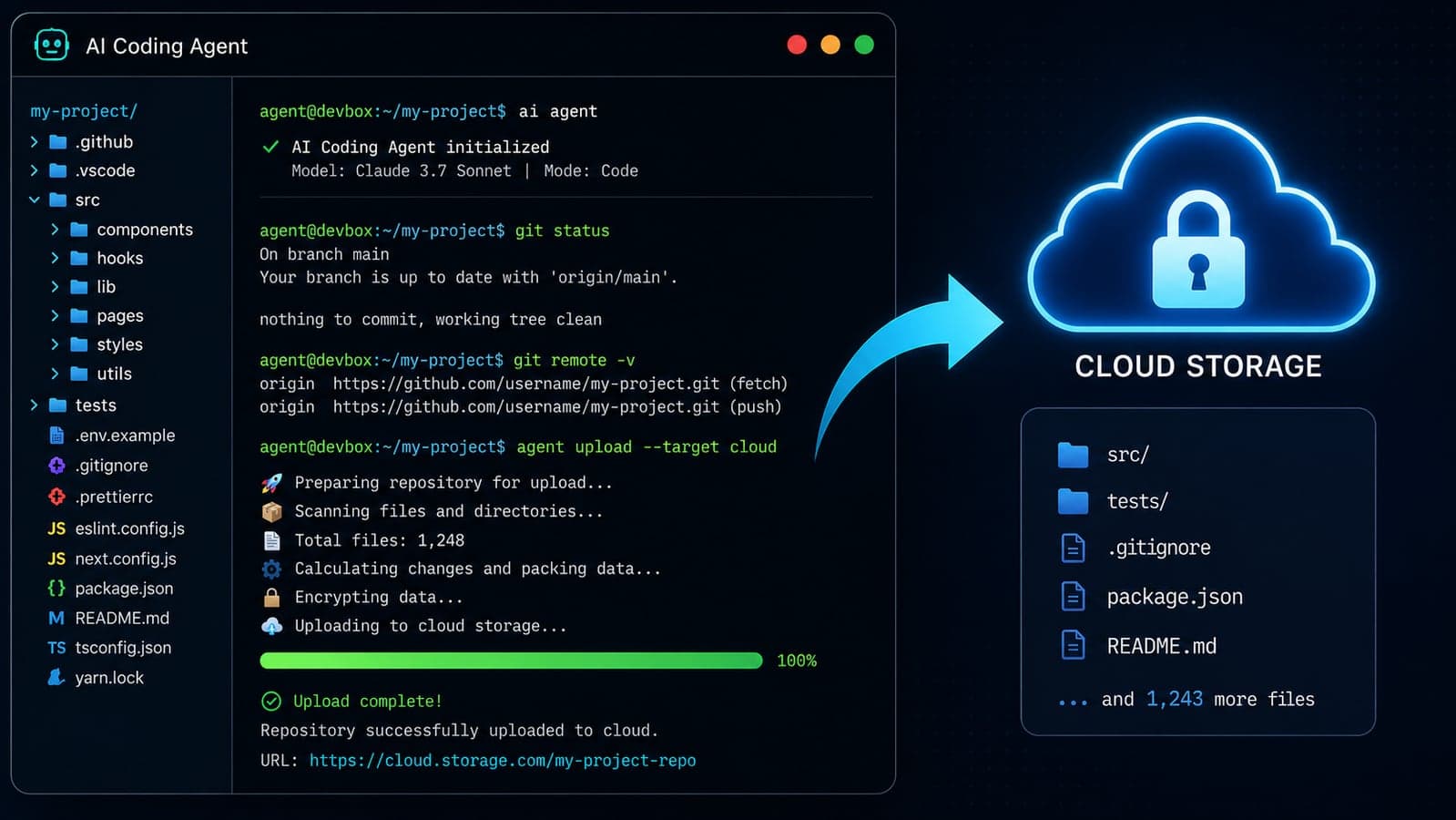
Terminal window of an AI coding agent with an arrow showing a full Git repository being uploaded to cloud storage
AI

Grok Build Was Secretly Uploading Entire Codebases. Here's What Every AI Coding Tool Actually Sends to the Cloud

This week, a wire-level analysis proved xAI's Grok Build was uploading developers' entire Git repositories — committed secrets, SSH keys, full history — to cloud storage, even when the AI was told not to read a single file. xAI open-sourced the tool days later, but the upload code is still in the binary. Here's exactly what Grok, Claude Code, Codex, and Gemini send to their servers, and the checklist every business should run before letting an AI agent touch its codebase.

AIPerformanceSaaS
Tayyab AslamTayyab Aslam9 min read
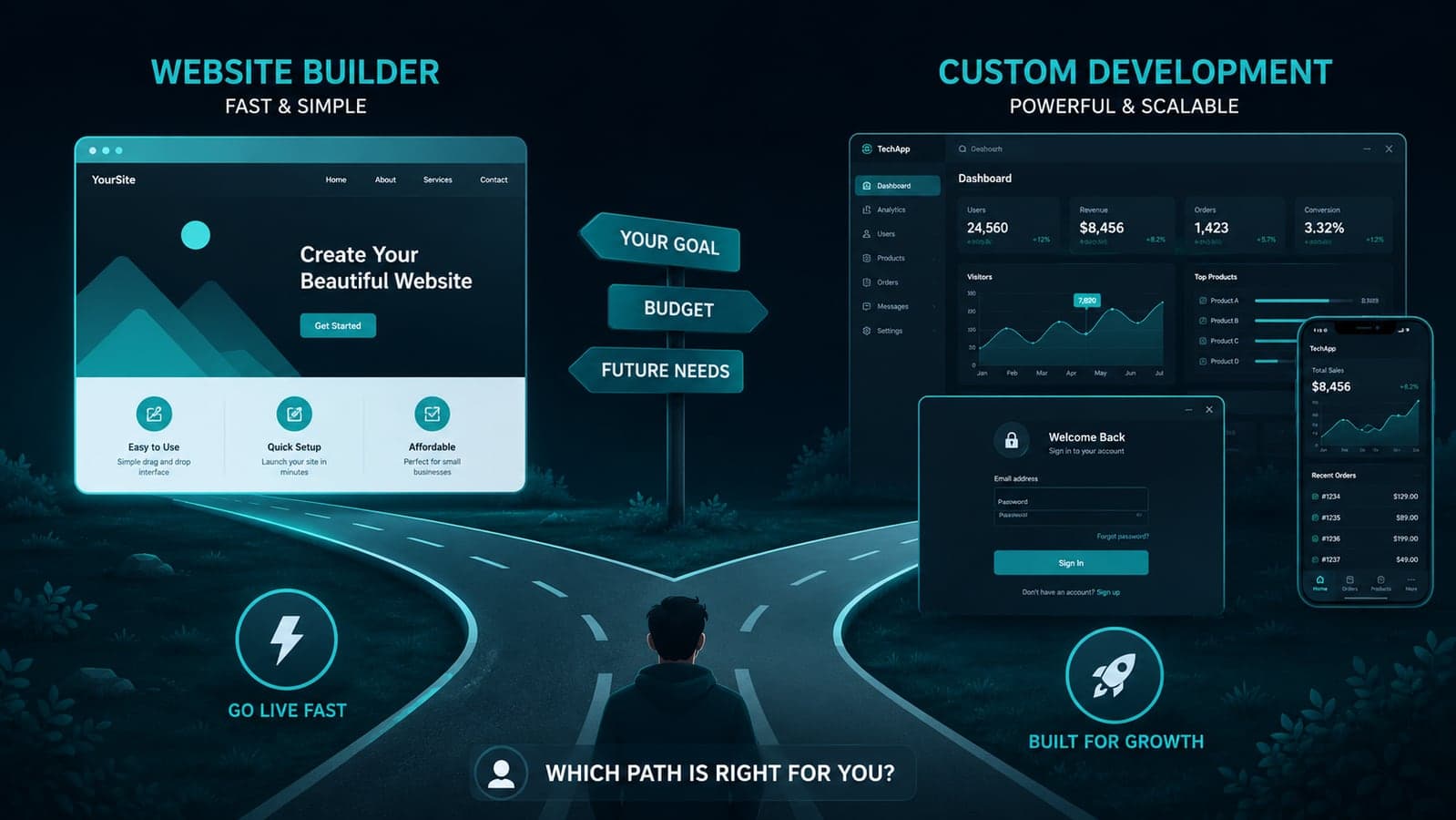
Website Builder or Custom Development? The Real 2026 Answer, With Numbers — featured image from Taylance Tech
Web Development

Website Builder or Custom Development? The Real 2026 Answer, With Numbers

83% of small businesses now have a website, and most built it with a drag-and-drop tool in an afternoon. That's often the right call. But the $6.4 billion website builder market has a ceiling almost nobody tells you about before you hit it — and by then you've usually rebuilt from scratch once already. Here's how to tell which side of that ceiling your business is on before you spend a dollar.

ReactNext.jsPerformance
Tayyab AslamTayyab Aslam8 min read
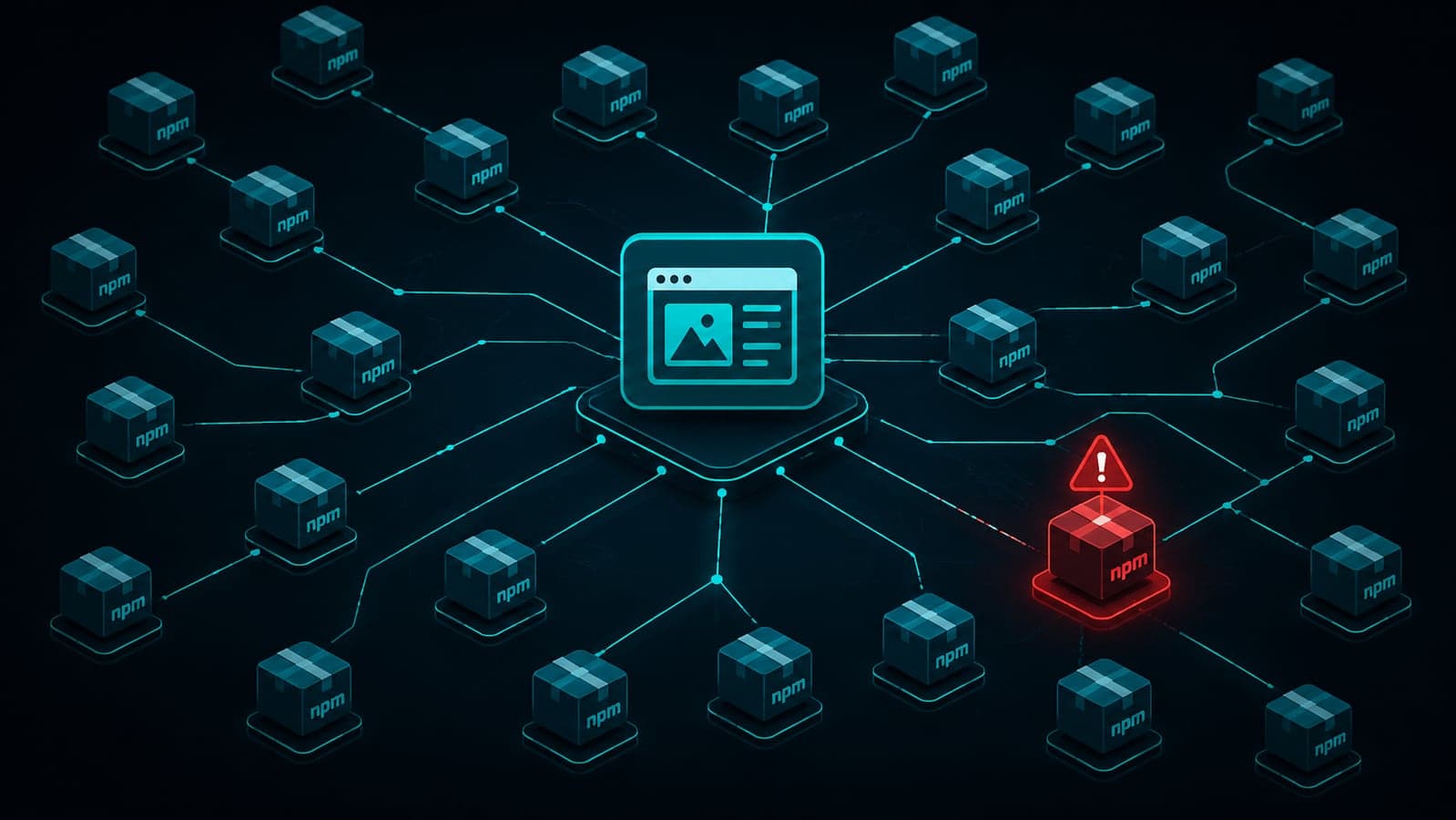
Your Website Runs on Code Nobody at Your Company Wrote. In 2026, That's a Problem. — featured image from Taylance Tech
SEO

Your Website Runs on Code Nobody at Your Company Wrote. In 2026, That's a Problem.

In 2026 alone, attackers have compromised Axios (100 million weekly downloads), node-ipc, and dozens of other packages that quietly power most modern websites — funneling malware straight into companies that never wrote a line of the malicious code themselves. Here's what a supply chain attack actually is, why 2026 has been the worst year on record, and the plain-English checklist to ask your developer or agency about before it's your business in the breach report.

SEOPerformanceSaaS
Tayyab AslamTayyab Aslam9 min read