Wholesale Billing Software: Credit, Units, and Party Accounts

Wholesale billing is a different craft from retail tills. Counter sales chase speed; wholesale chases accounts — per-customer prices, cartons and pieces on the same line, running balances that survive arguments, delivery notes the warehouse can sign, credit terms that match how cash actually moves, and an audit trail that still makes sense years later. This guide explains how wholesale billing works on paper and in software, without assuming you run a supermarket checkout.
Wholesale billing is not retail billing
Retail billing optimises one moment: a buyer at the counter, payment now or never, a receipt as proof, the transaction closed before the next customer steps up. Wholesale billing optimises a relationship: the same buyer forty times a year, prices negotiated once and applied many times, goods leaving before money arrives, balances that drift over weeks, and documents that must still agree when both sides have changed staff twice.
The structural differences show up in daily work:
- Named accounts, not anonymous tickets. Every credit sale belongs to a party with a ledger — the accounting guide explains the took / gave / balance story. Wholesale without named accounts is credit without memory.
- Trade units. Cartons, cases, bundles, pieces — often on one invoice. Retail SKUs are usually single-unit.
- Variable pricing. List price is fiction; the real price is what this customer pays this month, sometimes on this product alone.
- Dispatch workflow. Pick, pack, deliver, sign — sometimes days before or after the invoice date. Retail conflates sale and handover.
- Statements and ageing. Wholesale collections run on monthly rhythms and phone calls driven by who crossed 60 days — not on card terminals.
Software built for retail-first shops often fails wholesale quietly: it prints a total beautifully but cannot hold a carton price for Customer A while Customer B pays per piece, cannot batch statements, or treats credit as “pending payment” on a receipt instead of a balance on an account. Recognising the gap early saves a migration later.
Per-customer pricing
In wholesale, the price on the shelf label (if you even have one) is often not the price on the invoice. Discount tiers, long-standing deals, category margins, and competitive matches all produce a matrix: same SKU, different customers, different numbers.
Price lists.Many wholesalers maintain a default list plus customer-specific lists — “Rahim pays list minus eight percent on cables, fixed 142 on switches.” Software should attach a list to the customer and resolve price at invoice line entry. Staff override should be possible with a reason and a name in the audit log, not a silent edit that makes margin analysis lies.
Contract windows. Promotional prices often expire. A price valid until 31 August should revert automatically — or warn — on 1 September, not rely on someone remembering during a busy morning load-out.
Last-price memory.Practical habit: default to what this customer paid last time for this item, if still within policy. It matches how experienced billers think and reduces arguments (“you charged me 138 last month”).
Example: one SKU, three customers
| Customer | Unit | Price | Basis |
|---|---|---|---|
| Rahim General Store | carton (24 pcs) | 2,880 | List carton − 5% |
| City Electricals | piece | 130 | Fixed trade piece rate |
| Metro Traders | carton (24 pcs) | 2,760 | Volume deal until Sep |
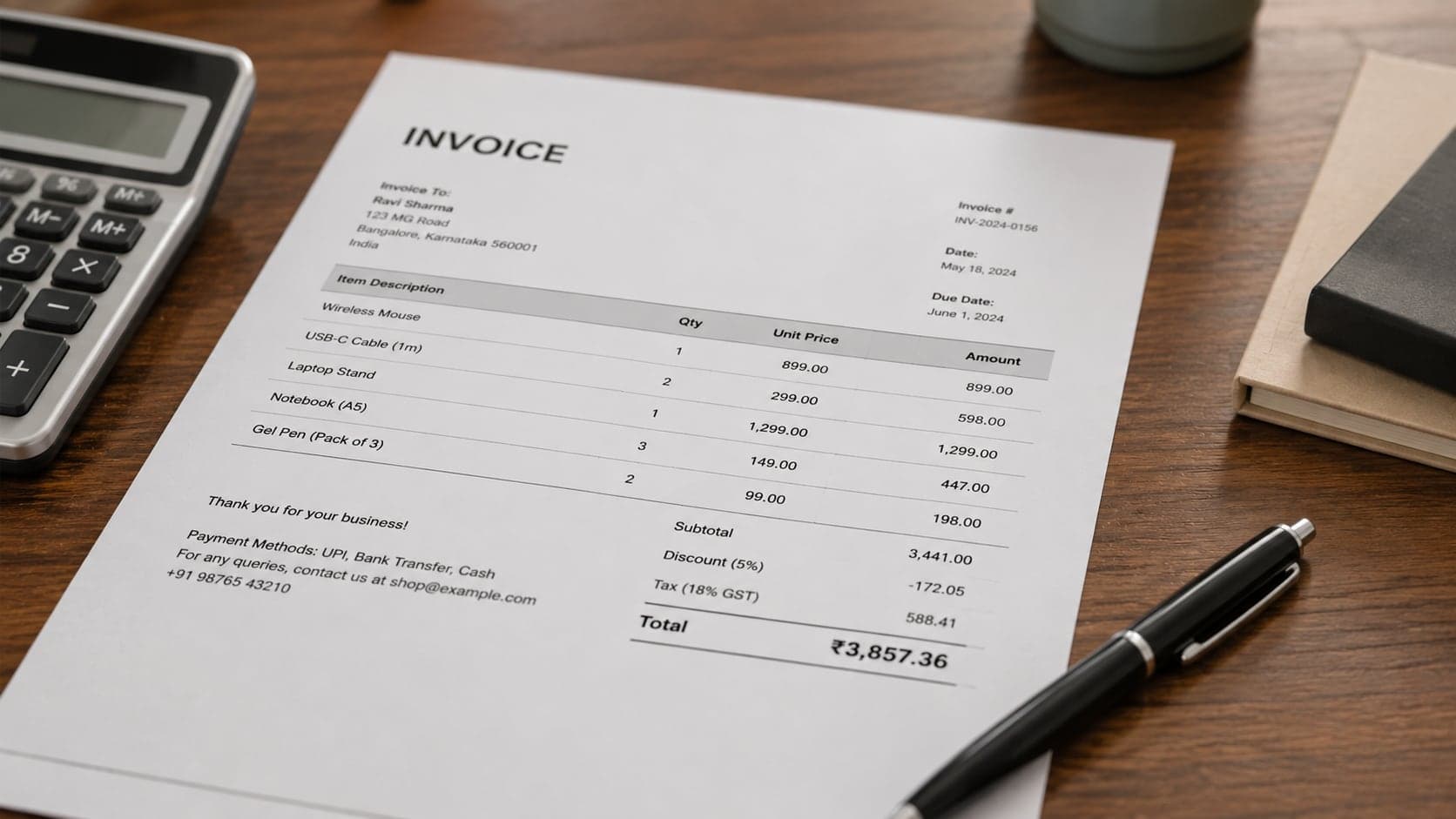
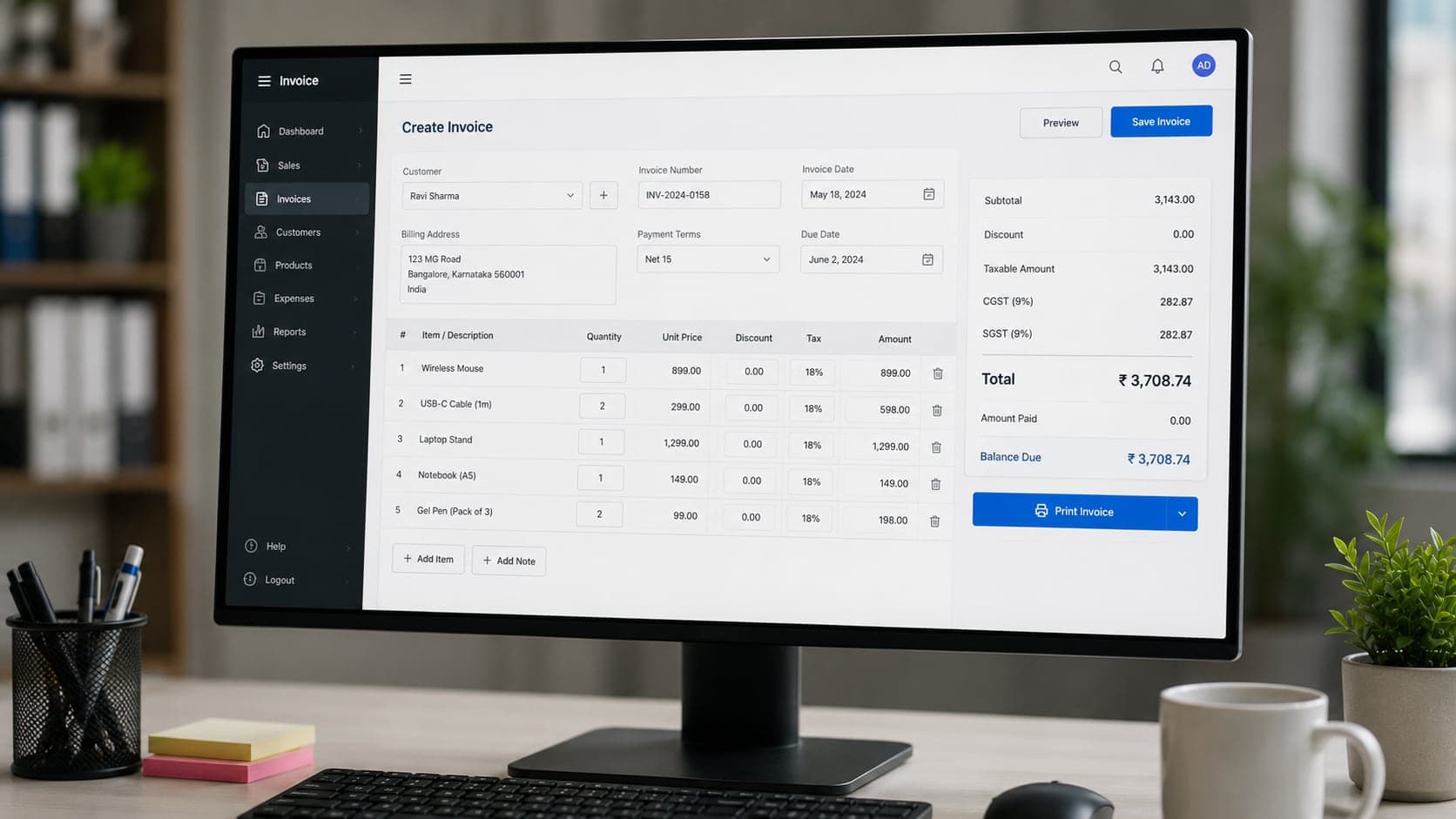
Billing software that only stores one price per product forces overrides on every wholesale line — and overrides without discipline are how margin bleeds. The billing guide covers document fields; wholesale pricing is the arithmetic those fields must reflect honestly.
Carton, piece, and mixed units
Wholesale inventory lives in layers: pallets, cartons, inner packs, pieces. The invoice must speak the unit the customer ordered and the warehouse picked — not the unit the software prefers.
Unit of measure (UOM) hierarchy. A product might be stocked and sold as carton with a defined piece count (24, 12, 48). Software should know that one carton equals twenty-four pieces for stock conversion, while still allowing piece sales when the customer breaks a carton.
Mixed lines on one invoice. Customer takes three cartons of bulbs and seventeen loose switches from opened stock — one invoice, two unit types, stock deducted correctly per line. This is routine wholesale; it is odd retail.
Pricing per unit. Carton price is not always piece price × count. Breaking a carton may carry a premium; full-carton orders may carry a discount. The invoice line should show unit, quantity, unit price, line total — never only a lump sum that cannot be checked against the pick list.
Pick-list alignment.Warehouse staff compare invoices or delivery notes to physical picks. When units mismatch (“they billed cartons, we picked pieces”), returns and credit notes follow. Barcode scanning at pick — covered in the inventory guide — reduces unit confusion if scans resolve to the same UOM the invoice uses.
Party accounts and ledgers
Wholesale billing without party ledgers is a stack of invoices with no summary — fine until someone asks the balance. A party account is the running total of one trading relationship: everything they took, everything they paid, what remains.
Every wholesale document type posts to the ledger:
- Invoice — they took goods; balance up.
- Credit note — return or adjustment; balance down.
- Receipt / payment — they paid; balance down.
- Debit note (where used) — agreed extra charge; balance up.
- Opening balance — migration or year-start truth.
The ledger screen is where owners should glance before approving another load: not only “8,700 owed” but whether that figure drifted up or down this month and which invoices compose it. Wholesale billing software centres this screen; retail software often hides it under reports.
Ledger: Metro Traders (customer)
| Date | Document | Debit | Credit | Balance |
|---|---|---|---|---|
| 01 Aug | Opening | — | — | 12,400 |
| 03 Aug | INV-0892 (DN-0441) | 18,600 | — | 31,000 |
| 10 Aug | RCP-0312 bank transfer | — | 15,000 | 16,000 |
| 18 Aug | CN-0098 (damaged goods) | — | 1,200 | 14,800 |
Note the delivery note reference on the invoice line — linking dispatch evidence to billing. Supplier party accounts (what you owe upstream) mirror customer accounts; wholesale shops that track only receivables get surprised by payables each month.
Delivery notes and dispatch
A delivery note(dispatch note, goods issue note) lists what left your premises: items, quantities, units — usually without prices. The driver and the customer's receiver sign it. The invoice carries the money. Separating them is standard wholesale hygiene.
Why prices stay off the delivery note. Loaders and receivers verify count, not margin. Drivers should not broadcast your cost structure. In competitive markets, price-free dispatch documents reduce leakage.
One invoice, many deliveries.Large orders often ship in partial loads across days. Three delivery notes, one invoice at month-end — or one invoice per delivery — is a policy choice; software should support your choice without duplicate line entry. Linking DN-0441 to INV-0892 in the ledger example above is how you answer “what was on the truck?” without reopening the warehouse.
Stock timing. Some businesses reduce stock on delivery note confirmation; others on invoice issue. Pick one rule and apply it consistently — mixed rules make stock counts lie. Software should match the rule, not force invoice-before-pick when your warehouse picks first.
Signed copies. Photograph or scan signed delivery notes where disputes are common. They are evidence that quantity left and was acknowledged — the first document pulled when someone claims short delivery.
Credit terms that protect cash
Credit in wholesale is not a favour; it is payment delayed with risk priced in. Terms should be explicit on every invoice: Net 15, Net 30, due on receipt, end-of-month plus days — printed, not assumed.
- Due date per invoice. Software calculates from invoice date plus terms. Staff should see overdue flags at billing time — not only in a report nobody opens.
- Credit limit per party. Maximum balance or maximum days outstanding before new credit stops. Limits set in daylight; enforcement at invoice save beats arguments at the loading bay.
- Stop list. Accounts paused for chronic lateness — visible to billing and dispatch. A stop that dispatch does not see ships goods that will not be paid.
- Partial payments. Common and healthy — record receipt, allocate to oldest invoices or leave on-account, print receipt, state new balance aloud. Unallocated payments are another notebook failure mode.
Terms interact with supplier terms: if you must pay upstream in fifteen days but customers pay you in forty-five, the gap is working capital you fund from the drawer or the bank. Ageing reports show customer side; supplier ledgers show the other. Profitable wholesale can still choke on timing — terms are where that risk is decided.
New accounts deserve tighter terms than old ones — due on receipt or Net 7 until a payment history exists. Software should flag first-time credit sales and default terms for new parties without making staff hunt settings. Seasonal buyers(pre-holiday stockists, project contractors) may need temporary limit bumps recorded with an expiry — not a verbal “let them run this month” that outlasts the season.
When a customer pays late but wants more goods, the policy choice is structural: cash against current delivery, old balance untouched, or no new credit until cleared. Software stop rules enforce what owners otherwise negotiate away under pressure at the loading bay. The ledger balance and ageing column are the objective inputs; sympathy and commercial judgement stay human — but they should not override numbers nobody can see.
Statements and ageing
Wholesale collections run on rhythm. Monthly statements to every account with a balance — posted, emailed, or handed to the driver — convert vague memory into shared facts. A statement lists opening balance, each document in the period, payments, closing balance.
Ageing analysis buckets outstanding amounts by age: current (not yet due), 1–30 days past due, 31–60, 61–90, 90+. Wholesale owners should read ageing before buying stock — money stuck past 60 days is inventory you already shipped without cash.
Batch statement generation is non-negotiable for scale: one click for all parties, PDF archive, optional email log. Doing forty statements manually is how line items get skipped.
When a customer disputes, the statement is the index: line points to INV-0892; INV-0892 points to lines and delivery note; payment points to RCP-0312. Without that chain, disputes become relationship theatre. The invoice software guide details statement and ageing features software should provide; wholesale is where those features pay rent.
The audit trail wholesale needs
An audit — tax, bank loan, partnership dispute, buyer due diligence — asks the same question: show me that these numbers are real and nothing was rewritten. Wholesale billing generates volume; volume without trail becomes reconstruction work at the worst time.
Minimum trail elements:
- Sequential document numbers per type, with voids explained — invoices, credit notes, receipts, delivery notes.
- Immutable issued documents. Corrections via new documents (CN), not edits to old PDFs.
- User and timestamp on create, price override, void, and reprint — who did what, when.
- Price source on each line — list, customer list, last price, manual override — so margin reports are trustworthy.
- Links between documents — DN to INV, CN to INV, payment allocation to invoices.
- Exportable registers — sales, receipts, credit notes, stock movement — reconciling to ledgers and tax filings.
Paper wholesale shops achieve this with duplicate books, numbered receipts, and disciplined filing. Software should not be worse than paper — silent edits and shared logins are how digital systems lose to a well-kept ledger book.
Reprint logging matters: a reprinted invoice should not look like a second issue. Watermark, reprint count, or audit entry — something that distinguishes first print from copies.
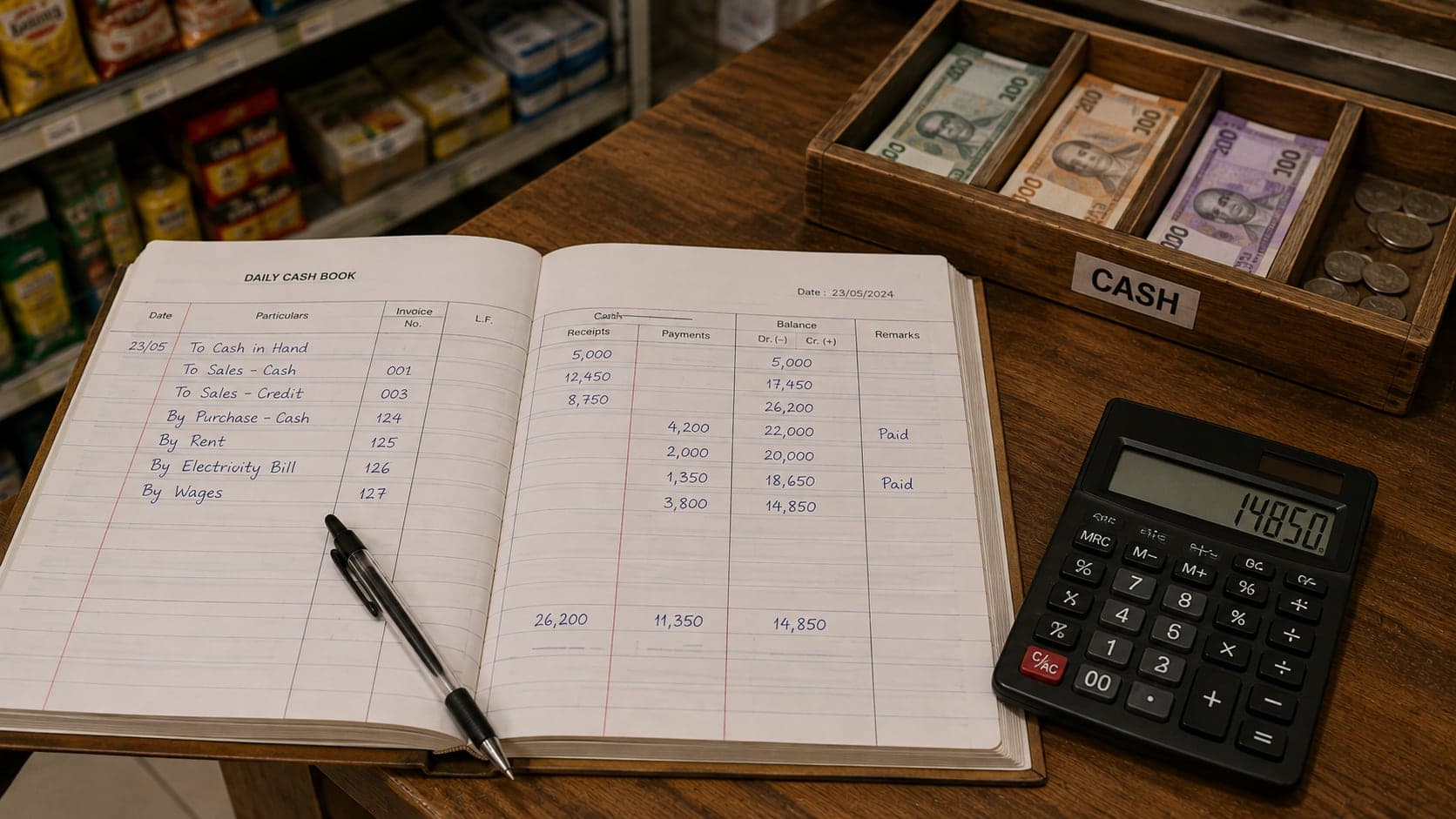
Bank reconciliationties the trail to cash: each receipt in the billing system should match a bank or wallet deposit with a reference. Wholesale shops that record payments only in the billing system but reconcile the bank separately discover “missing” payments that were never posted — or duplicate posts that inflate balances. One receipt number should appear on the customer ledger, the cash book, and the bank statement line.
When tax applies, the audit trail extends to tax lines on each invoice and credit note — not a monthly guess. Credit notes must reverse tax in the same structured way invoices charged it. A wholesaler who cannot produce CN-linked tax adjustment for a queried period is rebuilding from boxes of paper while the counter stays idle.
A specimen week on one account
Theory clears when you walk one account through a ordinary week. Metro Traders — mid-size electrical buyer, Net 30 terms, 25,000 credit limit, carton-and-piece mix — illustrates how documents stack:
Monday.Metro phones an order: four cartons of cable, thirty loose switches. The biller enters the order against Metro's account. Software applies Metro's cable carton rate (volume deal) and per-piece switch rate. Warehouse picks; delivery note DN-0450 lists quantities without prices; driver gets signed copy. Stock reduces on dispatch. Balance not yet invoiced if your policy invoices on delivery — or invoice INV-0901 issues now, balance rises 22,400, still under limit.
Wednesday.Metro requests two more cartons of the same cable — rush. Second pick, DN-0456, links to pending or separate invoice depending on policy. Running balance before payment: opening 14,800 plus new goods. Billers glance at ageing: nothing past due yet from prior month's terms.
Thursday. Bank alert: 15,000 transfer from Metro. Receipt RCP-0318 recorded, allocated against oldest open invoices per policy. Ledger credit 15,000; balance falls. Receipt prints with remaining balance stated. Cash book and bank reconcile the same day.
Friday.Metro reports six damaged switches from Monday's delivery. Credit note CN-0102 issues for six pieces at the same per-piece rate as INV-0901, references invoice line, stock returns to damaged quarantine or write-off category. Balance adjusts down; tax line reverses if applicable.
Month-end (following week).Statement batches for all accounts. Metro's shows opening, INV-0901, DN references, RCP-0318, CN-0102, closing balance. Ageing bucket shows current vs due based on invoice dates and Net 30. Owner reads ageing before approving Monday's large order from a different account stuck in 90+.
Seven document types, one ledger, no memory required — that is the wholesale billing target state. Paper shops achieve it with duplicate books and discipline; software achieves it when ledger, dispatch, and billing share one database and numbering. Gaps appear when the warehouse runs from WhatsApp photos while the office invoices from a spreadsheet — the week still happened, but audit season will not believe you.
Common wholesale billing mistakes to catch in that specimen week: invoicing cartons while stock left in pieces (counts diverge); applying list price because the customer list was not loaded; recording payment without allocation (statement shows mystery credit); credit note without stock return (inventory inflated); delivery without signed DN when short-delivery disputes are frequent. Each mistake is cheap on the day it happens and expensive when the balance is argued.
Evaluating wholesale billing software
Test with your messiest customer, not your simplest. Bring a real order: mixed units, customer-specific price, partial prior balance, delivery note, credit limit near cap. Walk through:
- Customer price resolves correctly on each line, with visible override trail.
- Carton and piece on one invoice; stock deducts in the right UOM.
- Ledger updates on invoice, CN, receipt — balance on screen matches statement.
- Delivery note without prices; links to invoice; optional signature capture or scan attach.
- Terms and due dates print; overdue visible on account.
- Batch statements and ageing in reasonable time for your account count.
- Audit log for void, reprint, price change — readable without calling support.
- Exports your accountant and tax workflow accept.
If you also run a retail counter, evaluate whether one system covers both modes or whether integration is clean. Two silos mean two stock figures unless something syncs them. The software buyer's guide covers trials and migration; wholesale adds the requirement that ledger and dispatch screens are equal citizens with the POS screen.
Wholesale billing is relationship arithmetic: the right price for the right party, the right unit on the right document, balance moving only when something traceable happened. Software that respects that model collects faster, argues less, and sleeps through audit season. Software that treats wholesale as “big retail” keeps the owner reconciling notebooks at midnight — which is the old problem, only digitised.
FAQ
Frequently Asked Questions
Quick answers to common questions about this topic.
Can I use my retail POS for wholesale billing?
Retail POS excels at speed: scan, total, receipt. Wholesale billing excels at named accounts, carton quantities, per-customer prices, delivery notes without prices, and statements with ageing. Many retail-first systems treat credit as an afterthought. If more than a quarter of your revenue is invoiced on account with trade units and variable pricing, judge the POS by its wholesale invoice screen — not by how fast it rings up a single item.
How do I bill when one customer gets three different prices on the same product?
Store the price against the customer–product relationship (or customer price list), not only on the product master. At invoice time, software should default to that customer's price and show who changed it if staff override. On paper, the same discipline applies: three customers mean three columns in your price book, and the invoice must name which column was used.
Should the delivery note show prices?
Usually not. Warehouse and driver check quantities; the buyer's receiving clerk often should not see your cost structure. The invoice (or a separate price-bearing document) carries money. One invoice can cover several delivery notes when shipments split across days — a common wholesale pattern that retail receipts rarely need.
What credit terms should I offer?
Terms are a cash-flow decision dressed as politeness. Net 7, 15, or 30 days are common; 'due on receipt' is valid for new accounts. Match terms to how fast you must pay suppliers and how reliably each customer pays history. Software should print terms on every invoice and calculate due dates automatically — and ageing should show who has crossed them.
How do I handle returns without losing the audit trail?
Never delete the original invoice. Issue a credit note with its own number, reference the invoice and lines returned, reduce stock when goods come back, and post the balance reduction to the party ledger. The pair INV + CN is the story auditors and customers expect. Editing the old invoice breaks the trail for everyone.
What records do I need if a tax audit looks at wholesale sales?
Sequential invoice numbers, issued PDFs or prints, a sales register reconciling to tax returns, credit notes with references, delivery evidence where regime requires it, and party ledgers showing balances moved with documents — not unexplained adjustments. Software that cannot produce a gapless numbering report and a period sales export will make you reconstruct months by hand.