Billing and Invoicing for Small Businesses: A Complete Guide
A surprising share of small-business money problems are really paperwork problems: a bill that was never written, an invoice missing the one detail that would have settled a dispute, a credit sale everyone remembers differently. This guide covers the whole billing craft — the documents, the fields, the numbering, credit and wholesale billing, corrections, and the mistakes that cost real money.
First, the words: bill, invoice, receipt, quotation
In everyday shop talk these words blur together, and mostly that is harmless. When documents start travelling — to a customer's accountant, a tax office, a court — the differences matter, so it is worth being precise once:
A quotation(or estimate) is an offer: “this is what it would cost.” Nothing is owed. It should carry a validity date, because prices move and old quotations have a way of resurfacing at awkward moments.
An invoiceis a request for payment for goods or services actually delivered. It creates a debt. “Bill” is the same thing in informal dress — a restaurant hands you a bill; a supplier sends your business an invoice.
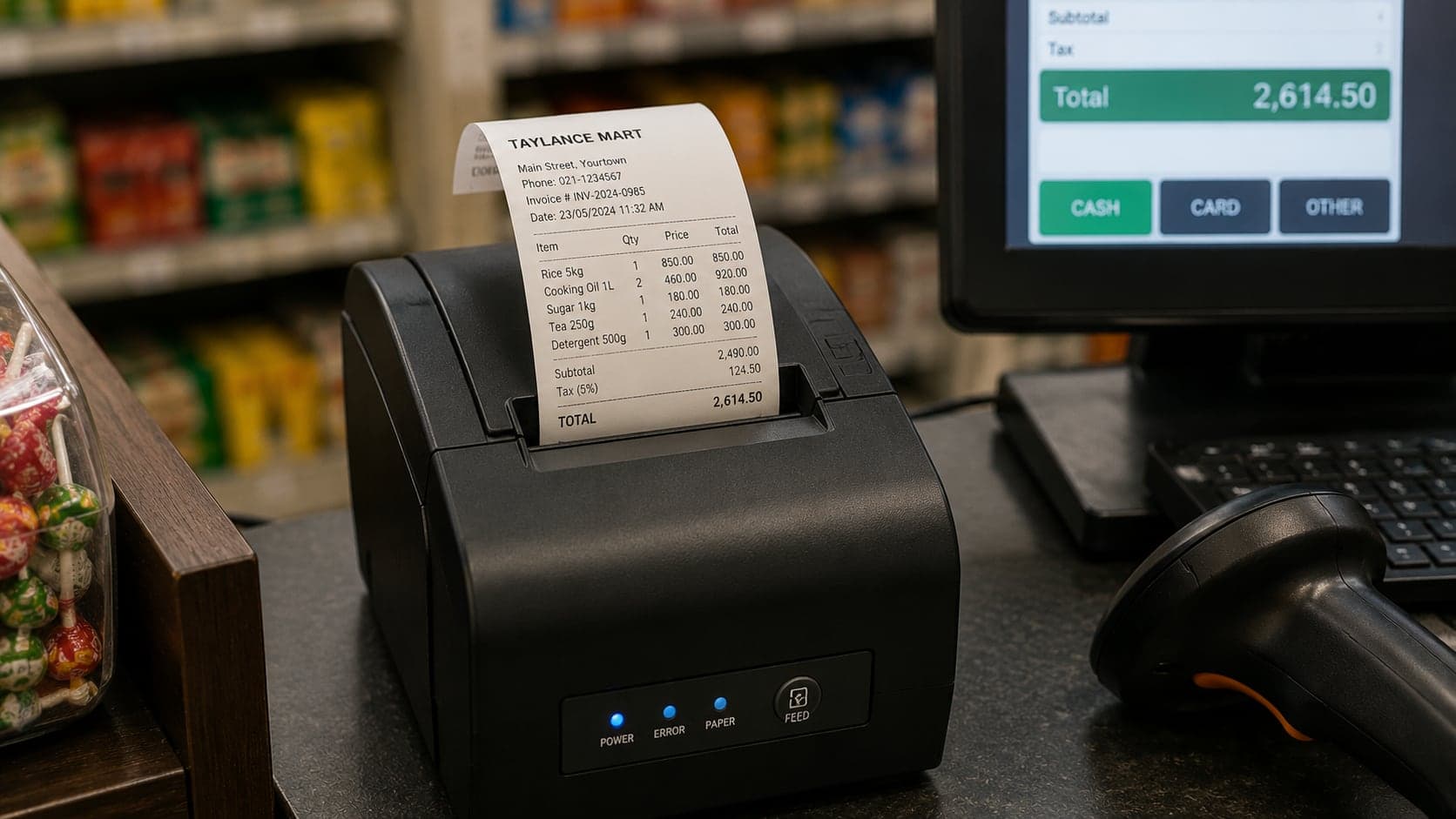
A receiptis proof that payment happened. It points the other way from an invoice: the invoice says “you owe me,” the receipt says “you no longer do.” A till slip from a cash sale is really both at once — a record of the sale and proof of instant payment — which is why nobody at a grocery counter argues about the distinction.
The sequence for a credit transaction is worth keeping straight: quotation (maybe) → invoice on delivery → receipt against each payment. If your business only ever sells cash-and-carry, the till slip collapses that chain into one piece of paper, and your billing life is simple. Credit, wholesale, and business customers stretch the chain out again — and that is where discipline pays.
What a correct invoice contains, field by field
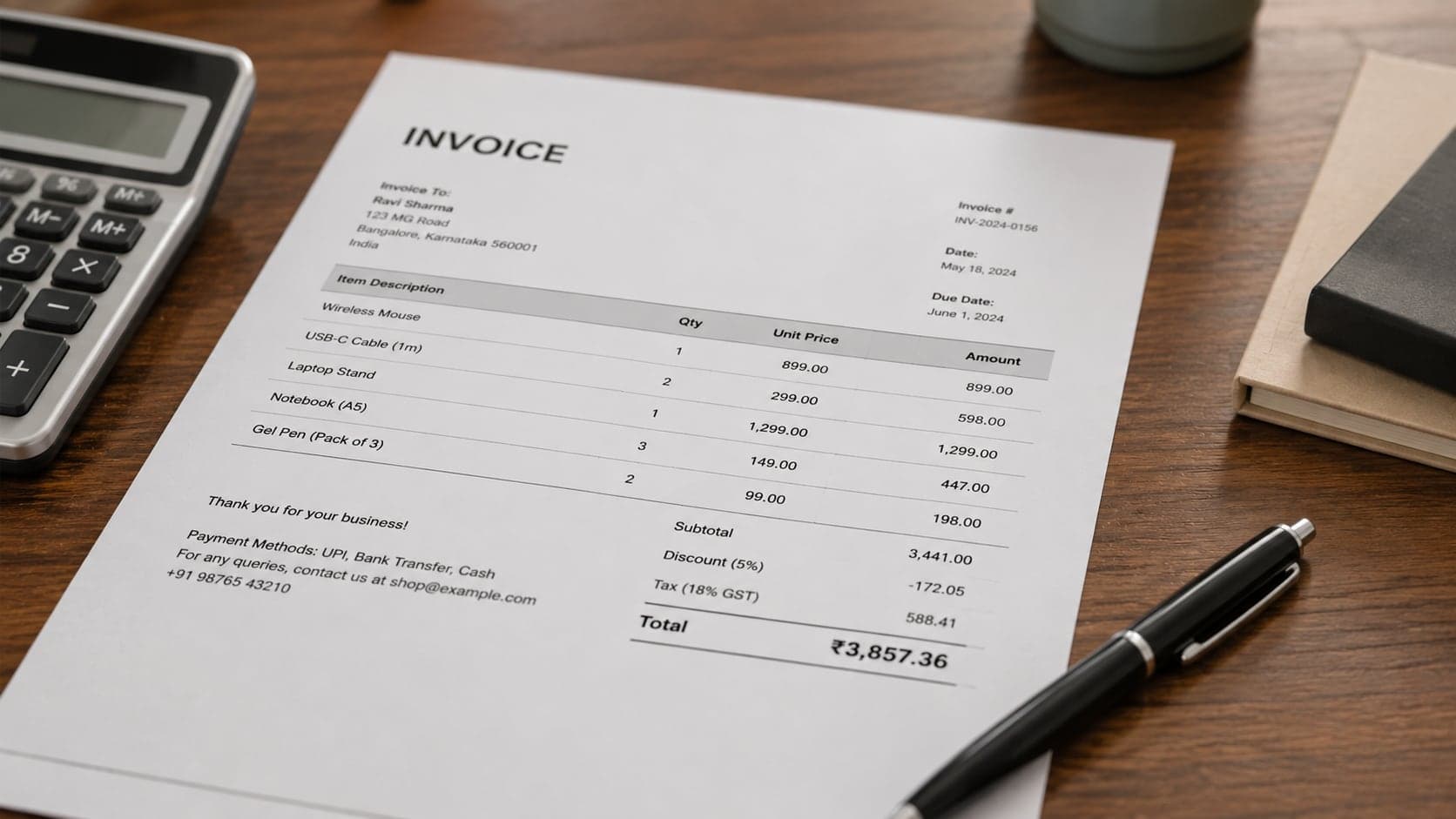
An invoice is not a creative document. Its job is to be so complete that a stranger — the customer's bookkeeper, a tax inspector, you in three years — can reconstruct the transaction without phoning anyone. Every field below exists because its absence has caused somebody a real problem:
- Your identity. Business name, address, phone, and any registration or tax number your country requires. Letterhead is not decoration; it is what makes the document attributable.
- The word “Invoice” and a unique number. The number is the document's name. Two invoices sharing a number is how payment disputes are born (numbering has its own section below).
- Date of issue — and, if different, the date of delivery. Payment terms count from a date; make it unambiguous.
- The customer's identity.For walk-in retail this can be “Cash customer.” For credit or business sales it must be the real name and, for companies, the business name — a first name alone is not something you can collect a debt against.
- Line items.One row per product or service: description a stranger could understand, quantity with its unit (12 pcs, 5 kg, 3 cartons of 24), unit price, and line total. “Goods — 15,000” is not a line item; it is a shrug.
- Subtotal, discounts, tax, and grand total — each on its own line. A discount buried inside adjusted unit prices is invisible later, including to you when you wonder where margin went.
- Amounts already paid, and balance due. Essential for advances and part payments. An invoice that shows a total but not the remaining balance guarantees a phone call.
- Payment terms.“Due on receipt,” “Net 30,” or a plain date — plus how to pay (cash, bank details, wallet). If late payment carries a charge, it must be stated here, not invented afterwards.
- The human touches that prevent disputes: your returns policy in one line, and a signature or stamp where local practice expects one.
Print two copies of anything on credit — one travels with the goods, one stays with you, signed by the receiver if you can get it. Digital systems keep the archive automatically, but the customer's signed copy still settles “we never got the delivery” conversations like nothing else.
Invoice numbering that will not embarrass you later
Numbering sounds trivial until an accountant or auditor asks why invoice 0088 is missing, or why there are two 0107s from the same month. Rules that keep you safe:
- Sequential, no gaps, no reuse.A missing number reads as a deleted sale. If a document is spoiled, keep it marked “cancelled” rather than reissuing its number.
- One series per document type. Invoices, credit notes, and quotations each get their own sequence — INV-, CN-, QT- prefixes make misfiling obvious at a glance.
- Consider embedding the year (INV-2026-0311). It resets the counter annually and makes archives self-sorting.
- Let software assign numbers.Handwritten books tempt people to “borrow” the next number and fill the page later. Software that issues numbers automatically removes the temptation and the arithmetic.
Quotations, proforma invoices, and advances
Three documents live in the space before a real invoice, and mixing them up creates debts that do not exist and deliveries that were never agreed.
A quotationcommits you to a price, not the customer to a purchase. Give it a number (QT- series), a validity period — “valid 14 days” is standard where prices move — and exactly the line-item discipline of an invoice, because a vague quotation becomes a disputed invoice later. When the customer agrees, the quotation's lines become the invoice's lines, unchanged; any difference between the two documents should be a conscious, explained decision.
A proforma invoice looks like an invoice, is numbered like its own series, and is not one: it creates no debt and books no sale. Its job is practical — a document formal enough for the buyer to raise payment, open a letter of credit, or clear internal approvals, before goods move. Issue the real invoice at delivery as usual. Businesses that book proformas as sales meet the same sale twice in their records and spend year-end untangling it.
An advance is real money before delivery, and the rule from the numbering section applies with force: record it the day it arrives, with a receipt, against the named customer. On the final invoice the advance appears as a deduction line — visible, dated, referenced. The worked example below shows exactly that.
A worked example, start to finish
Here is the whole discipline in one small story. A stationery wholesaler receives an order from a school supplies shop: fifty reams of A4 paper and twenty boxes of ballpoint pens.
INVOICE INV-2026-0483 — 28 Aug 2026
Bilal Traders → Iqra School Supplies (Account #C-041)
A4 paper, 80gsm — 50 reams × 5.80 ............ 290.00
Ballpoint pens, blue — 20 boxes × 9.50 ....... 190.00
Subtotal ..................................... 480.00
Volume discount (5%) ......................... −24.00
Tax (0% — exempt category) .................... 0.00
Total ........................................ 456.00
Advance received 25 Aug ..................... −100.00
Balance due (Net 30 → 27 Sep) ................ 356.00
Received by: ____________ Returns within 7 days in original packing.
Notice what the document quietly accomplishes. The quantities carry units, so nobody can claim the pens were twenty pieces. The discount is visible, so next month's negotiation starts from the list price, not the discounted one. The advance from last week is applied on the face of the invoice, so the balance is beyond argument. And the due date is a calendar date, not a vibe. When the shop pays 200 in mid-September, a receipt referencing INV-2026-0483 records it, and the remaining 156 stays visible on the account. No memory involved anywhere.
Cash sales vs credit sales
Cash billing is self-closing: goods go out, money comes in, the slip proves both, done. Credit billing opens a loop that stays open until the last payment, and everything about the paperwork should acknowledge that:
- The customer must be a named account, not a scribble. You cannot age, chase, or write off a debt attached to “the tall gentleman from Tuesday.”
- The invoice must state when payment is due. “Whenever” is not a term; it is a donation schedule.
- Every payment against the invoice gets a dated receipt, and the running balance should be visible to both sides — ideally printed at the foot of each new bill.
- Statements — a monthly summary of invoices, payments, and balance — turn awkward reminder calls into routine paperwork. Businesses expect them; individuals respect them.
How much credit to give, to whom, and what to do when it goes stale is really an accounting-policy question rather than a billing one — our shop accounting guide covers credit limits, ageing, and recovery in detail. The billing rule is simpler: no credit without a named account and a due date, ever. The five seconds that rule costs at the counter is the cheapest debt insurance available.
Wholesale billing: where it gets genuinely harder
Selling to other businesses adds per-customer pricing, carton-and-piece units, running account balances, delivery notes, and credit terms that retail cash-and-carry rarely needs. The invoice fields and numbering rules in this guide still apply — wholesale just stresses them harder. For the full wholesale workflow — party ledgers, dispatch, statements, ageing, and audit trails — see our wholesale billing guide.
Tax on bills, in general terms
Sales taxes differ by country, so this section stays deliberately general. The principles that hold almost everywhere:
- If you are registered for a sales tax or VAT, your invoices must show your registration number, the tax rate applied, and the tax amount as its own line — not blended into prices.
- Registration thresholds exist in most systems: below a certain annual turnover you may not need to charge tax at all. Know your threshold and which side of it you are on.
- Keep every invoice you issue and receive. Tax filings are reconstructed from these documents, and the retention period is typically five years or more.
- When in doubt, one hour with a local accountant is worth more than any article on the internet, this one included.
Fixing mistakes: returns, corrections, and credit notes
Mistakes are guaranteed — wrong rate, damaged goods, a return next Tuesday. What separates clean books from chaos is how you fix them. The golden rule: never alter an issued invoice. A document that has left your hands is history; history gets corrected by new documents, not by edits.
The instrument for this is the credit note— an invoice in reverse. It carries its own number, the date, a reference to the original invoice, the items or amounts being reversed, and the reason. Customer returns two damaged reams from the example above? Credit note CN-2026-0092, referencing INV-2026-0483, for 11.02 (two reams at the discounted rate). Their balance drops; the paper trail explains itself; nobody has to trust anybody's memory.
Small retail returns handled on the spot — refund from the till, slip stapled to the day's record — do not need ceremony. The moment the sale was on account, or the return happens on a different day, the credit note is the correct tool. If it feels bureaucratic, remember what it replaces: a crossed-out number on someone's copy of an invoice, which is exactly how trust between businesses dies.
Getting paid: terms, reminders, and partial payments
An invoice is not money. The gap between issuing and collecting is where small businesses feel cash pressure, and billing hygiene narrows that gap more than aggressive phone calls do:
- Short, explicit terms. If you can trade on 14-day terms instead of 30, do. Terms drift longer on their own; they never drift shorter.
- Invoice immediately. Every day between delivery and invoice is a day added to your effective terms. Invoice with the goods, not at month-end.
- Remind on a schedule, not a mood. A note a few days before due, a call the day after due, a statement weekly thereafter. Predictable follow-up reads as professionalism, not desperation — and it trains customers to pay you before the suppliers who never call.
- Welcome partial payments, record them precisely. Money in hand beats money promised. Issue a receipt, show the new balance, and agree the date for the rest while goodwill is warm.
A monthly billing routine that keeps you collectable
Billing discipline is not a personality trait; it is a calendar. The routine below takes one person a couple of hours a month and keeps every practice in this guide alive:
- First working day: statements out to every credit customer with a balance — invoices, payments, and the closing figure for the month just ended. Post them, hand them over, or send them digitally; the medium matters less than the regularity.
- Same sitting:run the ageing view (or sort the ledger pages) and mark three lists — gentle reminder (past due under 30 days), firm call (30–60), and stop-supply conversations (60+). Do the calls that week, not “soon.”
- Mid-month: a numbering audit that takes five minutes — the invoice and credit-note series each complete, no gaps, cancelled documents present and marked. Gaps found in the same month have innocent explanations; gaps found at year-end have interviews.
- Month-end:reconcile billing against money — total invoiced, total collected, total outstanding — and write the three figures somewhere permanent. The trend line of “outstanding” is the earliest warning system a credit-giving business has.
- Quarterly bonus:refresh the quotation template's prices and terms, so the next urgent quote is not copied from one made under last quarter's costs.
Paper billing vs billing software
A duplicate bill book has real virtues: no cost, no learning curve, no battery. For a low-volume, cash-only counter it is honestly sufficient. Its limits appear exactly where volume, credit, or staff appear — totals computed by hand, balances scattered across pages, numbering discipline resting on one person's carefulness, and no way to ask “how much did we sell in June?” without an evening of adding.
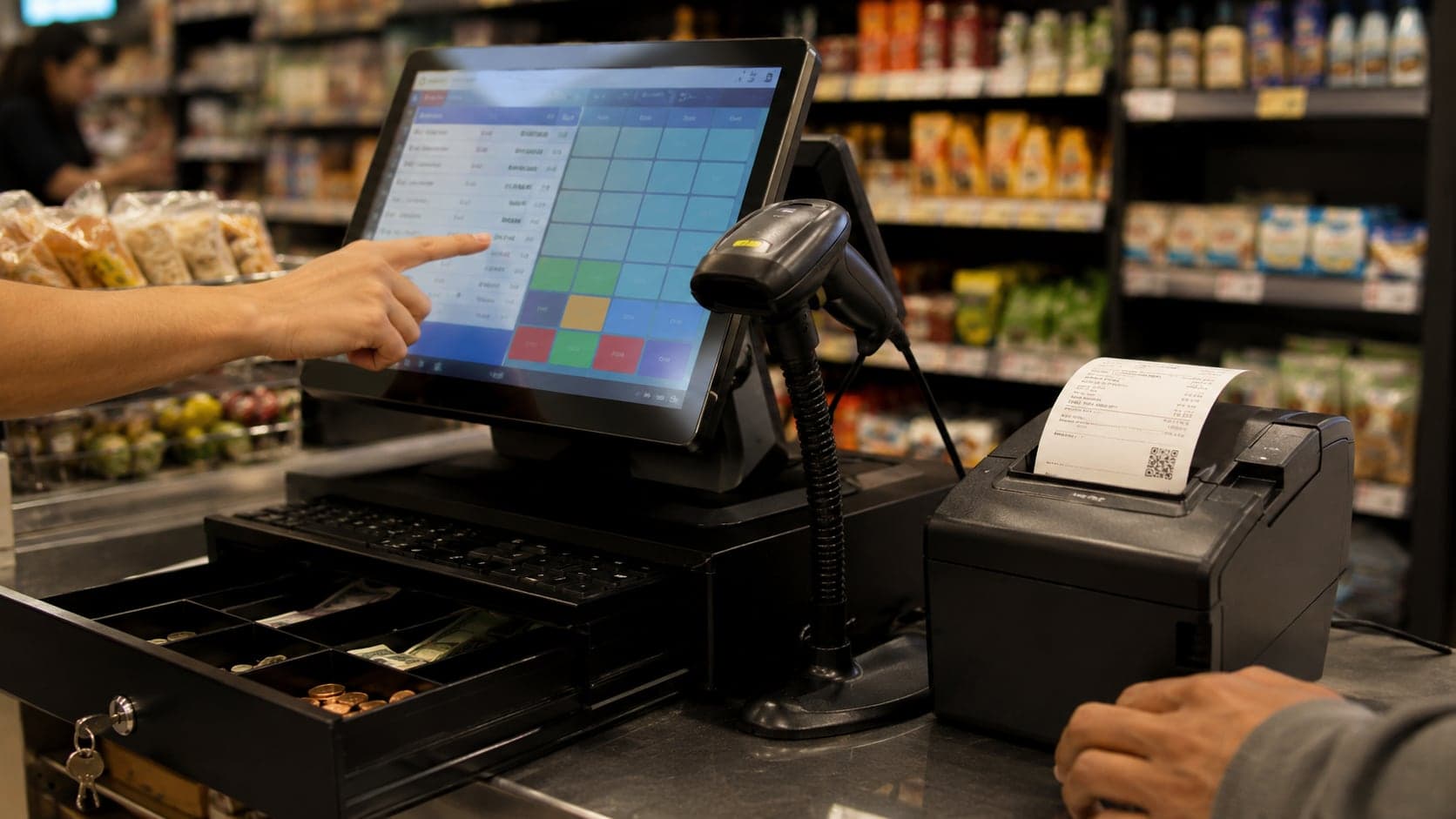
Billing software — whether a standalone invoicing tool or the billing screen of a POS system — automates the mechanical parts: numbering, arithmetic, tax lines, customer balances, statements, and the archive. The honest cost is setup time (products and customers must be entered once) and the change of habit. The honest benefit is that correctness stops depending on concentration. Tired people make arithmetic mistakes; software does not get tired.
If you move to software, move properly: enter opening balances for every credit customer as of a cutoff date, run the last paper bill the evening before, and start the first software invoice the next morning. Two parallel systems maintained “for safety” beyond a couple of weeks always diverge, and then neither can be trusted.
The seven billing mistakes that actually cost money
- Selling on credit without a document. The friendly nod at the counter becomes a disputed number in three months. If it is not written, it is a gift.
- Vague line descriptions.“Hardware items — 4,500” cannot be checked, priced, or defended by anyone, including you.
- Editing issued invoices. Corrections belong in credit notes. An altered invoice is worse than a wrong one, because it proves your documents can quietly change.
- Hidden discounts. Knocking the unit price down silently instead of showing a discount line erases your list price, your margin visibility, and your negotiating position — in one stroke.
- Letting advances float.Money received before delivery must be recorded against the customer the day it arrives, or it becomes the classic “I already paid part of this” dispute.
- Month-end batch invoicing. It bunches your cash flow, guarantees forgotten deliveries, and hands every customer an extra interest-free month.
- No archive.Whether carbon copies in a carton or rows in a database, the archive is the business's memory. Tax authorities assume that missing records hide something, and they price that assumption accordingly.
Keeping billing records
However you bill, the records need to survive. On paper that means bound duplicate books (not loose slips), stored dry, boxed by year. In software it means knowing where the data physically lives and how it is backed up — a question worth asking your vendor in plain words: “if my laptop is stolen tonight, what do I still have?” Cloud systems generally answer this well; installed systems answer it exactly as well as your backup habit does.
Retention rules vary, but five to seven years is the common legal expectation for commercial records, and old invoices earn their keep more often than you would think — warranty claims, supplier disputes, loan applications, and the sale of the business itself all reach back into the archive.
FAQ
Frequently Asked Questions
Quick answers to common questions about this topic.
Is a handwritten invoice legally valid?
In most jurisdictions, yes — validity comes from the content (identities, items, amounts, date), not the medium. Handwriting only becomes a problem when it omits required tax details or becomes illegible. Software helps with completeness, not legality.
Do I need to give a receipt for every small cash sale?
Practice and law vary by country, but the working answer is: offer one always, insist on keeping your own record always. The customer's copy is courtesy and dispute protection; your copy is the business's memory and, where taxes apply, a legal obligation.
What is the difference between an invoice and a delivery note?
A delivery note lists what physically travelled — items and quantities, no prices — and gets signed at the receiving end. The invoice carries the money side. Separating them lets warehouse staff check goods without seeing prices, and lets one invoice cover several deliveries.
How do I handle a customer who disputes an old balance?
With documents, calmly: the statement, then each invoice, then each receipt, in date order. This is precisely why numbering, named accounts, and signed delivery copies exist. If your own trail has gaps, price the lesson honestly, settle somewhere defensible, and fix the process that let the gap happen.
Should prices on retail receipts include tax?
Follow local law first — many countries mandate tax-inclusive shelf prices for consumers, while business invoices show tax separately. Where you have a choice, consumers understand inclusive totals better, and businesses need the split. Good billing setups can print both correctly from the same sale.