
 Tillqorin by Taylance Tech
What is accounts ledger software — and why do shops need it?
Keep customer, supplier, cash, and bank balances moving from real sales, purchases, expenses, and cash entries at pos.taylancetech.com.
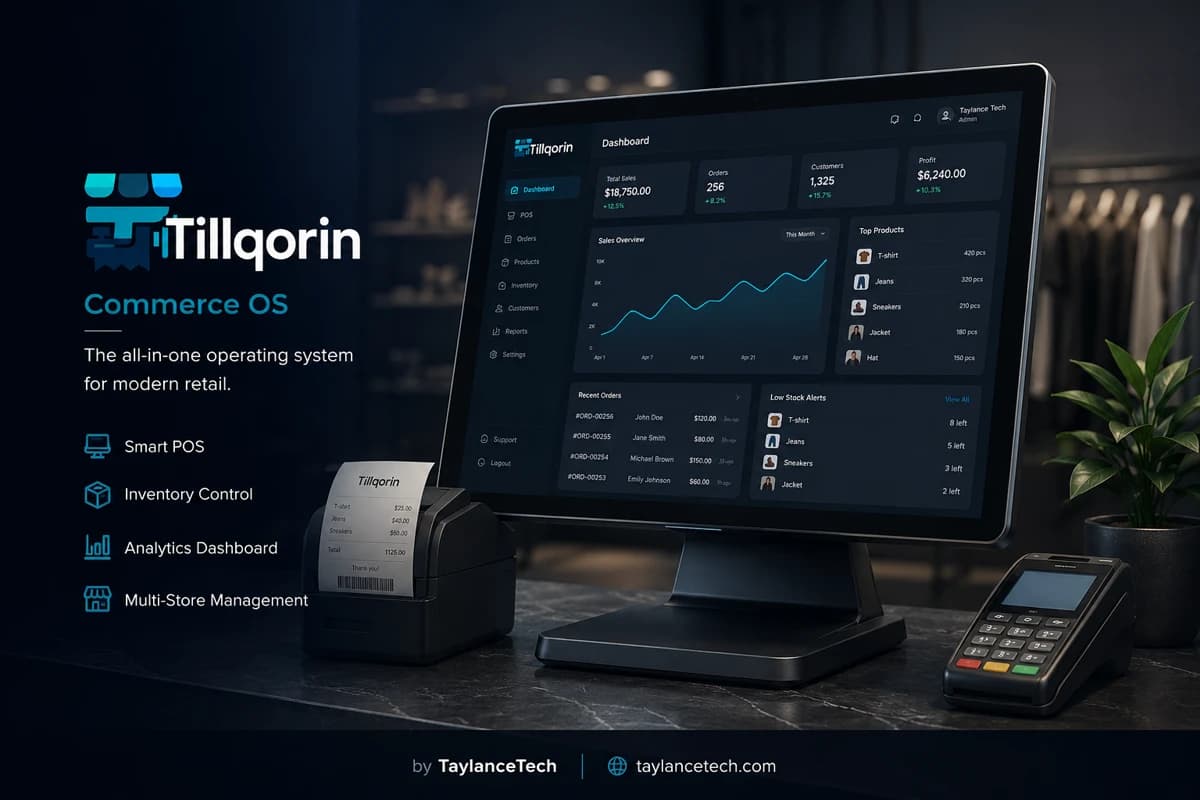
Accounts ledger software for shops records who owes whom, where money sits, and how balances changed — customers, suppliers, cash, and banks — with a running history you can open during collections or supplier settlement.
Shops need it when credit sales live in memory, supplier dues hide in chat threads, or drawer counts never match a written story. The failure is usually disconnection: billing in one place and ledger updates in another until someone skips a step on the busiest day.
Tillqorin keeps party ledgers inside the same organization as sales, purchases, expenses, and cash entries. Balances are consequences of work already posted, not a second notebook you retype at night. Built by Taylance Tech for retail and wholesale shops using pos.taylancetech.com.
What it is
What is accounts ledger software for shops?
A plain definition owners can use when comparing party books and shop systems.
Accounts ledger software for shops is a system that keeps running balances and movement history for the parties and money locations that matter in daily trading: customers, suppliers, cash, and banks. Each ledger shows what changed, when it changed, and what remains due or available.
In a healthy shop setup, those balances are not a second job after closing. They move when you bill a credit sale, post a purchase, record an expense, or enter a cash movement. The ledger becomes a consequence of operations rather than a nightly homework assignment.
People search for customer ledger software, supplier ledger tools, party ledger software, credit sales ledgers, or shop accounts software when trust-based trading outgrows memory. The need is clarity during collection and settlement — not corporate accounting theater.
Tillqorin’s accounts area is built for that shop reality inside the same organization as POS selling and purchasing at pos.taylancetech.com. It supports operational ledgers; it does not claim to replace every corporate general-ledger feature or automatic tax filing.
- Running balances for customers, suppliers, cash, and banks
- History tied to operational documents where possible
- Collection and settlement visibility for busy shops
- Operational accounts focus — not a full corporate GL promise
Why shops need it
Why shops need accounts and ledgers
The practical reasons owners stop running balances from memory.
Shops need accounts ledger software when credit is part of normal trading. Neighborhood customers may pay later. Wholesale buyers may settle weekly. Without a running customer balance, collection becomes an argument about who remembers what.
They need it when suppliers deliver on account. Purchase values that never join a payable ledger turn into surprise cash crunches. A supplier ledger lets you settle against history instead of reconstructing invoices under pressure.
They need it when cash and bank locations disagree with the drawer. If money moves between till, safe, and bank with no posted entry, month-end becomes detective work. Cash accounts and cash entries shrink that mystery.
They need it when an external bookkeeper asks for clean party activity. Handing over a bag of paper and three conflicting notebooks wastes paid hours. Exportable operational ledgers make handoff calmer without pretending the shop software filed anyone’s taxes.
Tied to billing
Why ledgers must stay tied to billing and purchasing
Disconnection is the root failure mode for shop accounts.
Ledger software fails shops when it is disconnected from billing. If you invoice in one place and update balances in another, someone will skip a step — usually on the busiest day. The skipped step becomes a silent lie in the book.
The same failure hits purchasing. Goods arrive, a bill exists, and the supplier balance never moves until someone “finds time.” Time rarely appears. Payable truth then lives in the supplier’s reminder call instead of your records.
Tied ledgers reduce double entry busywork. Staff still must post the sale or purchase correctly. They should not also retype the same event into a second account book at midnight.
Tillqorin is designed so operational documents are primary writers of ledger truth for shop parties. That design only helps if the team posts credit sales and purchases to the correct parties every time.
Customer ledgers
Customer ledgers and credit sales tracking
How receivables stay usable for collections.
A customer ledger is the running story of what a buyer purchased on account, what they paid, and what remains. For shops, it is a relationship tool as much as a finance tool. Clear balances protect trust when memories differ.
Credit sales tracking fails when cashiers create unnamed tickets for known credit customers. The sale may look complete at the till while the party balance never receives the debt. Train staff to choose the correct customer when payment is later.
Collections improve when you can open one party and see movement, not when you scroll chat screenshots. A weekly collection list pulled from real balances beats a mental list of “people who probably owe.”
In Tillqorin, treat customer accounts as living parties. Keep names unique enough that two neighbors are not merged by accident. Merge mistakes create collection drama that software alone cannot soothe.
- Create customer parties before the first credit sale
- Post credit sales to the named customer
- Record receipts against the same party
- Review balances on a fixed collection weekday
Supplier ledgers
Supplier ledgers and payable settlement
How purchase posting supports calm supplier relationships.
A supplier ledger holds what you owe for goods received and what you have already paid. Shops that buy frequently need this history more than shops that pay cash for every carton at the door.
Payable settlement goes wrong when purchase values sit only on paper while payments sit only in a bank SMS. The supplier remembers the full bill; your drawer remembers the transfer; nobody shares one timeline.
Post purchases to the correct supplier when goods are accepted. If you dispute quantity, resolve the accepted value in records instead of leaving a vague “we’ll adjust later” note that never lands.
Tillqorin links supplier accounts to purchasing workflows so payables can follow operational posting. Use account reports when you plan a settlement visit or transfer, not only when the supplier escalates.
Cash and bank
Cash and bank accounts in shop ledgers
Money locations that need posted movement, not assumptions.
Cash and bank accounts answer a simple question: where is the money right now, according to posted history? Shops often have a till drawer, a safe, and one or more bank accounts. Without those locations in software, “cash” becomes a blurry word.
Cash entries record movement between locations or adjustments that operations require. A deposit from drawer to bank should leave a trail. A withdrawal for a supplier payment should leave a trail. Silent movement creates silent imbalance.
Drawer counting still matters. Software does not replace physical counts. The point of cash accounts is to give the count something honest to compare against. Large unexplained gaps mean posting was missed or cash handling needs coaching.
Configure the cash and bank parties your store actually uses in Tillqorin, then post movements when they happen. Waiting until month end to invent entries recreates the notebook problem with nicer labels.
- Name real money locations the shop uses
- Post deposits and withdrawals when they occur
- Compare drawer counts to posted cash on sample days
- Keep bank transfers out of unmarked chat-only history
Opening balances
Opening balances without poisoning the ledger
Starting numbers that owners must agree once.
Opening balances are the bridge from old books to the new system. If they are guessed, every later collection argument will blame the software. If they are agreed and written down, later movement can be trusted.
Bring only active parties with real remaining dues or money locations. Skip dormant names with zero relevance. A clean short list beats a cluttered import that confuses cashiers choosing a customer.
Owner and, if needed, bookkeeper should sign off on opening receivables, payables, and cash/bank figures for the go-live morning. One shared snapshot prevents three “official” starting points.
After go-live, resist endless opening tweaks. Fix true errors quickly, then let operational posting carry the story forward. Constant opening edits train the team that balances are optional.
Collections rhythm
A collections rhythm that ledgers can support
Turning balances into action without damaging customer relationships.
A ledger only helps collections when someone opens it on a schedule. Pick a weekday for receivables review. Call or visit with the balance in front of you. Vague reminders based on feelings create friction; specific balances create clearer conversations.
Segment gently. Large overdue balances need earlier attention than small current ones. Shop software can show who owes; humans still choose tone and timing. Professional collection is firm and specific, not theatrical.
Record payments promptly against the correct customer. Delayed receipt posting makes you chase people who already paid — a fast way to harm goodwill.
Use Tillqorin account reports as the collection list source. If staff keep a parallel paper list, reconcile it weekly or retire it so two truths do not form.
Settlement rhythm
Supplier settlement rhythm for payable ledgers
Paying what you owe with history in hand.
Supplier settlement works best on a rhythm matching how you buy. If deliveries arrive daily, review payables at least weekly. If buying is lumpy, review before each large payment run.
Bring the supplier ledger to the conversation. Confirm invoices included, payments already made, and the remaining balance. Many disputes shrink when both sides look at the same movement list.
Do not clear a payable with an undocumented cash handover if you can avoid it. Post the payment path so the ledger and the bank story match later.
When a purchase was partially returned or short-received, adjust through proper operational posting rather than a silent mental discount. Silent discounts recreate fudge-factor ledgers.
Not full accounting
Operational shop accounts versus full accounting packages
Honest scope so expectations stay AdSense-safe and professional.
Tillqorin focuses on operational accounts and ledgers for shops — customers, suppliers, cash, banks, and related movement tightly linked to selling and purchasing. That coverage matches what most retail and wholesale counters need day to day.
It is not a promise to replace every corporate general-ledger feature, multi-entity consolidation suite, or jurisdiction-specific statutory filing robot. Shops that need those tools should keep a specialist accountant workflow alongside operational records.
Operational ledgers help bookkeepers. They do not automatically complete tax returns, payroll filings, or legal compliance. Keep those duties with qualified professionals where your rules require them.
Choosing shop accounts software with clear scope prevents disappointment. Buy Tillqorin for party balances tied to commerce. Keep formal accounting advice where it belongs.
- In scope: party ledgers and money locations for shop trading
- In scope: balances influenced by sales, purchases, expenses, cash entries
- Out of scope: automatic tax filing and legal determinations
- Out of scope: every enterprise GL feature set
Expenses and ledgers
Expenses, cash book habits, and ledger honesty
Small spends that still change balances and owner trust.
Expenses are easy to ignore because each one feels minor. Transport, packing, repairs, and petty purchases still move cash and still change whether a strong sales day was a strong business day. Leaving them unposted makes ledgers look healthier than reality.
Cash book habits matter. If staff pay small costs from the drawer without an entry, drawer counts drift and suspicion rises. Posting a simple expense or cash entry takes less time than arguing about missing notes later.
Owners should decide which expense categories must be posted same day versus batched at week end. Same-day is safer for cash discipline. Weekly batching only works when someone truly owns the batch.
Tillqorin includes expense and cash-entry paths as part of operational posting. Use them so party and cash ledgers stay believable during owner review.
Staff and permissions
Who may change balances and why limits matter
Role hygiene for accounts work inside a busy shop.
Not every cashier should edit party opening balances or delete historical movement. Accounts power without limits turns honest mistakes into silent balance changes that collections cannot explain.
Managers may need to review ledgers and record receipts. Admins may need to configure accounts and handle sensitive corrections. Cashiers primarily need correct party selection during credit selling.
Document who may create adjustment-like entries. Rare corrections should be visible and owned. Frequent invisible fixes are a process smell, not a feature.
Tillqorin’s role model helps separate selling from administration. Pair it with a shop rule: balance corrections require a named person and a short reason note in your internal habit, even if the screen is simple.
Bookkeeper handoff
Handing ledgers to an external accountant
Operational clarity that supports professionals without replacing them.
External accountants work faster when party activity is consistent. Provide customer and supplier movement for the period, cash and bank summaries, and notes on opening balances you agreed at go-live.
Do not expect shop software exports to be a finished statutory pack for every jurisdiction. Accountants map operational data into filing formats. Your job is clean source history; their job is professional filing where required.
Agree a monthly handoff day. Dumping six months of chaos before a deadline creates avoidable fees and avoidable errors.
Tillqorin’s exportable account review supports this handoff pattern. Keep posting disciplined so the export is worth opening.
Wholesale credit
Wholesale counters and dues collection
Party ledgers when ticket sizes and credit terms grow.
Wholesale counters often sell larger tickets on short credit cycles. A missed ledger update hurts more because each invoice carries more value. Party selection at billing time is non-negotiable.
Weekly dues collection is a common rhythm. Prepare the list from customer ledgers the morning of collection day. Visiting with outdated numbers wastes trips and damages credibility.
Partial payments are normal. Post them against the correct customer so remaining balances stay true. Holding partial payments “in mind” recreates memory accounting.
Use Tillqorin customer accounts as the spine of wholesale credit operations, and keep naming consistent with how drivers and counters refer to each buyer.
Retail credit
Retail neighborhood credit without chaos
Smaller balances still need clean party history.
Retail credit balances may be smaller individually and still painful in total. Many neighbors owing a little becomes a cash flow problem if nobody reviews the ledger.
Name discipline matters. “Ahmed — street corner” and “Ahmed — delivery” must be distinct if they are different people. Merged identities create unfair collection calls.
Set a practical credit habit: no unnamed credit sales. If the customer is new, create the party before the goods leave, not after the rush.
Tillqorin helps when staff follow that habit. Software cannot invent a customer name the cashier refused to record.
Reconciliation
Simple reconciliation habits for shop ledgers
Checks that keep trust without turning the shop into a finance department.
Reconciliation here means comparing software balances to real-world evidence on a sample rhythm: drawer cash versus cash account, bank SMS or statement versus bank account, supplier statement versus supplier ledger for a few key parties.
You do not need to reconcile every party every day. You do need a weekly sample that catches drift early. Early catches are cheap; month-end surprises are expensive.
When a gap appears, ask which post was missing before asking which screen is “wrong.” Most shop ledger gaps are human posting gaps.
Write the sample checklist once and reuse it. Consistency beats heroic audits after distrust has already spread through the team.
- Sample drawer versus cash account weekly
- Sample one bank account against real bank activity
- Sample two supplier statements against ledgers
- Sample top credit customers before collection day
Choosing software
How to choose accounts ledger software for a shop
Selection questions tied to credit, payables, and cash reality.
Choose accounts ledger software by testing your real credit sale, your real supplier purchase, and your real drawer-to-bank deposit. If any of those require a second book, keep evaluating.
Ask whether balances update from operational documents. Ask how you open one customer’s movement. Ask how cash and bank locations are modeled. Ask what the product does not try to be.
Avoid tools that market “complete accounting” while leaving party posting disconnected from the till. Also avoid tools so heavy that cashiers cannot select a customer during a queue.
Tillqorin fits shops that want operational party ledgers connected to selling and purchasing in one organization, with clear limits around statutory automation and corporate GL depth.
Myths
Myths about shop accounts and ledgers
Claims that waste time and create false comfort.
Myth: a notebook ledger is always safer than software. Reality: notebooks skip updates on busy days too — and they are harder to search during collections.
Myth: software balances are automatically correct. Reality: wrong party selection and missing cash entries produce wrong balances quickly.
Myth: accounts ledger software files your taxes. Reality: operational history helps professionals; filing duties remain yours under local rules.
Myth: only wholesale shops need ledgers. Reality: retail credit and cash location drift hurt small counters every month.
Myth: you can fix trust later with adjustments. Reality: frequent fudge factors train everyone to distrust the book.
Mistakes
Accounts ledger mistakes shops regret
Avoidable errors during the first months.
Guessing opening balances without owner agreement poisons collections from week one.
Allowing unnamed credit sales keeps the till moving and the receivables blind.
Posting supplier payments without linking them to supplier history creates fake payables calm.
Letting every staff member edit balances without limits turns corrections into invisible churn.
Skipping weekly collection review until cash gets tight makes ledgers feel useless right when you need them.
First month
First-month accounts and ledger plan
A grounded sequence for trustworthy party balances.
Week one: create active parties, agree opening balances, and post live credit sales to named customers only.
Week two: post purchases to suppliers and record at least the cash movements you always forget, such as bank deposits.
Week three: run the first formal collection day from account reports and settle one supplier using ledger history.
Week four: sample-reconcile drawer and one bank account, clean duplicate party names, and confirm who may perform balance corrections.
- Opening balances written and agreed
- No unnamed credit sales policy enforced
- One collection day completed from software balances
- Cash and bank sample check completed
Metrics
Simple metrics that show ledgers are working
Signals that stay honest and operational.
Track how many credit sales posted without a customer party. That number should fall to near zero. If it rises, till training failed.
Track collection conversations that required inventing a balance from memory. That number should fall as reports become the source.
Track drawer variances on sample days. Persistent large gaps mean cash entry discipline needs coaching.
Track supplier disputes caused by missing purchase history. Falling disputes mean payable ledgers are doing their job.
Ownership
Who should own ledger hygiene in the shop
Named humans keep balances believable.
Someone owns party naming quality. Someone owns opening-balance integrity. Someone owns collection day. Someone owns supplier settlement posting. Someone owns cash entry discipline. Write the names down even if one owner holds every hat.
Cashiers own correct customer selection on credit sales. Managers own daily exception review. Admins own permissions for sensitive corrections and account setup.
When ownership is vague, ledgers rot quietly until a fight makes the rot visible. When ownership is clear, small fixes happen early.
Tillqorin provides the accounts surface. The shop assigns the humans who keep it true.
Poor fit
When this accounts approach is a poor fit
Boundaries that protect buyers and keep claims responsible.
If your shop never extends credit, never buys on account, and never struggles with cash location tracking, you may need only lighter billing tools. Ledgers still help, but urgency is lower.
If you need deep statutory accounting automation, multi-company consolidations, or formal audit packs as the primary product, choose a specialist accounting suite and integrate operational exports as needed.
If leadership refuses to stop unnamed credit sales, no ledger software will rescue receivables. Fix the habit first.
Tillqorin is a poor fit for teams seeking unlimited unpaid write access after trial. Organizations subscribe through Paddle; inactive billing pauses writes until payment is active again.
Professional limits
Professional expectations and limits
What Tillqorin accounts and ledgers are for — and what they are not.
Expect customer, supplier, cash, and bank oriented accounts with running balances influenced by sales, purchases, expenses, and cash entries, plus reports you can use for collections and settlement.
Do not expect automatic tax filing, legal advice, profit guarantees, or a claim that every corporate GL feature is included. Do not expect perfect balances if staff skip party selection or cash posting.
Do not expect ledgers to repair distrust caused by endless undocumented adjustments. Do not expect software alone to collect dues without a human rhythm.
Within those limits, accounts ledger software is how shops keep credit and cash stories honest. Tillqorin is built by Taylance Tech for that operational job at pos.taylancetech.com.
Statements talk
Using ledger history in customer and supplier conversations
How to speak from balances without escalating conflict.
Bring movement, not accusations. “Here is the sale on Tuesday and the receipt on Friday; the remaining balance is this” beats “you never pay.” Specific history lowers heat.
If the other party disputes a line, pause collection drama and verify the operational document. Fix true posting errors quickly. Stand firm on lines that match accepted deliveries and signed tickets.
For suppliers, ask which invoices they include in their reminder. Match them to your purchase posts before transferring money. Paying against vague totals recreates confusion next month.
Keep printed or on-screen reports ready on collection day. Searching through chats in front of a customer signals that your house records are weak.
The problem
Ledger problems shops hit before they search
These gaps show up as collection fights and drawer arguments, not as software jargon.
Balances that need constant “adjustments”
Manual ledgers collect fudge factors until nobody trusts the number on the page.
Collections without a usable list
You know people owe you — not who, how much, or since when.
Supplier dues living in chat threads
Purchase paperwork never joins a running payable balance you can settle cleanly.
Cash versus bank confusion
Drawer counts disagree with the software story because money movement was never posted.
Credit sales remembered, not recorded
Neighborhood trust turns into relationship strain when memories differ on the balance.
Nightly retyping into a separate book
Busy days skip ledger updates, so the book becomes fiction by month end.
Tillqorin
How Tillqorin supports shop accounts and ledgers
Party accounts, cash and bank visibility, operational posting, and exportable account review.
Customer and supplier party accounts
Running balances influenced by sales, purchases, and related money movement for the parties you trade with.
Cash and bank accounts
Track money locations and record cash entries as funds move between them.
Ledgers tied to operations
Sales, purchases, expenses, and cash entries write history so you retype less at night.
Account reports for collections
Open a party’s movement and balance when you collect dues or settle payables.
Handoff-friendly review
Export or share account activity when an external bookkeeper needs operational detail.
Role-aware shop access
Keep sensitive balance work with managers and admins while cashiers focus on selling.
Who it’s for
Who accounts ledger software fits
Shops that extend credit, settle suppliers, and need money locations they can explain.
- Retail counters selling on customer credit
- Wholesale teams collecting dues on a weekly rhythm
- Owners reconciling cash drawers against posted movement
- Shops settling supplier balances from purchase history
- Family businesses tired of memory-based party balances
- Teams handing operational ledgers to an external accountant
Getting started
How to start accounts and ledgers in Tillqorin
A practical path from empty parties to trusted running balances.
- 1
Create the parties you actually trade with
Add active customers, suppliers, cash, and bank accounts before importing a museum of unused names.
- 2
Set opening balances carefully
Record true starting dues and money locations once, in writing, with owner agreement.
- 3
Post sales and purchases normally
Let operational documents update party history instead of retyping invoices into a second book.
- 4
Record cash entries when money moves
Deposit, withdraw, and shift funds between cash and bank with a posted trail.
- 5
Review ledgers on a fixed collection day
Open account reports to collect receivables and settle payables while balances are still trusted.
Checklist
Accounts and ledger go-live checklist
Confirm these items before you trust balances for collections and settlement.
- Active customers and suppliers created with clear unique names
- Cash and bank accounts named for real money locations
- Opening balances agreed in writing by the owner
- Credit sales policy: no unnamed credit tickets
- Staff trained to select the correct party at billing time
- Purchases posted to the correct supplier on acceptance
- Cash entry habit defined for drawer-to-bank movement
- Collection weekday chosen and kept
- One sample drawer reconciliation completed
- One supplier settlement completed using ledger history
- Permissions limited for balance corrections
- Duplicate party names reviewed and cleaned
- Bookkeeper handoff format agreed if you use an external accountant
- Trial and subscription billing status known to an admin
- First month metrics owner assigned
Compare
Tillqorin ledgers vs disconnected account books
What changes when balances follow operational posting.
| Criterion | With Tillqorin | Typical alternative |
|---|---|---|
| How balances update | Sales, purchases, expenses, and cash entries write history | Retype every invoice into a separate ledger book |
| Credit visibility | Running customer balances for collections | Memory, chats, and disputed scraps of paper |
| Supplier payables | Supplier accounts influenced by purchase posting | Sticky notes and verbal promises |
| Cash discipline | Cash and bank accounts plus cash entries | Drawer counted with no system trail |
| Busy-day reliability | Ledger work rides along with counter posting | Nightly bookkeeping skipped when the queue was long |
| Bookkeeper handoff | Exportable party activity from live operations | A bag of bills and conflicting notebooks |
FAQ
Accounts & ledgers — frequently asked questions
Practical answers about accounts ledger software and how Tillqorin handles it.
What is accounts ledger software for a shop?
It is software that keeps running balances and movement history for customers, suppliers, cash, and banks — ideally updated from sales, purchases, expenses, and cash entries instead of nightly retyping.
Is Tillqorin a full accounting package?
Tillqorin focuses on operational accounts and ledgers for shops, linked to POS and purchases. It is not a replacement for every corporate general-ledger feature, and it does not automatically file taxes or provide legal advice.
Can I see one customer’s full ledger?
Yes. Account reports are designed so you can review a party’s movement and balance for collections or statements.
How do cash and bank accounts help?
They track money locations and support posted cash entries when funds move. That gives drawer counts and bank activity something honest to compare against.
Do credit sales update customer balances?
When credit sales are posted to the correct customer party, balances can reflect that operational activity. Unnamed credit tickets leave receivables blind.
Can suppliers be tracked the same way?
Yes. Supplier accounts are meant to follow purchasing and settlement activity so payables are based on history rather than sticky notes.
Will this replace my accountant?
No. Clean operational ledgers help an accountant work from better source data. Filing, advisory, and compliance duties remain with you and qualified professionals where required.
Who builds Tillqorin?
Taylance Tech builds and operates Tillqorin. Shops use the product at pos.taylancetech.com after signup, trial, and subscription through Paddle.
Keep exploring
Related Tillqorin guides
More pages on billing, stock, cloud setup, and small-shop use — same product, different focus.
Wholesale billing
What wholesale billing is, why traders need it, and how Tillqorin handles account invoices and dues.
Read guideBilling software
What billing software is, why shops need it, and how Tillqorin creates customer bills.
Read guideShop management
What shop management software is, why stores need one daily loop, and how Tillqorin unifies selling, stock, buying, and spending.
Read guidePurchase orders
What a purchase order system is, why shops need purchasing software, and how Tillqorin receives supplier goods into stock.
Read guideWant to try Tillqorin at your counter?
Start a trial on the live app at $9/month after trial, or contact Taylance Tech if your shop needs a custom setup.