
 Tillqorin by Taylance Tech
What is wholesale billing software — and why do traders need it?
Invoice account customers, track dues, and keep wholesale stock and purchases aligned with Tillqorin at pos.taylancetech.com.
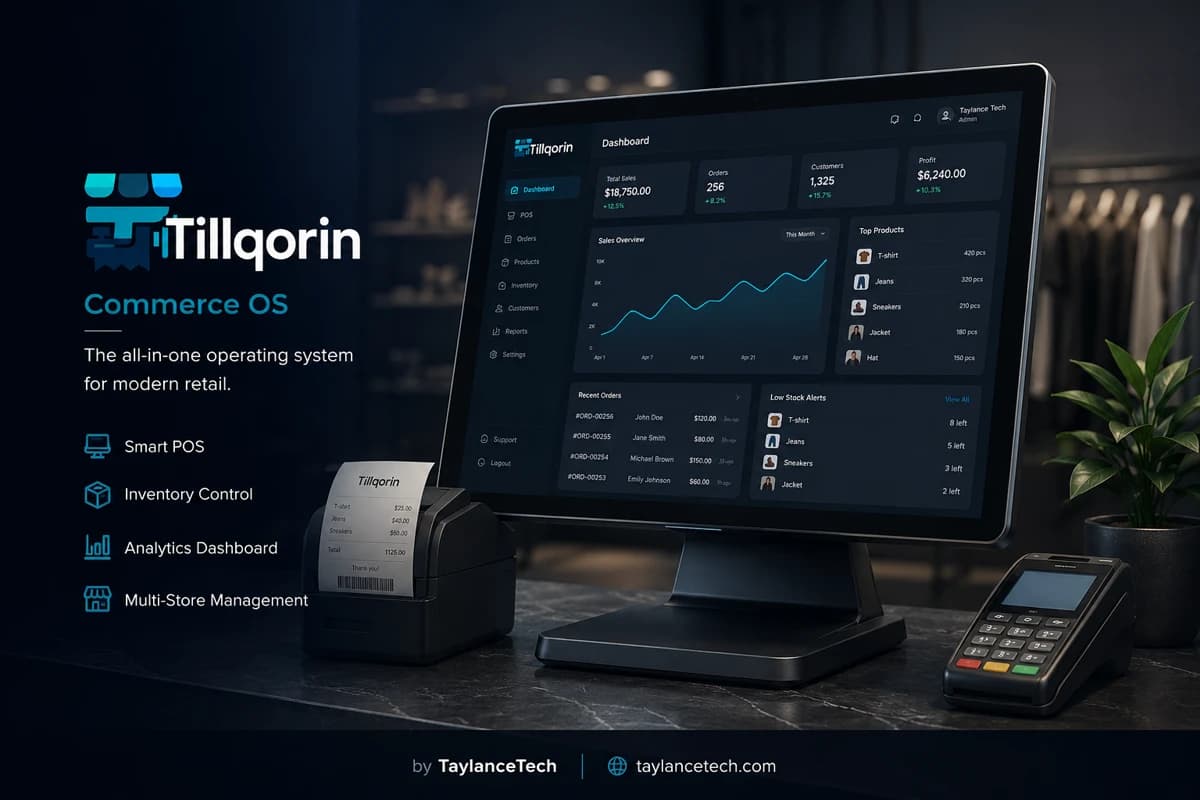
Wholesale billing software is the system distributors and traders use to invoice business buyers, often on credit, with clear item lines and lasting dues records. Wholesale work is rarely a one-item walk-in sale. It is carts of cartons, named customers, partial payments, and paperwork another office may process later.
Wholesale businesses need dedicated billing discipline when chat-based dues, notebook ledgers, and informal invoices start creating collection fights. The risk is not only lost money. It is broken trust with buyers who expected a clean invoice and a reliable balance.
Tillqorin supports wholesale billing at pos.taylancetech.com through sales invoices on customer accounts, purchase receiving against suppliers, stock movement on the same catalog, and ledger-style visibility for what remains owed. Hybrid shops can still serve walk-ins; the emphasis below is account trade and distributor-style charging.
What is wholesale billing
What is wholesale billing software?
Wholesale billing software manages invoices and dues for account-based trade.
Wholesale billing software is used when a business sells to other businesses or bulk buyers and must issue durable invoices. The document usually names the customer, lists goods with quantities and rates, states the total, and often remains unpaid in full at the moment of dispatch.
Wholesale billing is therefore both a document job and a receivables job. Creating the invoice is step one. Knowing what each customer still owes after weeks of partial payments is step two. Tools that only print pretty pages without account balances leave the harder half unfinished.
Distributors, traders, and hybrid merchant shops all feel this need at different scales. The shared pattern is named buyers, repeated orders, and credit terms that make informal notes unsafe.
Tillqorin approaches wholesale billing through sales invoices on customer accounts, with purchases and stock on the same product catalog. That combination matters because wholesale profit depends on what you bill, what you are owed, and what you still hold.
Search phrases such as “wholesale billing software,” “wholesale billing system,” “distributor billing software,” and “wholesale invoice software” typically point to this account-trade workflow rather than pure walk-in retail checkout.
One-line definition: wholesale billing software creates itemized account invoices and keeps customer dues linked to those invoices over time.
That definition excludes tools that only design letterheads. If your team cannot open a customer’s invoice history and see what remains unpaid, you do not yet have wholesale billing control — only document decoration.
It also excludes pure retail checkout tools that never force customer identity on credit trade. Wholesale billing begins when the buyer’s name is part of the commercial record.
- Named customer invoices
- Itemized wholesale lines
- Credit and dues tracking
- Retrieval of past invoices
- Catalog shared with stock and purchasing
Why wholesale needs it
Why wholesale businesses need billing software
Wholesale needs software when credit volume exceeds what notebooks can govern.
Wholesale margins can look healthy on paper while cash is trapped in unpaid invoices. Without dues lists, owners finance their customers accidentally.
Wholesale buyers often have their own accounts staff. They ask for clear invoices. Weak paperwork slows payment and damages professional standing.
Wholesale order sizes magnify quantity mistakes. One wrong carton line is expensive. Structured product lines reduce that risk compared with freehand totals.
Wholesale trade usually involves both selling and buying. If supplier receiving and customer invoicing use disconnected lists, stock and cost judgment degrade together.
Wholesale teams grow. What one owner remembered for twenty customers fails at eighty customers. Software scales the record, not the memory.
If your wholesale book is still small and fully prepaid on every dispatch, urgency is lower. As soon as credit terms appear, billing software becomes risk control.
Credit terms can be informal at first — “pay Friday” — and still create real exposure. Informal timing is not a reason to keep informal records. It is a reason to make the invoice and due visible immediately.
Wholesale also needs continuity when the owner is away. If only one person understands who owes what, the business is fragile. Shared account records are continuity infrastructure.
- Receivables visibility
- Buyer-ready invoice documents
- Lower quantity-error cost on bulk lines
- Connected purchasing and selling catalog
- Team-scale customer records
Wholesale vs retail charging
How wholesale charging differs from retail checkout
Wholesale billing follows account rhythm, not queue rhythm.
Retail checkout optimizes for strangers in a line. Wholesale billing optimizes for known buyers, often with credit and later payment.
Retail proof is often a compact thermal slip. Wholesale proof is often a fuller invoice a second office will read.
Retail speed mistakes annoy a shopper. Wholesale documentation mistakes can delay payment cycles and damage B2B relationships.
Retail can survive more anonymous cash sales. Wholesale credit without customer identity is operational negligence.
Tillqorin can serve hybrid shops, but staff need separate habits: fast walk-in path versus account invoice path. Mixing those habits casually creates both queue delay and messy dues.
The focus here is the account-trade path: customer selection, itemized wholesale invoices, dues, and the purchase side that feeds wholesale stock.
Account invoices
Creating wholesale invoices on customer accounts
Account invoicing is the core wholesale billing motion.
Select the customer before the invoice is treated as credit. Nameless credit recreates notebook chaos.
Add lines from the product catalog. Prefer scan or search against real SKUs rather than typing vague descriptions that nobody can stock-check later.
Confirm quantities carefully on bulk lines. A misplaced zero is a wholesale-sized loss.
Apply agreed rates and any discount policy your trade uses. Keep special rates intentional, not accidental keyboard edits.
Post the invoice so it becomes history and balance movement, then print the format the buyer needs.
If dispatch happens in stages, align invoiced quantities with what actually left. Invoicing phantom goods creates immediate trust damage.
- Choose the customer account
- Build itemized lines from the catalog
- Verify bulk quantities
- Post, then print the buyer’s format
- Keep dispatch and invoice quantities aligned
Collections
Collections, partial payments, and wholesale dues
Wholesale billing fails in public when collections lack invoice linkage.
A dues list is only useful if invoices created the dues. Start clean: every credit sale posted to the right customer.
When money arrives, record settlement in a way that updates the account. Accepting cash into a drawer with no account entry leaves the invoice falsely open or falsely closed in someone’s head.
Partial payments are normal in wholesale. Your process should tolerate many payments against ongoing balances without losing the story of what remains.
Review top overdue accounts on a fixed weekly rhythm. Wholesale collections improve with calendar discipline more than with aggressive one-off panic calls.
When a customer disputes a balance, open invoice history together. Documented lines shorten arguments that memory cannot settle.
Do not erase history to “simplify” a dispute. Controlled corrections preserve professional records.
Build a simple aging habit even if you start manually: which dues are current, which are late, which are chronically late. Software balances make aging possible; owners still interpret the risk.
When a customer promises payment on a date, note follow-up in your team routine. Wholesale collections fail when promises are remembered only by one tired person.
Dispatch paperwork
Dispatch, delivery, and invoice matching
Wholesale trust depends on goods and paperwork telling the same story.
Before vehicles leave, check that invoice lines match picked quantities. Warehouse haste is a common source of mismatch.
If a delivery is short-supplied, adjust the invoice through your controlled process rather than promising a verbal fix with no record.
Give the buyer a document they can sign or photograph according to your trade custom. The saved software invoice remains the master record.
When buyers claim short delivery days later, history and clear lines are your defense and their clarification tool.
Separate logistics notes from commercial invoices carefully. Do not let side chats become the only proof of what was agreed.
Buying side
Wholesale buying, receiving, and why billing depends on it
You cannot bill what you do not reliably hold.
Wholesale selling without purchase receiving creates false confidence. Staff invoice goods that software thinks are missing, or software thinks goods exist when the warehouse is empty.
Tillqorin purchases update stock on the same products used for customer invoices. That is the operational bridge between buying and wholesale billing.
Use demands when the floor knows what is short before a buyer order arrives. A demand list is calmer than emergency purchasing after a customer is already waiting.
Receive partial supplier deliveries honestly. Inflating receipts to match a supplier invoice you wish had fully arrived corrupts stock and future wholesale commitments.
Keep supplier accounts in view so payables and receivables are not managed as unrelated mysteries.
Wholesale cash crunches often come from mismatch timing: customers pay slowly while suppliers demand promptly. Seeing both sides in one operational system helps owners plan instead of panic.
If a supplier substitutes items, map receiving to the correct products before those goods are invoiced outward. Substitution without identity control creates wholesale invoice disputes later.
- Receive purchases into the selling catalog
- Use demands for true shortages
- Post partial receipts accurately
- Watch supplier balances beside customer dues
Pricing discipline
Wholesale pricing discipline on invoices
Bulk trade dies from informal price chaos.
Wholesale customers notice inconsistent rates quickly because they buy repeatedly. Unstable pricing looks unprofessional and invites negotiation on every line.
Maintain product rates as the default. Use deliberate overrides only for agreed deals, and make sure the invoice shows what was actually charged.
If different customers have different commercial terms, encode that in process and training. Do not rely on one senior person whispering rates during dispatch.
Review margin-sensitive SKUs periodically using sales history. Wholesale billing software should help you see what you charged, not only that you charged something.
Avoid duplicate products created to store “special prices.” Duplicates fracture stock and history. Prefer clear rate handling on the real SKU.
Hybrid shops
Hybrid shops with wholesale accounts and walk-in sales
Hybrid trade needs explicit rules at the counter and desk.
Write a rule for when a sale must be an account invoice versus a walk-in checkout. Staff under pressure will otherwise choose the fastest private method.
Keep customer records ready for regular wholesale buyers so account selection is not a scavenger hunt during dispatch.
Do not force every walk-in through wholesale paperwork. Equally, do not let wholesale credit hide inside anonymous retail slips.
Tillqorin can host both motions in one organization. Success depends on staff knowing which motion they are in.
Review hybrid days separately in your mind: queue health and receivables health are different management questions.
Choosing
How to choose wholesale billing software
Evaluate wholesale tools with credit-invoice and collection tests.
Create a credit invoice for a real-style customer with bulk quantities. Confirm the balance movement.
Print a buyer-ready invoice page and check whether lines are clear enough for a second office.
Record a partial payment scenario and verify the remaining due still makes sense.
Receive a purchase into the same products you just invoiced. Confirm stock logic.
Ask two staff members to find last week’s invoice for a customer. Retrieval speed is a wholesale requirement.
Confirm role separation so dispatch clerks cannot alter sensitive settings casually.
Tillqorin is built by Taylance Tech for shop and trade operations including account invoicing. Test it at pos.taylancetech.com with your actual customer names and SKUs during trial.
Units and cartons
Units, cartons, and quantity language on wholesale invoices
Bulk trade needs quantity language that warehouse and buyer both understand.
Decide how each product quantity is stored: pieces, pairs, cartons, or another unit your trade uses. Mixed unit thinking is a major source of wholesale invoice error.
If you sell by carton but sometimes break cartons, train staff on when to use which product record or quantity method. Ambiguity here becomes short-delivery claims.
Write unit labels clearly on invoices so a buyer’s receiving clerk does not guess. Guessing creates debit notes and damaged trust.
During trial, invoice a bulk line and a broken-case line if your trade does both. Confirm the printed language is unmistakable.
Correct unit discipline also protects stock. Wrong units make inventory and wholesale billing fail together.
Team handoffs
Handoffs between sales, warehouse, and collections
Wholesale billing quality depends on people passing the same facts.
Sales should not promise quantities warehouse cannot pick. Check stock truth before confirming large credit orders when possible.
Warehouse should pick against the invoice or an agreed dispatch list derived from it, not against a verbal side instruction.
Collections should work from account balances and invoice history, not from private notebooks that diverge from software.
When a handoff fails, fix the interface between roles. Blaming one department rarely repairs a broken chain.
Tillqorin gives a shared catalog and shared invoices. Leadership still assigns who owns each handoff step.
Seasonality
Seasonal wholesale pressure and billing readiness
Busy seasons expose weak wholesale billing fastest.
Before peak season, clean customer duplicates and top SKU names. Peak is a bad time to repair master data.
Pre-train temporary helpers on account selection and quantity checks. Seasonal staff errors are expensive on bulk invoices.
Increase overdue review frequency during peaks when dispatch volume rises. Exposure can jump in two weeks.
Keep printers, paper, and connectivity ready. Wholesale paperwork delays become delivery delays in busy periods.
After peak, review dispute patterns immediately while examples are fresh. Waiting a month wastes learning.
Myths
Myths about wholesale billing
These myths keep distributors on unsafe credit habits.
Myth: “Known customers do not need formal invoices.” Truth: known customers are exactly who create large dues; they need clearer records, not weaker ones.
Myth: “WhatsApp confirmations are enough.” Truth: chats scroll away and lack stable itemized history.
Myth: “Wholesale software must be a giant ERP on day one.” Truth: many traders first need solid invoicing, dues, stock receiving, and staff roles.
Myth: “We can tidy receivables at month end.” Truth: month-end cleanup is where disputes harden and cash stays trapped.
Myth: “Printing invoices guarantees payment.” Truth: printing helps clarity; collections still need follow-up discipline.
Myth: “Any retail POS is automatically good wholesale billing.” Truth: wholesale needs account identity, dues handling, and buyer-ready documents as first-class concerns.
Mistakes
Wholesale billing launch mistakes
Avoid these errors when moving account trade into software.
Importing customers without cleaning duplicate names, then splitting one buyer’s dues across two accounts.
Allowing credit invoices without mandatory customer selection.
Invoicing from memory descriptions instead of catalog products.
Ignoring purchase receiving while selling heavily on credit.
Running parallel notebook ledgers for months with no cutover date.
Delegating collections to nobody, assuming software will collect by itself.
Weekly rhythm
A weekly wholesale billing rhythm that works
Wholesale control improves with calendar habits.
Daily: post invoices when goods are dispatched, not in a weekend batch.
Daily: receive supplier goods the day they arrive.
Weekly: review overdue customer balances and call from the list.
Weekly: check unmatched dispatch complaints against invoice history.
Weekly: review demand lists so purchasing is proactive.
Monthly: review concentrated risk — customers who represent too much of receivables.
Risk control
Credit risk control for wholesale owners
Billing software makes risk visible; owners still set limits.
Visibility is not a credit policy. Decide maximum exposure per customer according to your capital and experience.
When a customer exceeds comfort levels, pause new credit invoices until payments catch up. Software helps you see the breach; policy enforces it.
Watch customers who always pay just enough to stay active while balances creep upward. That pattern is easier to spot with account history than with chats.
Keep owner review rights separate from dispatch urgency. Rushing a risky credit invoice to move a truck can be expensive.
Use clear internal notes and consistent staff rules. Wholesale loss often comes from exceptions that nobody documented.
Professional use
Professional expectations and limits
Honest limits protect business decisions and reader trust.
Wholesale billing software improves invoice clarity, dues visibility, and operational linkage to stock and purchases. It does not eliminate credit risk or guarantee that customers will pay on time.
Tax and regulatory treatment of invoices varies by location and business type. Use document fields carefully and follow local professional guidance for compliance.
Tillqorin is a real commerce operations product from Taylance Tech. Validate account invoicing, collections entries, and purchase receiving with your own data during trial before full cutover.
Do not promise staff that software alone will fix messy commercial discipline. Process and ownership still matter.
First month
First-month wholesale billing plan
Measure the first month by dues clarity and invoice retrieval, not by unused modules.
Week one: active wholesale customers entered, top SKUs in catalog, every credit sale posted in Tillqorin.
Week two: stop parallel notebook dues for those customers; collect using software balances.
Week three: purchase receiving live for the same SKUs you invoice.
Week four: review overdue accounts and clean duplicate customer records.
Keep a dispute log: invoice mismatches, short deliveries, payment allocation issues. Resolve from the log weekly.
If a wholesale document requirement cannot be completed with your real customer and SKU sample, capture that example and discuss it with Taylance Tech.
Buyer relationships
Protecting buyer relationships with cleaner billing
Wholesale relationships survive longer when invoices reduce friction.
Buyers remember whether your invoices are easy for their accounts person to process. Friction here delays money and goodwill.
Stable item names help repeat orders. If your invoice language changes every week, buyers waste time reconciling.
When you make a mistake, correct through clear records quickly. Relationship damage grows when errors are denied because paperwork is missing.
Professional billing will not replace personal trust in local trade, but it supports trust with evidence.
Use software as a shared reference during meetings with buyers. Opening the same invoice history together is calmer than arguing from memory.
Cash planning
Using wholesale billing data for cash planning
Receivables visibility should change how owners plan the week’s cash.
Each week, list the payments you reasonably expect based on overdue and current balances. This is not a guarantee schedule; it is a planning view.
Compare expected inflows with supplier payments you must make. Wholesale stress often appears as a timing gap, not as a surprise loss.
When expected inflows are weak, reduce new credit dispatch before the shortfall becomes an emergency.
Share a simple version of this plan with a trusted manager so the owner’s absence does not freeze decisions.
Revisit the plan after major collections or major new invoices. Wholesale cash planning is a living habit.
Billing software makes the numbers available. Owners still choose whether to act early or wait until suppliers start calling.
Onboarding buyers
Onboarding a new wholesale customer without dues chaos
New account buyers need clean setup before the first credit invoice.
Create the customer record with the legal or trading name your invoices should carry. Unclear names create payment misallocation later.
Agree credit expectations in plain words before the first dispatch on account: timing, contacts, and who approves orders.
Issue the first invoices carefully and confirm the buyer can process your document format. Early friction is cheaper than chronic delay.
Do not grant large credit on day one without a reason. Visibility in software does not replace judgment about new relationships.
After the first payment cycle, review whether the customer pays as discussed. Adjust limits before exposure grows.
The problem
Wholesale billing problems traders feel first
These account-trade failures appear before owners search for wholesale billing software.
Dues live in memory and messaging apps
Without invoice-linked balances, collection becomes negotiation instead of review.
Buyers reject unclear wholesale papers
Business customers need itemized invoices their own staff can check.
Partial payments get lost against old invoices
Money arrives, but nobody knows which charge it reduced.
Stock leaves without matching invoice lines
Dispatch and paperwork drift apart, then disputes follow.
Supplier buying and customer selling use different lists
Two catalogs mean two truths about what you trade.
Month-end surprises on receivables
Owners discover exposure late because daily wholesale billing was informal.
Tillqorin
How Tillqorin supports wholesale billing
Customer account invoices, dues visibility, purchase receiving, and shared catalog control.
Customer account invoicing
Create wholesale invoices against named buyers and keep dues visible.
Itemized lines from one catalog
Bill cartons and units from the same products you stock and purchase.
Credit and settlement tracking
Record on-account sales and follow balances as payments arrive.
Larger invoice print when buyers need filing copies
Issue clearer pages for account customers from the saved sale.
Purchases tied to the same products
Receive supplier goods into stock so wholesale selling is not flying blind.
Demands to capture what must be bought
List floor needs before converting them into supplier purchases.
Who it’s for
Who this wholesale billing system fits
For distributors, traders, and hybrid shops with serious credit invoicing needs.
- Wholesale traders invoicing retailers and other businesses
- Distributors managing credit customers and frequent dispatches
- Hybrid shops with serious account trade beside walk-in sales
- Owners replacing notebook dues and informal invoice chats
- Teams that need purchase receiving and customer invoicing in one catalog
Getting started
How to start wholesale billing in Tillqorin
Begin with customers, SKUs, credit invoice practice, and purchase receiving.
- 1
Create your organization
Register your wholesale shop at pos.taylancetech.com and verify the owner email so the trial period begins.
- 2
Add wholesale customers and products
Enter account buyers and the SKUs you invoice most often.
- 3
Post opening context carefully
Set quantities from counts for active SKUs before heavy selling.
- 4
Issue practice credit invoices
Create sample on-account invoices and confirm balances move.
- 5
Receive a practice purchase
Post supplier receiving so stock and payables logic are understood before go-live.
Checklist
Wholesale billing go-live checklist
Complete these steps before you move wholesale credit invoices fully into Tillqorin.
- Enter active wholesale customers with clean, unique names
- Load top wholesale SKUs with correct rates and units
- Count opening stock for those SKUs
- Create two practice credit invoices and confirm balances
- Reprint one wholesale invoice from history
- Record a practice partial payment against an account
- Post one supplier receipt into the same SKUs
- Assign who may issue credit invoices
- Set a weekly overdue-accounts review time
- End parallel notebook dues for migrated customers on a fixed date
Compare
Tillqorin wholesale billing vs notebooks and chats
A direct comparison for traders still running dues in memory, messaging apps, or disconnected diaries.
| Criterion | With Tillqorin | Typical alternative |
|---|---|---|
| Customer identity on invoices | Named account required for credit bills | Anonymous “udhar” notes |
| Dues visibility | Running customer balances from invoices | Chat scrolls and disputed memory |
| Invoice detail | Itemized lines from shared catalog | Round-figure papers without SKU clarity |
| Partial collections | Settlements against account activity | Cash accepted with no invoice link |
| Buying side | Purchases into same product list | Supplier deals tracked only in a separate diary |
| Staff control | Roles for selling vs admin settings | One shared login for every clerk |
FAQ
Wholesale billing — frequently asked questions
Practical answers about wholesale billing software and how Tillqorin handles it.
What is wholesale billing software?
It is software for creating itemized invoices to business or bulk buyers, often on credit, and tracking what each customer still owes.
How is wholesale billing different from retail checkout?
Wholesale focuses on named accounts, bulk lines, credit dues, and buyer-ready invoices. Retail focuses on fast walk-in checkout.
Can Tillqorin do wholesale billing?
Yes. You can invoice customer accounts, print fuller invoice formats, track balances, and receive purchases into the same product catalog.
Can I track partial payments from wholesale customers?
Yes. Record settlements against account activity so remaining dues stay visible over time.
Do wholesale invoices need customer names?
Credit invoices should always use a selected customer account. Anonymous credit recreates notebook risk.
Can wholesale billing connect to stock?
In Tillqorin, posted sales and purchases move quantities on the shared catalog, which helps wholesale commitments stay realistic.
Does software guarantee customers will pay?
No. It improves visibility and documentation. Collections still require follow-up and credit limits.
Can hybrid shops use Tillqorin?
Yes. Use account invoicing for wholesale buyers and faster checkout habits for walk-ins, with clear staff rules for each path.
What should I test in a wholesale trial?
Credit invoice creation, balance movement, invoice reprint, partial payment entry, and purchase receiving on the same SKUs.
Who builds Tillqorin?
Taylance Tech. The live app is at pos.taylancetech.com.
Is a giant ERP required for wholesale billing?
Not always. Many traders first need strong invoicing, dues, stock receiving, and roles before heavier ERP scope.
Does this replace my accountant?
No. It strengthens daily trade documents and receivables visibility. Accountants still support books and formal advice.
Keep exploring
Related Tillqorin guides
More pages on billing, stock, cloud setup, and small-shop use — same product, different focus.
Billing software
What billing software is, why shops need it, and how Tillqorin creates customer bills.
Read guideAccounts & ledgers
What accounts ledger software is, why shops need party balances tied to real sales, and how Tillqorin keeps customers, suppliers, cash, and banks clear.
Read guidePurchase orders
What a purchase order system is, why shops need purchasing software, and how Tillqorin receives supplier goods into stock.
Read guideInventory management
What inventory management is, why shops need stock control, and how Tillqorin tracks quantities.
Read guideWant to try Tillqorin at your counter?
Start a trial on the live app at $9/month after trial, or contact Taylance Tech if your shop needs a custom setup.