Job seekers bounce between five different sites for resume checks, cover letters, and interview practice. Each tool has a different account, a different quality bar, and a different idea of what 'ATS-friendly' means. Re-uploading the same PDF six times wastes time and introduces version drift — the cover letter references job titles that no longer match the resume. Generic AI wrappers produce fluent but hollow bullets that fail human recruiter review. We wanted one cohesive product where the tools share context — the same resume feeds the checker, improver, and cover letter generator — with scoring that reflects how real applicant tracking systems behave, not keyword stuffing.
Our solution
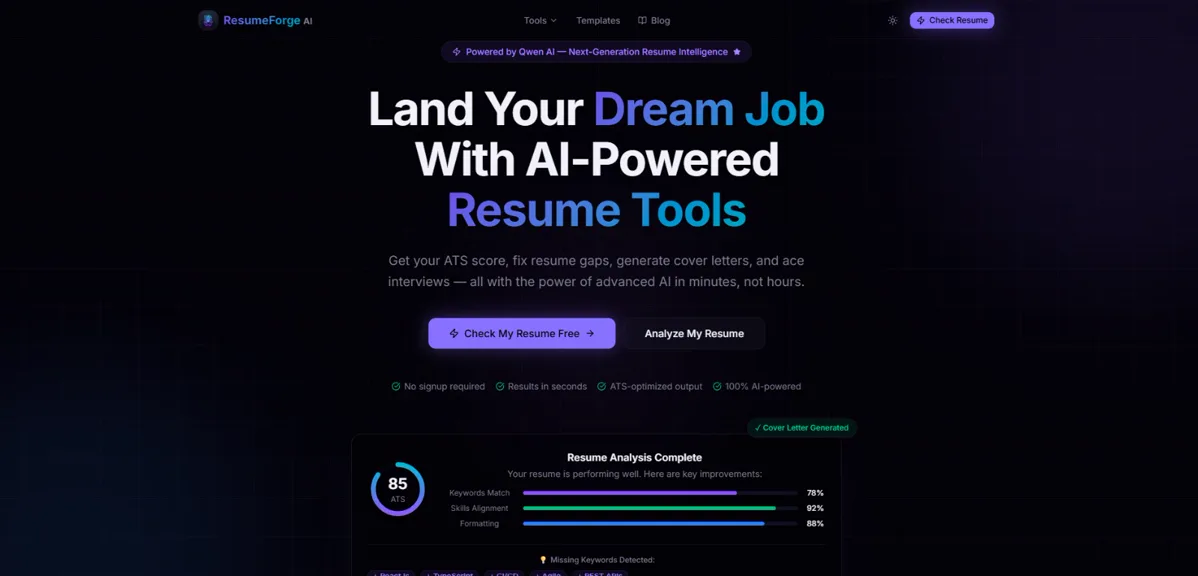
ResumeForge AI is a Next.js application with six tools behind one navigation model. Qwen powers generation and analysis; ATS scoring uses rules informed by common parser behavior — section headers, date formats, table layouts, and font choices that break parsing. Users can move from audit to improved resume to export without re-uploading files repeatedly. Each tool reads from a normalized resume object so improvements in one module immediately benefit the others.
How we approached it
Shared resume parsing layer normalizes input once and pipes structured data to each tool. PDF text extraction and DOCX parsing share a common schema for employment history, education, and skills.
Prompt templates are versioned per tool so we can tune tone and length without cross-contamination. Interview prep prompts stay conversational; cover letter prompts stay formal — same underlying facts, different voice.
Server actions and API routes keep API keys off the client; rate limits protect inference costs on public endpoints.
Export flows produce both editable text and print-ready layouts so users leave with something they can submit, not just AI prose in a textarea.
Implementation notes
ResumeForge AI treats the resume as structured data once, then pipes it to multiple tools. That architecture avoids the usual trap of six disconnected forms asking for the same employment history.
ATS scoring is rule-based, not a black-box percentage. We document which checks failed — missing dates, nested tables, non-standard section titles — so users understand what to fix instead of chasing a vanity score.
We version prompt templates per tool so tone and length can be tuned without cross-contaminating outputs. Rate limits and server-side inference protect cost while keeping API keys off the client.
The platform demonstrates how we approach multi-tool AI products for clients: shared parsing layer, clear UX boundaries, and production deployment patterns on Vercel — the same stack we recommend when a client needs several AI features behind one login.
Results
Six integrated AI tools on one platform
ATS-oriented scoring and improvement flows
Production deployment on Vercel
Cohesive UX across resume, cover letter, and interview prep
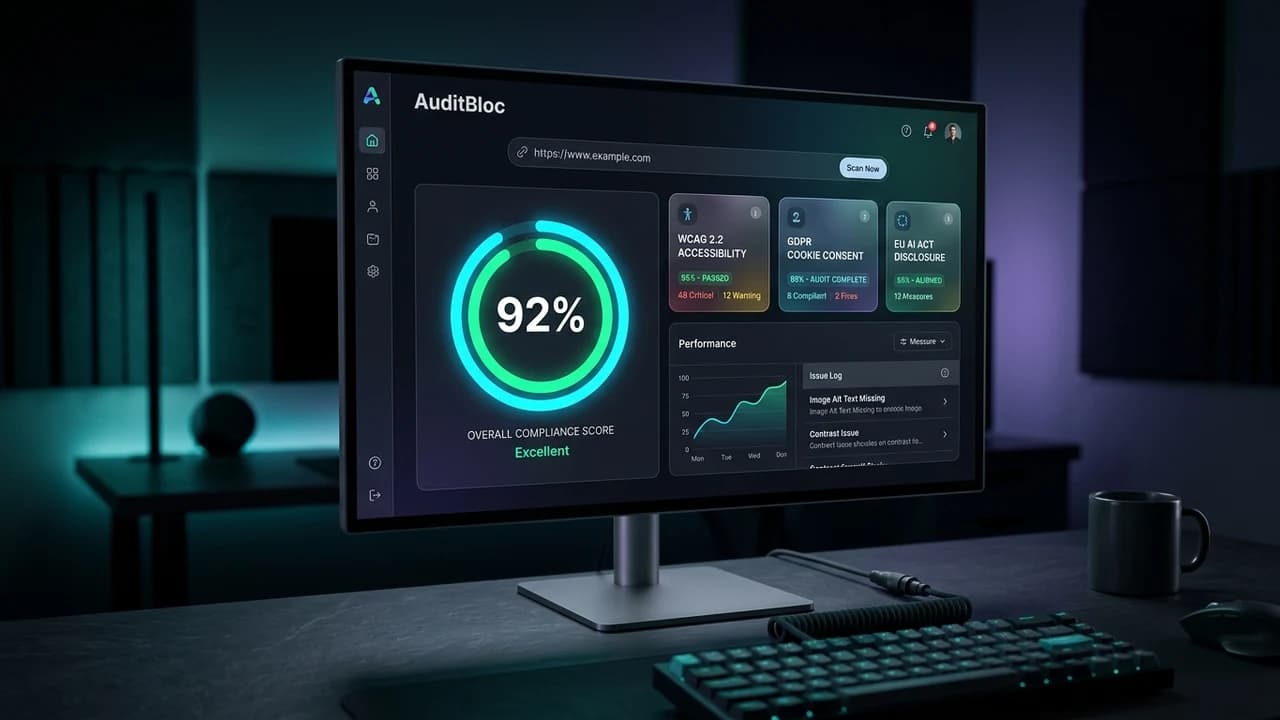
An automated compliance platform scanning URLs for WCAG 2.1/2.2 AA accessibility failures, GDPR cookie consent banners, and EU AI Act disclosures with instant reporting at auditbloc.taylancetech.com.